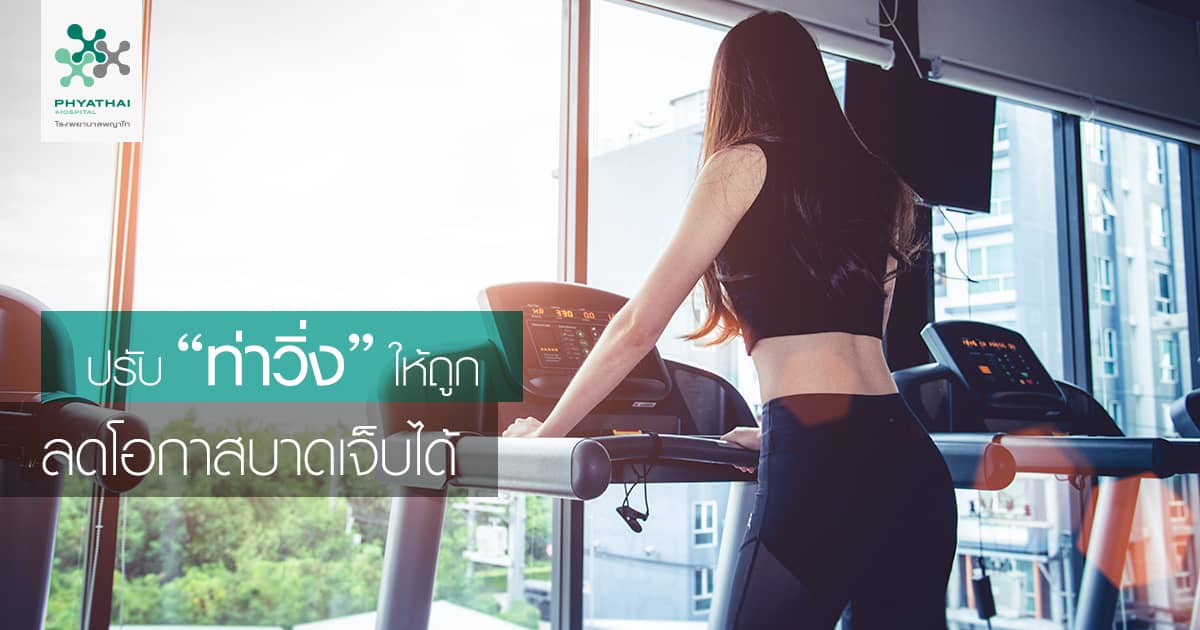
No matter where you turn, everyone is “running” for health. But shortly after starting to run, knee pain and back pain often come rushing in, forcing you to stop. These injuries result from improper running techniques. Here are the correct running techniques that beginner runners like you should be aware of before “injuries” damage your bone and joint structures, making recovery difficult.
Let’s adjust your “running posture” to reduce injuries!
- Head
Should be kept straight in line with the body, neither tilted down nor up, and the chin should not jut out. Eyes should look straight ahead to avoid neck muscle tension. Avoid looking at the ground near your feet, as this shifts weight to the lower back, causing back pain. - Torso
Your torso and back should be naturally upright or have a “Running Tall” posture, meaning stretch your back to make yourself as tall as possible without tensing. This allows efficient breathing, full lung expansion, and helps prevent back pain. - Arms and Shoulders
Arm swings should coordinate with your foot strikes while running, swinging in a front-to-back plane, not across the front of the body. Keep elbows bent at a 90-degree angle. Shoulders should not sway with your steps and should remain level, relaxed, and not raised. - Knees, Feet, and Ankles
When placing your feet on the ground, avoid heavy impact. The part that should touch the ground first is the “heel”, followed by the sole. When the toes touch the ground, it should coincide with the heel lifting up, pushing your body forward. Incorrect foot placement can cause “ankle sprains”. The “knee” should not be lifted too high or fully extended. Take short but quick steps. Observe if the lower leg (below the knee) moves outward from the body when landing. When your foot touches the ground, keep your knee relaxed, not tense, to allow natural bending.
3 Important Things… Not to Overlook!
- Warm-up Regardless of the type of exercise, warming up is an essential step! You can walk briskly or jog lightly to warm your body up first. This stimulates blood circulation in the muscles and respiratory system, reduces the risk of injury, and increases muscle endurance.
- Stretching We are familiar with stretching before exercise, but many people underestimate its importance. Stretching helps prevent injuries by increasing muscle and joint flexibility and reduces post-exercise pain or stiffness.
- Breathing while running Besides proper running posture, correct breathing helps fully expand the lungs, making you feel less tired and reducing side stitches while running. Breathe in so your belly expands and exhale by tightening your abdominal muscles.
Clearing up the confusion! Does running a lot really cause “knee osteoarthritis”?
We often hear that “running a lot causes knee osteoarthritis”, but according to research published by Paul Williams, people who run more than 2 kilometers per day have a lower incidence of knee osteoarthritis!
Meanwhile, it has been found that a major factor affecting knee osteoarthritis is being overweight, and runners tend to have a lower body weight. However, running that does not contribute to knee osteoarthritis must involve correct running posture to prevent injuries that could lead to knee osteoarthritis problems in the future!!
