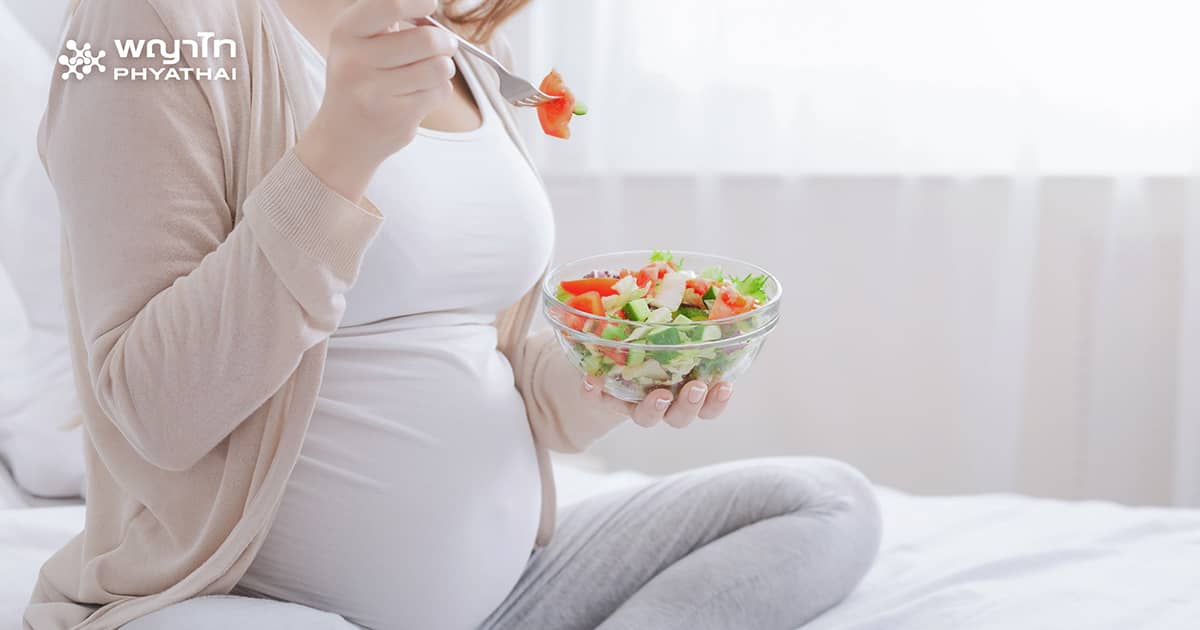
New mothers who are pregnant often worry about their weight and eating habits. Even though they want to eat for the baby in their womb, many cannot help but worry about their own weight. Dr. Tharinee Lamluk, Obstetrician at the Obstetrics Clinic, Phyathai 2 Hospital therefore recommends appropriate eating methods and correct understanding to help new mothers better manage and handle their body weight.
Is it true that pregnant women eat a lot?
By nature, pregnant women tend to feel hungry more often and eat larger amounts than usual because the body needs energy for two people. In the case of twins, the mother needs to eat twice as much to meet the needs of both her body and the babies in the womb. Therefore, when mothers eat, they must choose foods that are nutritionally appropriate and eat in suitable amounts—not too much or too little—for the health of both mother and baby.
How should pregnant mothers eat to avoid gaining too much weight?
- Choose to eat nutritious foods from all 5 food groups, focusing mainly on protein-rich foods such as meat, milk, eggs, and beans, and get vitamins from vegetables and fruits. Avoid focusing on carbohydrate-rich foods and foods high in sugar.
- Eat easily digestible foods with fiber, such as protein from fish and vitamins from vegetables.
- Chew food thoroughly to help the digestive system work better because during pregnancy, the hormone progesterone slows down intestinal contractions, resulting in reduced digestive function. Pregnant mothers are therefore more prone to bloating and constipation than usual.
The belief that pregnant women can eat anything is wrong
Many people still misunderstand that pregnant women can eat anything or as much as they want to help the baby grow. However, the nutrients valuable to the baby come from the main 5 food groups. Eating foods high in sugar and carbohydrates, such as sweets, bakery items, sugary drinks, and milk tea, in large amounts does not directly transfer energy to the baby or make the baby grow bigger. Instead, it causes the mother to gain excessive weight and may lead to a poor figure after delivery.
Poor eating habits may cause gestational diabetes
Diabetes is a common condition found in pregnant mothers, caused by several factors including:
- Pregnant mothers of advanced age
- Family history of diabetes
- Unbalanced eating habits and consuming high-sugar foods such as cakes, sugary drinks, milk tea, soda, or eating fruits high in sugar such as rambutan, durian, longan, grapes, or eating excessive carbohydrates rather than focusing on protein-rich foods
Diet control during pregnancy… reduces worries about weight
Pregnant mothers can control their diet but should do so in appropriate amounts and receive nutrients from all 5 food groups. Emphasize eating foods beneficial to the body, such as protein-rich foods and vitamins from easily digestible vegetables and fruits, while reducing carbohydrate and fried food intake.
Can pregnant women exercise?
Pregnant women can still exercise but should avoid activities that cause impact to the abdomen and should have expert guidance closely.
- Exercises that stretch muscles well, such as yoga, can help reduce muscle aches and stiffness for mothers.
- Non-impact exercises such as swimming help with movement and body toning but should not be done excessively as it may affect the baby in the womb.
- Avoid cardio, aerobics, running, or sports involving jumping.
After delivery, avoid exercising for about 6 weeks to prevent infection and complications from delivery wounds.
How much weight can increase during pregnancy?
The weight gain of pregnant mothers depends on their initial BMI, which can be divided into 3 groups:
- Underweight mothers can gain up to 15-18 kg.
- Normal weight mothers can gain up to 12-15 kg.
- Overweight mothers should not gain more than 10 kg.
After delivery, the mother’s weight will not immediately decrease, but breastfeeding and the energy used in caring for the baby during the first 3 months will help the weight drop relatively quickly.
