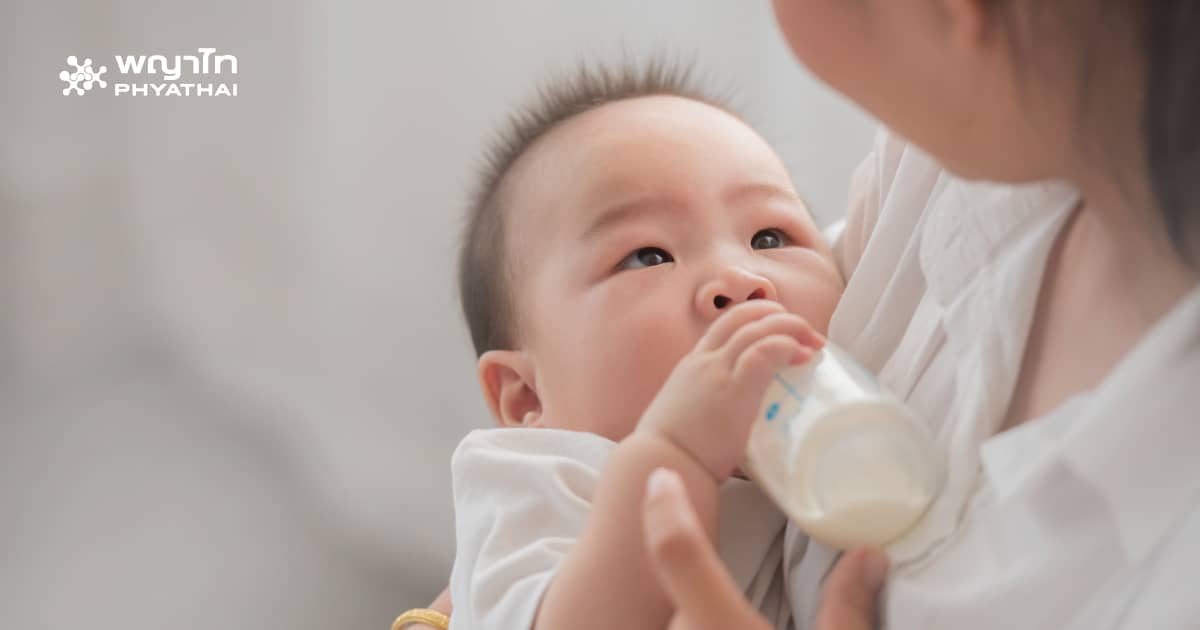
Proper nutrition from birth to 1 year old is very important for your baby’s development and growth. Inappropriate feeding may cause iron deficiency and low weight, affecting the child’s development in four areas: gross motor skills, fine motor skills, social skills, and emotional development. Therefore, paying attention to nutrition during this stage is crucial.
Focus on Breastfeeding… According to the Recommendations from the Department of Health, Ministry of Public Health
For infants from birth to 6 months, breastfeeding should be the main source of nutrition because it contains complete nutrients, love, and bonding, and helps build immunity in newborns. Research worldwide confirms that breastfed children have an IQ about 7 points higher than those who are not breastfed because sucking breast milk effectively stimulates the baby’s brain.
Did You Know? Mothers Often Eat Repetitive Foods, Increasing the Risk of Food Allergies in Babies
During breastfeeding, doctors recommend eating all five food groups with an emphasis on variety. There is no need to avoid any foods because eating the same foods repeatedly may cause the baby to develop allergies to those foods, except for high-risk foods such as fermented foods, semi-cooked or raw foods, and alcoholic beverages.
Recommended Energy and Protein Intake for Your Baby
The appropriate amount of energy and protein depends on your baby’s weight and activity level as follows…
-
- Age 0-6 months, weight 5-6 kilograms should be fed only breast milk as it is sufficient since the baby’s activities are limited to sleeping, breastfeeding, smiling, crying, or excreting.
- Age 6-12 months, weight 8-10 kilograms should receive 800-1,000 kilocalories/day.
Nutritional Principles for Children at Different Ages
-
- Food for children 0-6 months
During the first 6 months, breast milk is the best food for your baby because it contains full proteins and fats, helping reduce infections such as pneumonia, ear infections, intestinal infections, and meningitis. (Breast milk contains about 80% water, so there is no need to give additional water.)
-
- Food for children over 6 months
At this stage, in addition to breast milk, start giving one meal of food beginning with 3-4 tablespoons of rice, half a boiled egg yolk, alternating with pork, chicken, freshwater fish, liver paste, cooked mashed vegetables, pumpkin, and gradually increase the amount of food.
Dr. Urarom recommends that mothers prepare food themselves rather than buying from the market, with simple menus that can be eaten with the baby, such as clear soup with ivy gourd and pork bones served with fragrant jasmine rice porridge. It is not recommended to mash all foods together because children often have problems refusing to chew or not knowing how to chew. Using just a food grinder is sufficient.
**For children at risk of allergies, the World Health Organization recommends starting complementary foods earlier, from 4 months onwards.**
-
- Food for children over 8 months
At this stage, increase the number of meals to 2 times a day at any time, and also increase the amount of food.
-
- Food for children 10 months to 1 year
When your baby reaches 10 months to 1 year, start feeding 3 meals instead of breast milk. Breast milk becomes a supplementary food. Mothers can breastfeed between meals, such as before breakfast, after lunch, or before bedtime.
-
- Food for children over 1 year
When your baby turns 1 year old, they can eat like regular people, focusing on foods that are not too hard, such as noodle soup, rice porridge, boiled rice, and rad na (stir-fried noodles with gravy).
Baby Has Difficulty Passing Stool… What Foods Should They Eat?
It is normal if your baby has difficulty passing stool after starting complementary foods compared to when only breastfeeding. You should give your baby plenty of fiber, vegetables, and fruits. Recommended menus include blending tasty fruits such as dragon fruit, apple, orange, kiwi with yogurt. This will help your baby eat well, sleep well, and have good bowel movements.
Another important thing is food variety. Make the food colorful and interesting, and involve your baby in eating, such as holding a spoon or picking up food by themselves.
