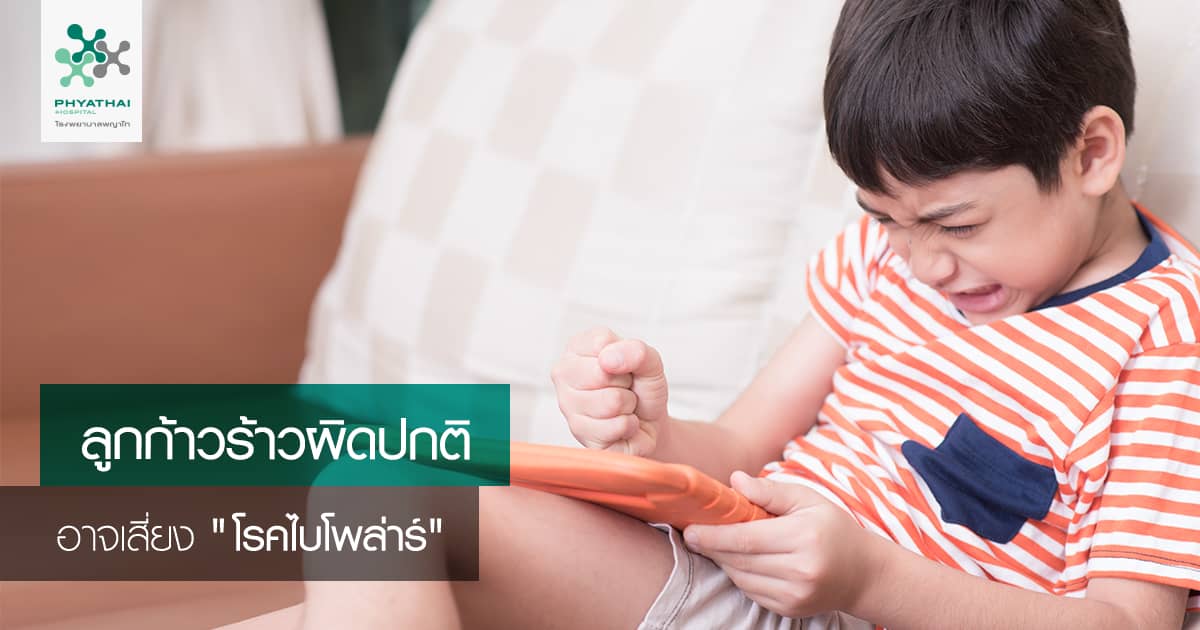
“Bipolar” is a psychiatric problem found that… not only adults are at risk, but children also have a chance of developing bipolar disorder. Therefore, parents or guardians should be aware of the abnormalities in children to seek treatment quickly… before unexpected events occur.
Bipolar symptoms in children… are different from adults
In adults with bipolar disorder, symptoms often include abnormally elevated mood, unusual excitement, high self-confidence, or grandiose ideas about projects, increased sexual drive, reduced need for sleep, sleeping less but not feeling tired.
In contrast, bipolar symptoms in children are less clear, such as abnormal irritability, intense mood swings, increased self-confidence, talking more, seeming to have many things they want to do. It differs from ADHD because bipolar symptoms occur in episodes, for example, lasting 4 days or 1 week. For children with mild bipolar symptoms, parents may notice changes in behavior, learning, or work performance, such as poor academic performance for a period. For children with severe symptoms, signs include delusions, aggression, auditory hallucinations, or visual hallucinations.
Causes of children developing “bipolar”
- Genetics: If family members have bipolar disorder, children have a higher chance of developing it. If both parents have bipolar disorder, the child has a 75% chance of developing it; if one parent has bipolar disorder, the child has a 25% chance.
- Brain system dysfunction causing imbalance.
- Family environment, loss of family members, and resulting depressive emotions.
Treatment approaches for bipolar disorder in children
- Medication: When symptoms improve, family care adjustments will be considered. Acute phase medication is given to help control mood and medication to treat hallucinations and auditory hallucinations, which must be continued for 1-2 years. In the first 2 years, children have a 50% chance of relapse, and some who relapse may need longer or lifelong medication.
- Providing advice to families to avoid triggers that cause symptom flare-ups, such as family conflicts.
- Adjusting perspectives and thoughts to help reduce children’s anxiety or sadness.
- Avoiding stimulating behaviors such as alcohol use, substance abuse, and sleep deprivation, as these can trigger symptom flare-ups.
Dr. Chonnipa Kaewpoolsri
Psychiatrist specializing in child and adolescent psychiatry
Child and Adolescent Health Center, Phyathai 2 Hospital
