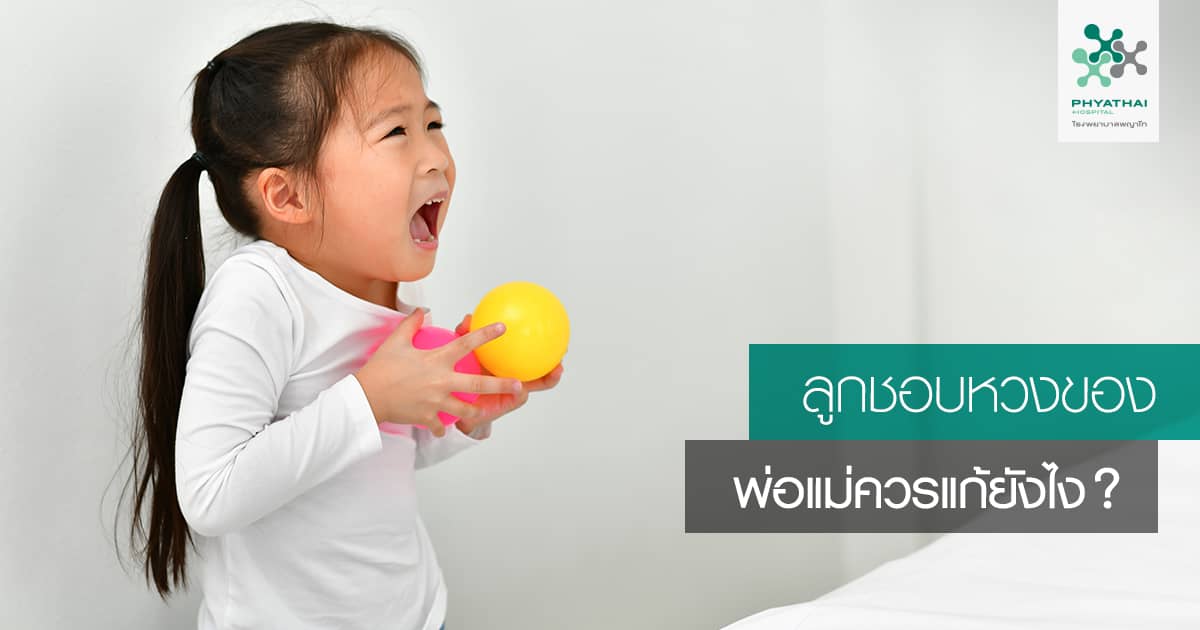
Many children have beloved and treasured items that they do not want to share with others, and they may also be possessive of things that do not belong to them. So how can we teach children to share? We have advice from Dr. Nicha Limtrakul, a pediatrician specializing in behavior and development at the Child Health Center, Phyathai 2 Hospital.
How to teach children to share and not be possessive of their belongings
- Talk to your child about which items belong to them and which do not. For items that belong to your child, they have the right to be possessive and to decide whether to share or not. But for items that do not belong to them, they cannot be possessive.
- Children feel secure and safe when they have their own treasured belongings nearby. If parents need to take something from the child, such as taking the child’s old blanket to wash or cleaning the child’s worn-out doll, always inform and ask for the child’s permission first. Explain the reason, such as it needs washing because it is very dirty or the doll is unwell. After cleaning, reassure the child that the item will be returned as before.
- If the child wants to use or play with something that does not belong to them, they must ask the owner for permission or wait until the current user finishes. If someone else is still using or playing with it, the child cannot use or play with it yet. You may redirect the child to do another activity first and wait until the other person finishes before the child can use or play with it.
- Family members should be good role models in sharing and generosity, such as sharing toys or snacks with each other.
- Allow your child to participate in sharing with others, such as donating items to those less fortunate.
- Teach your child to empathize, for example, when your child wants to play with a toy but a friend does not allow it, your child may feel disappointed or sad. Therefore, if a friend asks to play, your child should share. Besides sharing with others, your child will also have more fun playing.
- When your child shares something with others, don’t forget to reinforce this behavior by praising them every time.
Dr. Nicha Limtrakul
Pediatrician specializing in behavior and development
Child Health Center, Phyathai 2 Hospital, Tel. 02 617-2444 ext. 3219-3220
