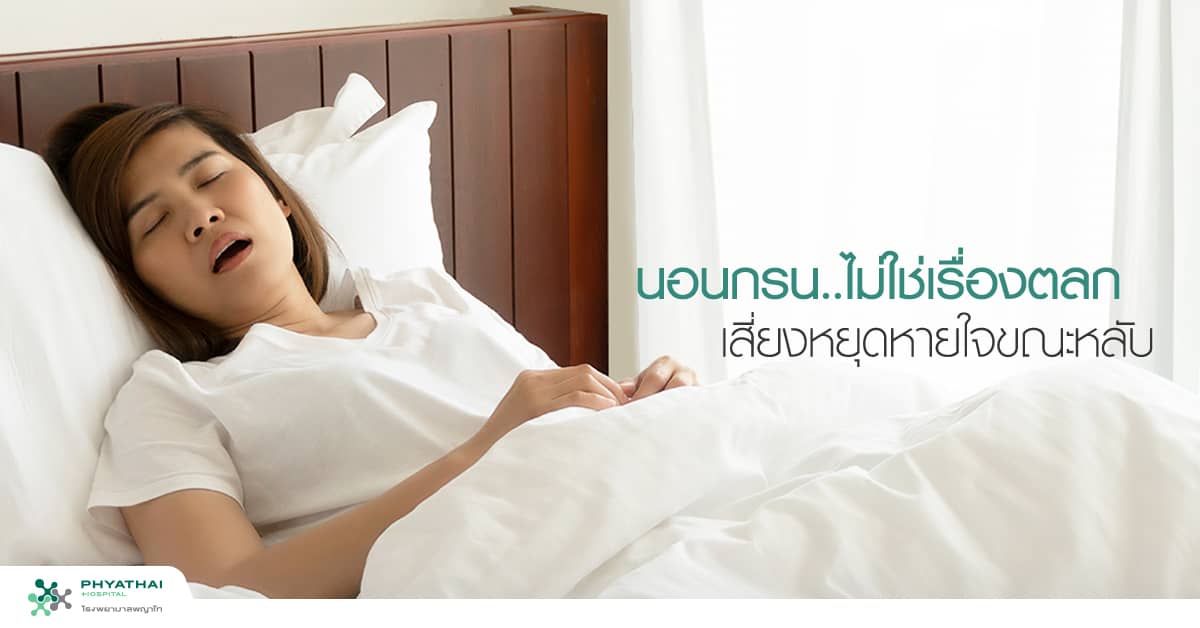
Snoring sounds from family members seem to be a common issue that people tolerate until they get used to it. Few realize that snoring often comes with sleep apnea, which severely deteriorates sleep quality to the point of being life-threatening. Dr. Phonphorn Apiwattanasevi, an otolaryngology specialist and snoring treatment expert at the Ear, Nose, and Throat Center, Phyathai 2 Hospital, provided the following information: About 25% of people snore, and most think it is normal, leaving it untreated until it significantly affects their body and daily life, and only then do they decide to see a doctor. Dr. Phonphorn recommends observing signs that indicate sleep apnea as follows:
Warning Signs of Sleep Apnea
- Snoring that stops intermittently and irregularly, with snoring silencing and then gasping for breath again. Most often, during sleep apnea episodes, the person and those around may not notice because it usually occurs in the middle of the night when everyone is asleep or in the early morning. Therefore, if snoring occurs, suspect sleep apnea and observe other symptoms as well.
- Waking up feeling unrefreshed and fatigued, like a person who has not slept despite having a full night’s rest.
- Daytime sleepiness that interferes with activities such as feeling drowsy while working, in meetings, or driving.
- Young age but unexplained high blood pressure, or those who already have high blood pressure that is difficult to control.
- Short memory, lack of concentration, irritability, and poor decision-making.
Most overweight or obese people have a higher chance of snoring than thin people because fat and tissue compress the airway, narrowing it. Especially Asians who are overweight have a higher chance of snoring than Westerners because their facial bone structure is smaller and their nasal passages are narrower, increasing the likelihood of airway narrowing.
Did you know? Snoring increases the risk of many diseases
Dr. Phonphorn also explained the dangers of sleep apnea: “During sleep, the brain does not stop working but organizes information systematically, linking short-term memory to long-term memory and organizing thoughts. Sleep apnea causes oxygen levels in the bloodstream to drop, insufficiently nourishing various organs. The brain detects low oxygen levels and triggers arousal to breathe in oxygen, resulting in shorter deep sleep periods and continuous light sleep. If left untreated for a long time, it increases the risk of chronic diseases such as stroke, arrhythmia, and high blood pressure. It also raises the risk of dementia because prolonged oxygen deprivation after a full day of brain activity leads to the accumulation of beta-amyloid peptides or waste in the brain, which damages brain function and neurotransmitter synthesis, a major cause of dementia or Alzheimer’s disease. Poor sleep impairs the removal or breakdown of these substances, causing them to accumulate in the brain.”
Want to treat snoring problems… what should you do?
Once you decide to seek treatment, initially, the doctor will take a history and discuss the problems that led you to visit, such as waking up unrefreshed, poor work performance, some executives experiencing decision-making issues, or accidents while driving, including underlying diseases. The next step is a physical examination and sleep quality assessment through a Sleep Lab test to determine the severity, cause, and appropriate treatment method. The patient will sleep comfortably in the Sleep Lab room, where multiple devices will be attached to monitor various body signals related to sleep in detail, including:
- Brainwave signals
- Breathing sensors
- Microphone to measure snoring volume
- Oxygen level measurement
- Electrocardiogram (ECG) monitoring
- Detection of lung and abdominal expansion signals
- Other causes
Besides Sleep Lab testing at the hospital, there is also a home sleep quality test (Home Sleep Test) using a data recording device that experts can analyze. However, if you have underlying diseases, it is recommended to do the Sleep Lab test at the hospital because if the heart function is poor, it may cause arrhythmia or cardiac arrest. Doctors and nurses monitoring the Sleep Lab can provide immediate treatment during the test if necessary.
After obtaining clear test results, the doctor and patient will jointly evaluate the findings and determine a specific treatment plan, such as using a continuous positive airway pressure (CPAP) device if the airway is narrowed, combined with a weight loss plan. If the airway is relaxed, muscle stimulation techniques may be used, or surgery can be performed if the main cause is structural abnormalities in the airway.
Dr. Phonphorn emphasized: “Snoring is a disorder that must be treated because it leads to health problems that can be life-threatening. Snoring can be treated and controlled to improve sleep quality and normalize it. This reduces the risk of stroke, heart disease, and Alzheimer’s disease, improves work efficiency, and allows for a longer, healthier life.”
