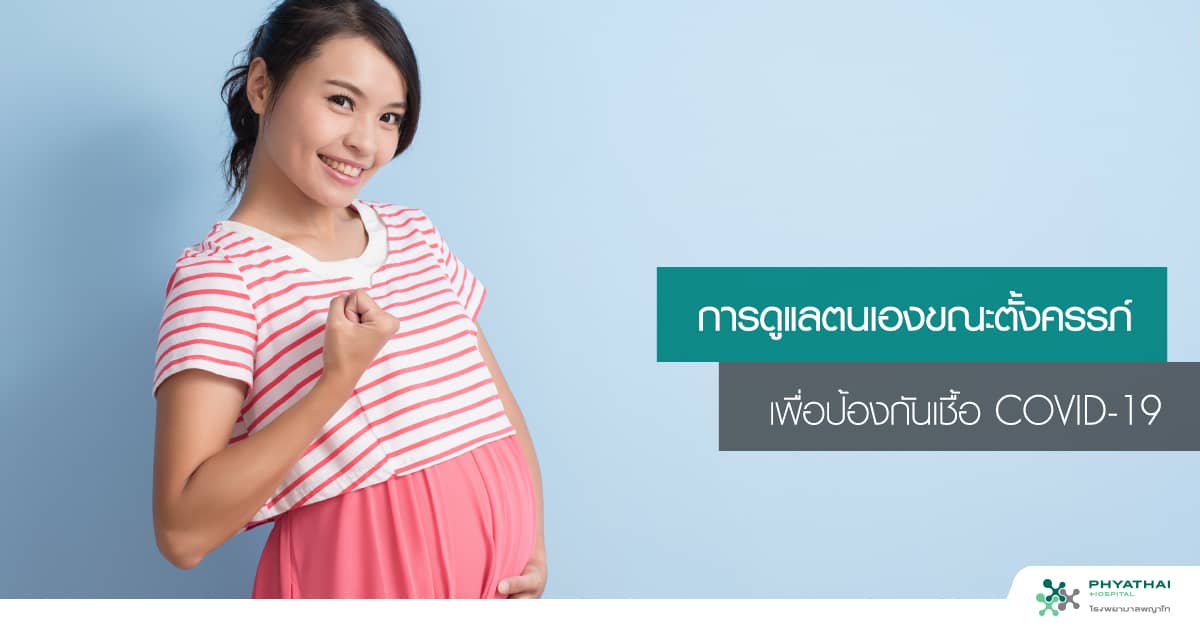
During pregnancy, the mother’s immunity decreases. Additionally, as the uterus expands and pushes against the diaphragm, lung capacity is reduced, requiring stronger breathing. This increases the risk of respiratory illnesses such as the flu more than usual, as well as the chance of contracting COVID-19. Therefore, pregnant women need to take extra care of themselves to ensure the health of both mother and baby in the womb.
How can COVID-19 be transmitted?
- Through droplet transmission, which occurs when small droplets containing the virus are expelled by coughing or sneezing and come into direct contact with us, such as saliva, mucus, or vomit from an infected person.
- Through contact transmission, which happens when touching objects contaminated with these secretions and then touching mucous membranes on our body, especially the face, such as the eyes, nose, and lips.
How should pregnant women take care of themselves during COVID-19?
- Avoid crowded places and close contact with people who have symptoms like coughing, fever, or those who have traveled from high-risk countries.
- Maintain social distancing by keeping 1 – 2 meters apart.
- Wash hands frequently with alcohol-based hand gel containing at least 70% alcohol for at least 15-30 seconds.
- Wear a face mask consistently.
- Avoid touching the eyes, mouth, and nose with your hands.
- Do not share personal items such as glasses, utensils, or personal belongings.
- Eat a balanced diet with all five food groups.
- Always eat freshly cooked food.
- Get 8 – 10 hours of sleep daily.
- If working, it is recommended to work from home.
- Avoid traveling and using public transportation.
- If you are at risk of infection or have symptoms such as fever, cough, sore throat, or difficulty breathing, see a doctor immediately.
Dr. Tharinee Lamluk
Specialist in Maternal and Fetal Medicine
Women’s Health Center, Phyathai 2 Hospital
