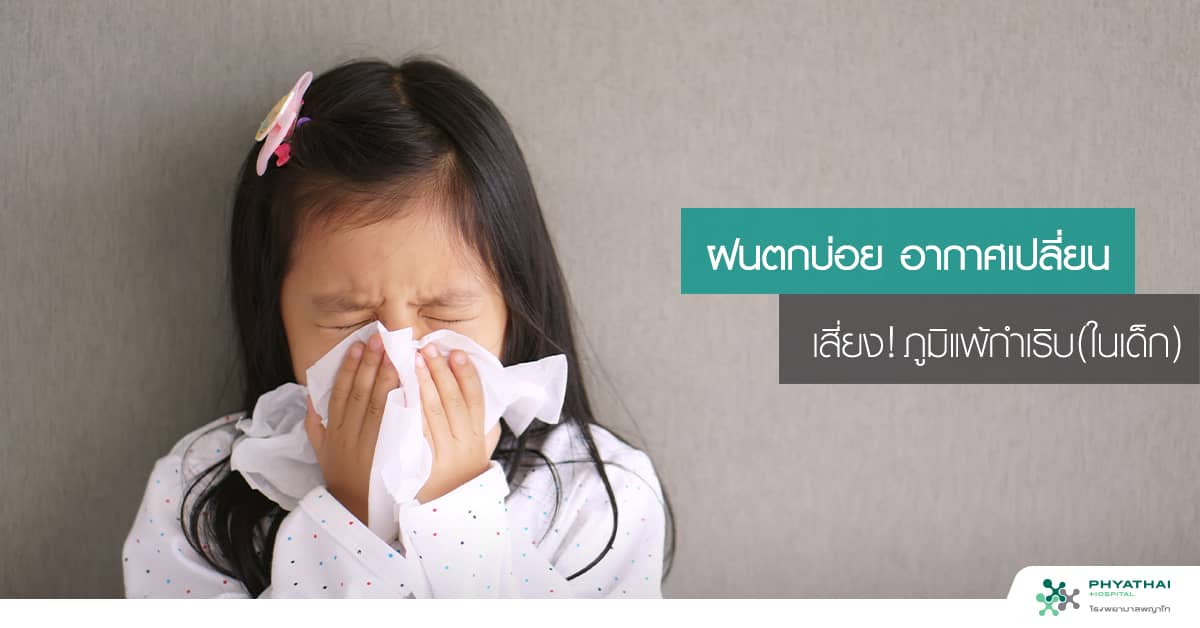
During weather changes—sometimes hot, sometimes cold, sometimes rainy—children who already have allergies are at increased risk of allergy flare-ups. This is because the nasal mucosa of these children is sensitive to changing weather conditions. Besides the temperature, “dust mites”, which thrive during the rainy season at temperatures around 25-27 degrees Celsius, are the number one allergen found in Thailand. Additionally, pathogens and viruses mixed in the air make infections another factor that can easily trigger allergy flare-ups in children during the rainy season.
During this rainy season! Respiratory allergies are even more concerning
During periods of almost daily rain with high humidity, patients with respiratory allergies need to be more cautious than usual. Respiratory allergies are divided into two parts: the upper part, such as the nasal mucosa, and the lower part, such as the bronchi and alveoli, which can cause asthma exacerbations. Asthma involves hypersensitive airways to allergens and humid air, leading to bronchial constriction, coughing, and difficulty breathing.
Allergy symptoms in children… that parents need to watch closely
- Children with allergic rhinitis will have symptoms of allergic inflammation of the nasal mucosa, causing itchy nose, itchy eyes, runny nose, nasal congestion, and sneezing in the morning or during weather changes.
- Children with respiratory allergies and asthma will have symptoms such as coughing and difficulty breathing.
- Children with skin allergies who are sensitive to dust mites and come into contact with dust mites may experience worsening symptoms.
For children who have been diagnosed and tested for allergens by a doctor, it is necessary to closely monitor for flare-ups during the rainy season. For some children diagnosed based on initial symptoms such as nasal congestion, itchy nose, sneezing, and runny nose without prior allergen testing, they should undergo further testing to clearly determine if they are at risk of allergy flare-ups during the rainy season.
What are the methods for allergen testing?
- Blood test for specific IgE antibodies against allergens, which can detect food allergies such as cow’s milk, egg yolk, egg white, wheat flour, nuts, and airborne allergies such as dust mites, dog hair, and cat hair.
Advantages of blood testing include the ability to test children who cannot undergo skin prick testing, such as those with severe allergies who need continuous antihistamine medication and cannot stop taking it, or children with skin sensitive to pricking. Blood test results take about 3-5 days.
- Skin prick test involves placing allergen extracts on the skin, usually on the forearm or back, then pricking the skin to allow the solution to enter beneath the skin. The body’s reaction to the allergen is observed for about 15-20 minutes.
Advantages of skin prick testing include immediate results after testing. However, it requires stopping antihistamine medication about one week before the test to avoid false negatives, and the child must have skin suitable for testing (not overly sensitive), as this could cause false positives.
How to prevent allergy flare-ups during the rainy season?
- For children with allergies who are already on medication, continue using the medication regularly, attend scheduled doctor appointments, and closely monitor symptoms.
- If allergy symptoms worsen, promptly see a doctor as complications such as infectious sinusitis or infectious otitis media may occur.
- Get the influenza vaccine to prevent infection and reduce the severity of the flu, which can trigger allergy flare-ups.
Dr. Jintana Chatrupphijit
Pediatric allergist and immunologist
Child and Adolescent Health Center, Phyathai 2 Hospital
