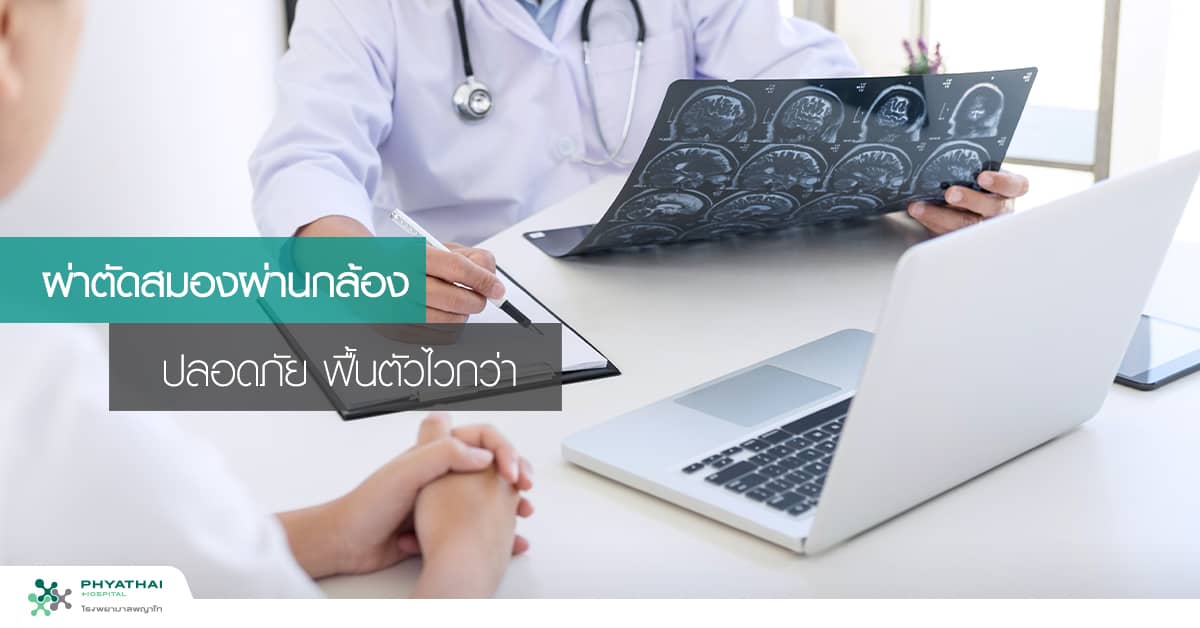
Brain-related diseases are considered serious illnesses. Although many diseases can be cured, patients often have some degree of permanent disability throughout their lives. Therefore, the treatment of brain diseases is very important and delicate. It requires treatment by specialized doctors and comprehensive medical equipment. Nowadays, the treatment of brain diseases widely uses advanced medical technology, including Minimally Invasive Neurosurgery or endoscopic surgery!!
Which diseases can be treated with brain surgery?
Diseases that require brain surgery include ischemic stroke or cerebral hemorrhage, brain tumors, brain abscesses or brain infections, and accidents causing brain bleeding or swelling and bruising.
What is Minimally Invasive Neurosurgery?
Minimally Invasive Neurosurgery, also known as endoscopic surgery, involves the doctor making a small incision on the skin at the treatment site to insert a small camera and surgical instruments to perform the surgery. The incision size is about 1-2 cm or 3-4 cm in some cases.
To provide clear images and reduce damage to tissues and internal organs, minimizing the risk of complications, patients have a shorter recovery time, smaller wounds, and less pain. The surgical instruments used include:
- Microscope A surgical microscope with high magnification and a light beam that can reach deep areas, providing detailed views during surgery.
- Endoscope A rod-shaped camera inserted into the brain area to be operated on, offering high resolution and clear views of deep areas. This tool is suitable for certain surgeries, such as draining brain fluid and pituitary tumor surgery.
- Calvitron Ultrasonic Surgical Aspiration (CUSA) A tool that breaks down tumors into small pieces using ultrasonic energy and suction, without disturbing other brain tissues.
- Laser Uses a light source transmitted through a small fiberoptic. The surgeon inserts the fiberoptic alongside the endoscope to cut or cauterize the targeted area. The laser light emits heat within a radius or depth of no more than 1 millimeter, which is safe for surrounding tissues and helps reduce excessive bleeding during surgery.
- Navigator Used to locate different parts of the brain, making the surgery more precise and safer.
How is endoscopic brain surgery better than traditional surgery?
- The surgical wound is smaller, only about 2.5-3 cm.
- Allows viewing of brain parts through high-magnification lenses, making surgery safer and minimizing impact on other brain areas, with a lower risk of infection.
- The wound heals quickly without affecting facial appearance.
- No need to shave the entire head as in traditional brain surgery.
- Less postoperative pain, allowing faster recovery.
- Shorter hospital stay.
If a patient has symptoms suspected to be related to brain disease, they should undergo brain examination for diagnosis and receive treatment from specialized doctors and hospitals equipped with comprehensive technology. This will make treatment easier and allow a return to normal daily life.
Dr. Theerasak Phuenngam
Specialist in Brain and Nervous System
Brain and Spine Center, Phyathai 2 Hospital
