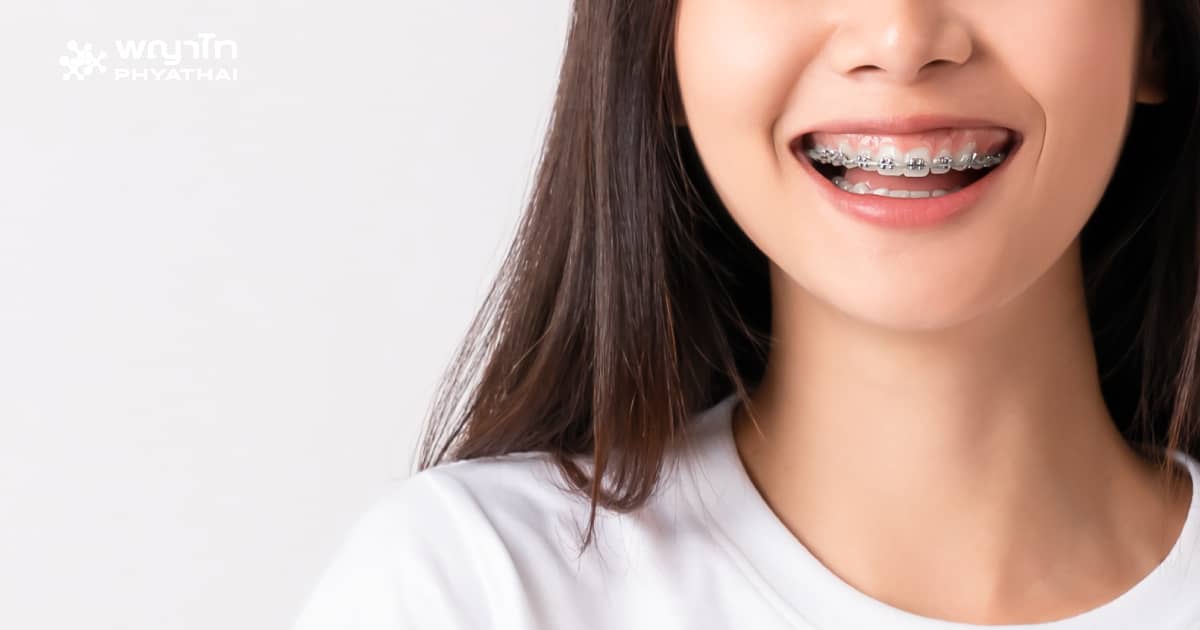
After Getting Braces or Orthodontic Appliances: Pain Relief with Medication, Eating Problems, and How to Eat
After the first time getting orthodontic appliances, patients usually experience tightness and pain for about 1 week. If the pain is severe, you can take paracetamol painkillers, but you should avoid other types of painkillers as their effects may prevent tooth movement.
Regarding eating, you should eat soft foods such as rice porridge or boiled rice to relieve tooth pain and gradually get used to chewing slowly with the orthodontic appliances in your mouth.
Foods to Avoid When Wearing Braces
Avoid hard, sticky, and crunchy foods such as ice cubes, nuts, and candies, as well as biting food or fruits with your front teeth that are usually bitten with the front teeth, such as guava, mango, rose apple, and corn. Instead, cut them into bite-sized pieces and chew with your back teeth to reduce the risk of the appliances coming loose.
Solving Mouth Ulcer Problems Caused by Scratches from Orthodontic Appliances
In the early stage, mouth ulcers may occur from the appliances scratching the inside of the mouth while chewing or talking. If you feel that the appliances are sharp or scratching your mouth, use the pain-relief wax provided by your dentist, mold it into a ball, and apply it over the sharp area of the appliance to prevent it from scratching your mouth.
Before applying, dry the area of the appliance with tissue or cotton. For mouth ulcers, apply triamcinolone acetonide ointment, which can be purchased at pharmacies. The frequency of mouth ulcers will decrease in the 2nd or 3rd month after you have adjusted to the orthodontic appliances.
How to Clean Your Teeth and Orthodontic Appliances?
Having orthodontic appliances in your mouth increases plaque accumulation, especially around the appliances, which raises the risk of tooth decay and gum inflammation. Besides brushing your teeth thoroughly, you must also clean the orthodontic appliances well. Therefore, you should brush your teeth longer and more frequently, at least 3 times a day or after every meal.
Moreover, brushing with a toothbrush alone cannot clean your teeth thoroughly because the appliances block some areas. It is necessary to use additional cleaning tools such as dental floss and interdental brushes to clean between the teeth and under the wires of the braces, where regular toothbrush bristles cannot reach.
