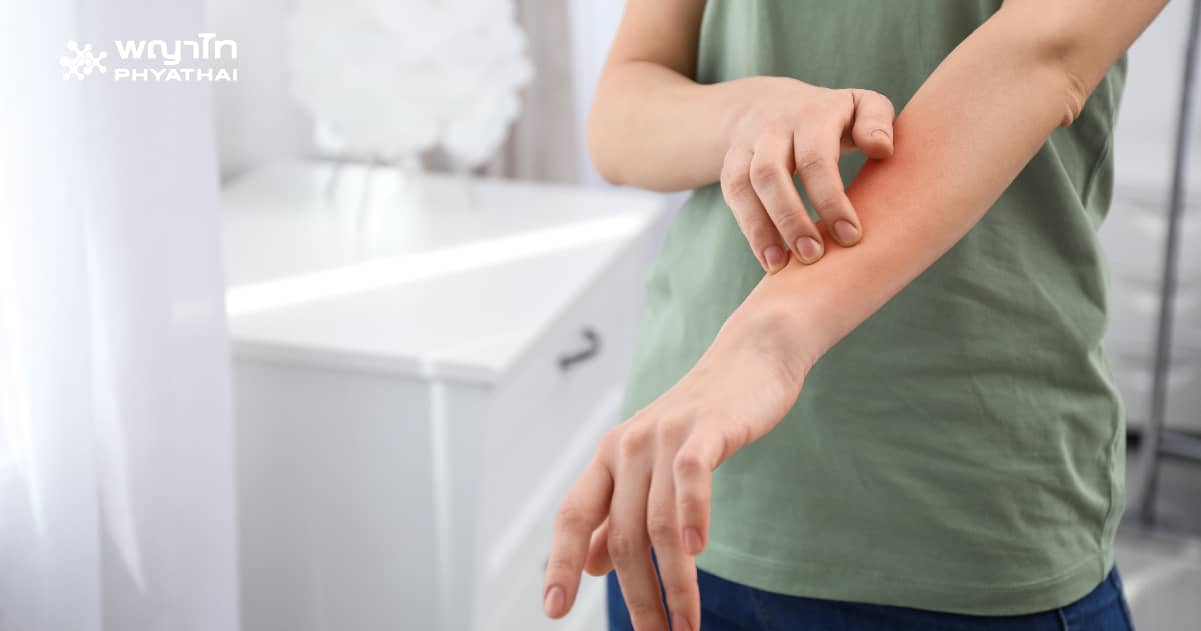
Adverse reactions from the COVID-19 vaccine injection may cause many people to be confused about which symptoms are dangerous and which can improve on their own. Besides fever and pain at the injection site, the occurrence of red rashes or hives is another symptom that can be found after receiving the COVID-19 vaccine. Are these symptoms dangerous? How should you take care of yourself if you develop an itchy rash? We have answers from Dr. Praneet Satchajareonpong, a dermatologist at Phyathai 2 Hospital.
Causes of “Rashes” After Receiving the COVID-19 Vaccine Can Be Divided into 3 Groups as Follows
- Rashes caused by vaccine allergy
- Rashes caused by immune system activation after vaccination
- Rashes from other skin diseases in people with a history of skin diseases or other viral infections such as herpes, shingles, psoriasis, or bullous diseases
Immediate Hives After Injection! A Dangerous Vaccine Allergy Signal That Must Be Watched Closely
The most severe and dangerous type of red hives rash is caused by vaccine allergy. It usually appears as a rash all over the body, accompanied by low blood pressure and may lead to shock. People at risk of severe vaccine allergy rash are those with a history of severe hives or allergies to vaccine components, making them more likely to be triggered by the vaccine.
The doctor further explained that.. “Severe rash symptoms after receiving the COVID-19 vaccine are very rare. However, for the safety and peace of mind of the patient, special monitoring is recommended. It is advised to receive the COVID-19 vaccine at a hospital because staff and specialists are ready to provide care in case of emergencies. Normally, severe allergic reactions occur within 30 minutes after vaccination.”
Severe Allergy After COVID-19 Vaccination… Should You Get the Next Dose?
If you experience a severe allergic reaction after vaccination, naturally, you will be worried and hesitant about whether to get the next dose. The doctor recommends that “You can receive the next dose, but you should not receive the same type of COVID-19 vaccine. For example, if you have a severe allergic reaction after receiving an mRNA vaccine, the next dose should be an inactivated vaccine like Sinovac or a viral vector vaccine like AstraZeneca.”
Which Red Rashes Are Not Concerning… Because They Can Heal on Their Own
Besides red rashes caused by COVID-19 vaccine allergy, the doctor also explained that “Within 1–14 days after receiving the COVID-19 vaccine, some patients may develop hives or small red rashes all over the body. This is called an “adverse reaction” caused by the immune system being activated after vaccination, which can heal on its own within 1-2 weeks.”
“Shingles” Another Skin Condition… That Can Occur After Vaccination
Shingles after vaccination is not a vaccine allergy, but it has been found that the COVID-19 vaccine may contribute to triggering shingles!!
Shingles is caused by the same virus as chickenpox, which many people had as children. Even after recovery, the virus remains dormant in our nerve ganglia. When the body is weak or there are factors that stimulate the immune system, the dormant virus can reactivate.
The doctor explained that.. “Based on current data, some patients develop shingles about 3-4 weeks after receiving the COVID-19 vaccine. Comparing mRNA vaccines, the number of cases is higher in those who received Pfizer, but those who received Moderna can also develop shingles. Therefore, it is still unclear which vaccine brand has a higher impact on shingles occurrence because this is only short-term statistical data. More time is needed for further study and data collection.”
If You Develop Red Rashes or Hives After COVID-19 Vaccination… How Should You Take Care of Yourself?
For those who develop hives or red rashes all over the body after receiving the COVID-19 vaccine, the doctor recommends taking antihistamines as they do not affect the vaccine’s effectiveness and can be taken normally. Apply moisturizing lotion to relieve itching, get plenty of rest, drink enough water, and if symptoms do not improve, see a dermatologist to adjust the treatment plan.
