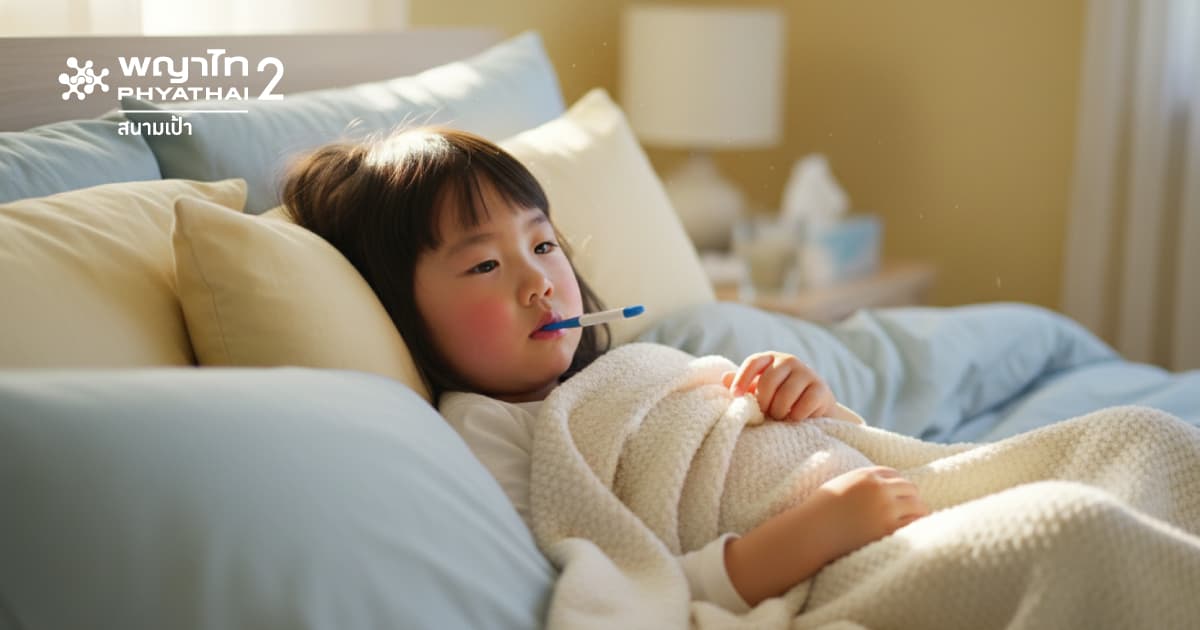
Fever in children is a common reason parents bring their children to see a doctor, especially in young children and preschool-aged children. Although most fevers are caused by common infections and can resolve on their own, in some cases, fever may be a warning sign of a serious illness. If parents know how to observe symptoms correctly, it will help children receive timely treatment and reduce the risk of complications.
What is fever in children?
Fever is a condition where the body temperature is higher than normal, caused by the immune system’s response to pathogens. Generally, a child is considered to have a fever when the body temperature is 38 degrees Celsius or higher.
Common causes of fever in children
- Viral infections such as common cold, influenza, hand, foot, and mouth disease
- Bacterial infections such as tonsillitis, pneumonia, urinary tract infections
- Fever after vaccination
- Teething in young children (usually low-grade fever and resolves on its own)
What types of fever in children are not dangerous
If a child has a fever but still shows good general condition, such as being alert, playing, able to drink milk, eat food, and drink water, no signs of difficulty breathing, and the fever decreases after wiping the body or taking fever-reducing medicine, these symptoms can usually be managed at home with close observation.
Fever symptoms in children that require increased caution from parents if accompanied by the following
- High fever of 39 degrees Celsius or higher
- Fever does not decrease even after taking fever-reducing medicine
- Child is lethargic, not cheerful, or unresponsive as usual
These symptoms may indicate a more severe infection.
Danger signs, take the child to see a doctor immediately if the following symptoms are found
- Child is very lethargic and difficult to wake
- Seizures caused by high fever
- Rapid breathing, difficulty breathing, chest indrawing, or flaring nostrils
- Refusal to eat or drink, risk of dehydration such as dry mouth, decreased urination
- Fever lasting more than 2–3 days continuously or recurring fever
- Rash, red spots, bleeding spots on the skin, or stiff neck
These symptoms may be signs of serious diseases such as dengue fever, pneumonia, or meningitis.
Initial care guidelines for children with fever Parents can provide initial care by
- Wiping the body with room temperature water
- Having the child wear light clothing that allows good ventilation
- Encouraging frequent drinking of water or milk
- Giving fever-reducing medicine correctly according to body weight
Do not use alcohol to wipe the body and do not give antibiotics to children without consulting a doctor.
When should you take the child to see a doctor?
If parents are unsure about the child’s symptoms or notice any abnormal signs as mentioned, taking the child to see a doctor early will help ensure accurate diagnosis, appropriate treatment, and reduce the risk of long-term complications.
Fever in children is common and not always dangerous, but the important thing is to observe accompanying symptoms. If the child has a high fever, lethargy, seizures, abnormal breathing, or fever that does not decrease for several days, they should be taken to see a doctor immediately for safety and the child’s long-term health.
