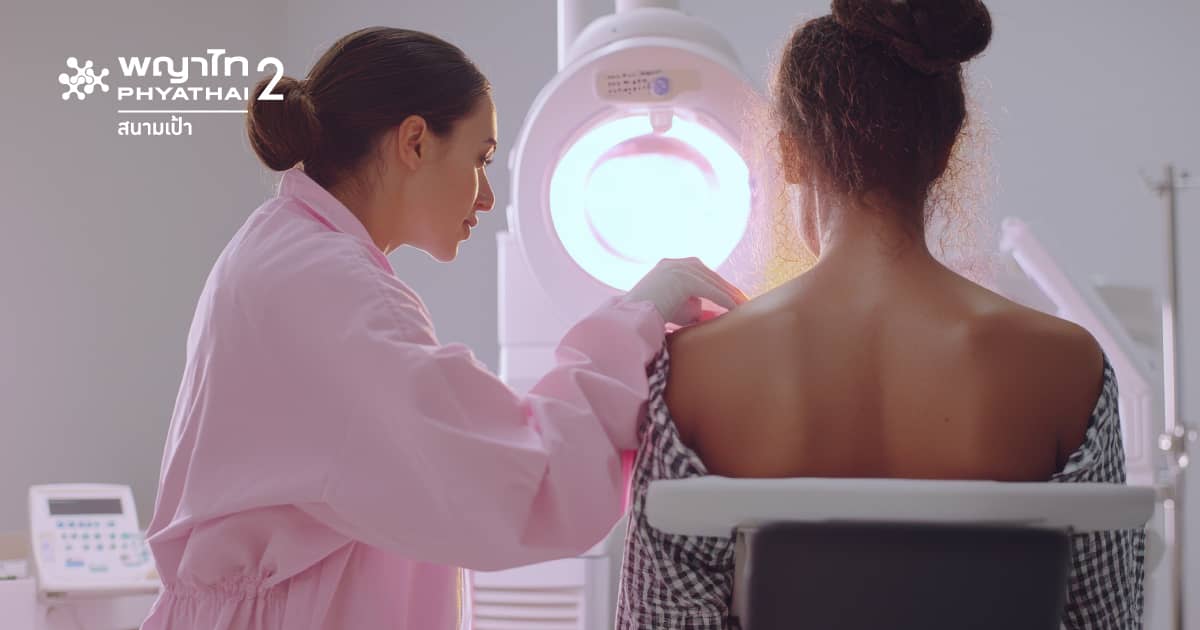
Choose the Appropriate Screening Method for Accurate Breast Cancer Diagnosis
Accurate breast cancer screening and diagnosis are extremely important, especially for women at high risk or with dense breast tissue, which may cause standard mammograms to miss abnormalities clearly. Currently, advanced screening technologies such as Breast MRI and Contrast-Enhanced Mammography (CEM) help increase diagnostic accuracy.
In this article, we will help you understand the differences between Breast MRI and CEM to assist in decision-making with a specialist doctor.
Breast MRI or Magnetic Resonance Imaging is a breast examination using magnetic waves combined with the injection of a contrast agent called Gadolinium to create detailed images of breast tissue.
Advantages
- Higher sensitivity in detecting cancer than mammograms and ultrasounds, especially in women with dense breast tissue.
- Can detect various abnormalities such as early-stage cancer, lumps, and tissue changes.
- Does not use X-rays (Ionizing radiation), making it safe for long-term use.
Limitations
- More expensive.
- Takes longer (approximately 45 minutes).
- Possibility of false positives (detecting abnormalities that do not actually exist)
- May have side effects from contrast injection (e.g., allergic reactions).
- Cannot be performed on patients with metal implants such as pacemakers.
Breast examination with contrast agent CEM or Contrast-Enhanced Mammography is a breast examination that combines digital mammography techniques with contrast injection to increase sensitivity in detecting tissue abnormalities.
Advantages
- Higher sensitivity in detecting cancer than standard mammograms.
- Takes less time than MRI (approximately 10 minutes).
- Can be performed on digital mammography machines already available in hospitals.
- Fewer false positives than MRI.
- Suitable for those who are claustrophobic or have metal implants.
Limitations
- Still requires contrast injection.
- More expensive than standard mammograms.
- May not yet be as widely accepted and used as MRI.
Which One is Right for You?
For women at high risk of breast cancer or with dense breast tissue, doctors may consider screening with MRI, CEM and Mammogram to increase diagnostic accuracy. However, choosing the appropriate screening method should be under the evaluation of a specialist, considering disease risk, family history, breast density, and the limitations of each method.
For proper and optimal breast health care if you are at high risk for breast cancer or have questions about the appropriate diagnostic methods, consulting a specialist is an important step not to be overlooked. Phyathai 2 Hospital is ready to provide diagnostic services with advanced technology under the care of breast specialists directly, to give you the most appropriate and safest advice for your health.
