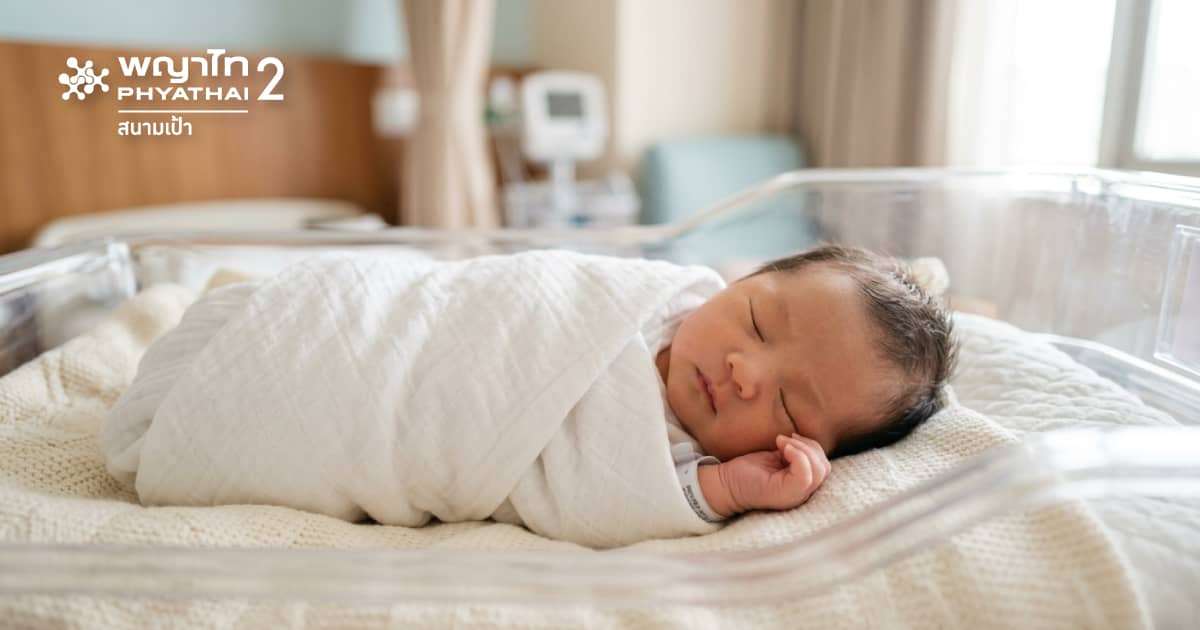
When your little one opens their eyes to the world, one of the symptoms many parents may notice is “yellow skin” or yellowing of the whites of the eyes, which can cause concern about whether it is dangerous. This condition is called “neonatal jaundice.” It is quite common in the first few days after birth and can mostly be managed and treated if properly evaluated by a doctor.
What is neonatal jaundice?
Neonatal jaundice occurs when the body has an excessive amount of a yellow pigment called “bilirubin” accumulating in the blood, causing the baby’s skin and the whites of the eyes to turn yellow. Bilirubin is produced from the breakdown of red blood cells, which is a normal process in the body.
While the baby is in the womb, the mother’s body helps remove bilirubin through the placenta. However, after birth, the baby’s liver must start to eliminate bilirubin on its own. In some cases, the liver may not be fully functional, especially during the first 2–3 days after birth, leading to jaundice.
Why are some babies born jaundiced?
Neonatal jaundice can result from several factors. Common causes include:
1. The baby’s liver is not fully developed
Newborns, especially premature babies, may have immature livers that cannot eliminate bilirubin efficiently. When bilirubin accumulates in the blood, the skin and whites of the eyes begin to turn yellow.
2. Increased breakdown of red blood cells in babies compared to adults
Newborns have a higher number of red blood cells, and their red blood cells have a shorter lifespan than adults. When red blood cells break down, more bilirubin is produced. If the body cannot eliminate it quickly enough, jaundice may occur.
3. Insufficient feeding in the first few days after birth
In the first few days after birth, if the baby feeds poorly, has reduced bowel movements, or is dehydrated, the body may excrete less bilirubin through stool and urine, leading to increased jaundice. Proper feeding and monitoring of bowel movements are therefore important.
4. Blood group incompatibility between mother and baby
In some cases, if the mother’s and baby’s blood groups are incompatible, such as ABO incompatibility or Rh incompatibility, the baby’s red blood cells may be destroyed more rapidly, causing bilirubin levels to rise quickly and jaundice to be more severe.
5. G6PD enzyme deficiency or certain genetic disorders
Some babies may have G6PD deficiency, which causes red blood cells to break down easily when exposed to certain triggers such as some medications, foods, or infections, leading to increased bilirubin levels.
6. Infections or diseases of the liver and bile ducts
Although rare, some cases of jaundice may be caused by infections, liver diseases, or abnormalities of the bile ducts. If jaundice persists abnormally or is accompanied by other symptoms such as pale stools, dark urine, lethargy, or poor feeding, medical attention should be sought promptly.
What types of jaundice are common and which should be cautious?
Neonatal jaundice usually appears around 2–3 days after birth and gradually improves as the baby’s body eliminates bilirubin more effectively. However, in some cases, bilirubin levels may become too high and require treatment. Parents should watch for:
-
- Increasing yellowing of the skin, especially spreading to the torso, arms, legs, palms, or soles
- Clearly yellow whites of the eyes
- Excessive sleepiness, difficulty waking the baby
- Reduced feeding or refusal to feed
- Unusual high-pitched crying
- Floppy or stiff body movements
- Reduced urination or pale-colored stools
- Jaundice lasting more than 2 weeks
Is jaundice dangerous?
Most cases of jaundice are mild and resolve on their own as the baby grows, the liver functions better, and the baby receives adequate feeding. However, if bilirubin levels become very high and are left untreated, it can affect the baby’s nervous system and brain, which is dangerous and should be prevented early.
Therefore, postnatal monitoring is very important, especially for premature babies, low birth weight babies, those with a family history of jaundice, or those at risk of blood group incompatibility between mother and baby.
How do doctors diagnose jaundice?
Doctors assess external symptoms such as skin and eye color along with measuring bilirubin levels, which can be done using a transcutaneous bilirubinometer or by blood tests for detailed bilirubin levels.
Additionally, doctors may consider further tests in some cases, such as blood typing of mother and baby, hemolysis evaluation, infection screening, or G6PD deficiency testing to plan appropriate treatment based on the cause.
How is jaundice treated?
Treatment depends on bilirubin levels, the baby’s age in hours after birth, gestational age, weight, and other risk factors. Common approaches include:
1. Adequate feeding
For mild jaundice, doctors may recommend proper feeding to help the body eliminate bilirubin through stool and urine more effectively. Parents should observe whether the baby feeds well and has sufficient urination and bowel movements.
2. Phototherapy
If bilirubin levels reach the treatment threshold, the baby may receive phototherapy, which uses specific wavelengths of light to change the bilirubin into a form that the body can eliminate more easily. This method is common, safe, and effective. During phototherapy, the baby’s eyes are covered to protect from the light, and bilirubin levels are regularly monitored to assess treatment effectiveness.
3. Treatment of underlying causes
If jaundice is caused by other factors such as hemolysis, blood group incompatibility, infection, or liver and bile duct diseases, doctors will treat these conditions accordingly to prevent complications.
How should parents care for their baby after going home?
After going home, parents should regularly observe their baby’s skin and eye color, especially during the first week after birth, as well as monitor feeding behavior, bowel movements, and alertness.
If the baby appears more jaundiced, lethargic, feeds poorly, is difficult to wake, or shows any abnormal symptoms, parents should take the baby to see a doctor promptly. They should not wait too long to observe symptoms or use treatments not recommended by a doctor.
Neonatal jaundice is a common condition that is usually not severe. It results from bilirubin accumulation in the blood because the baby’s liver is not fully functional in the early days after birth. However, if bilirubin levels are very high or accompanied by abnormal symptoms, it can be dangerous and requires timely care.
Postnatal assessment, monitoring of jaundice levels, and pediatric care help keep your baby safe, reduce the risk of complications, and give parents greater confidence during this important start of life.
