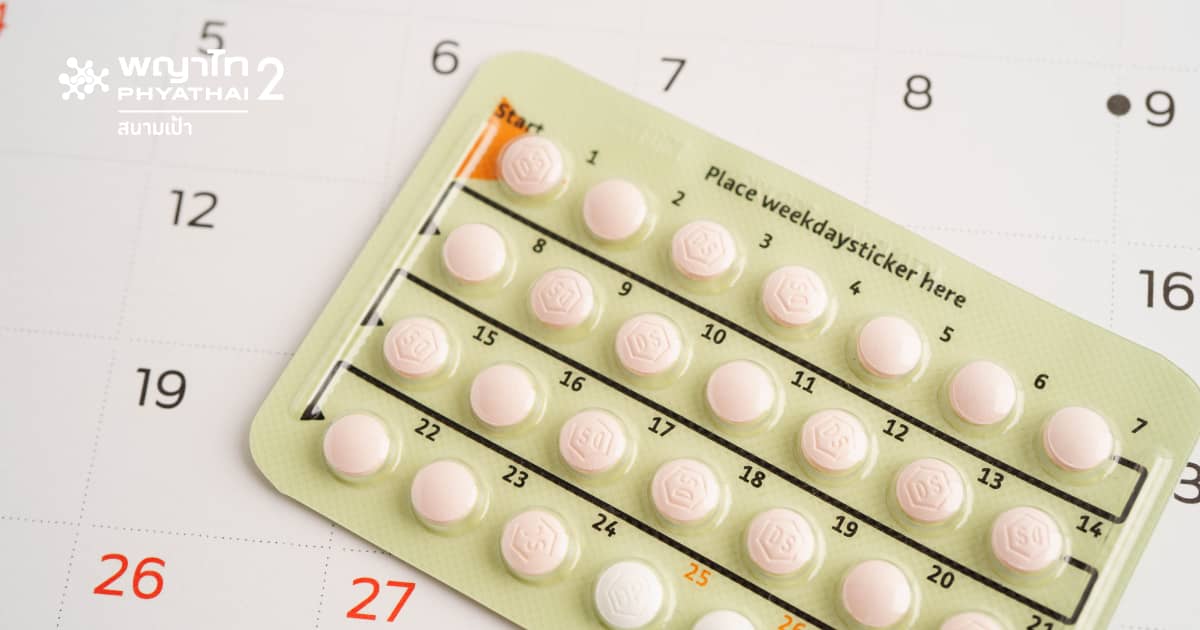
“Birth control pills” are one of the most popular contraceptive methods used by women due to their convenience, ability to regulate menstrual cycles, and help reduce premenstrual symptoms. However, a frequently asked question is, “Is it harmful to take birth control pills continuously for a long time?” Let’s find out the answer together.
What are birth control pills?
Birth control pills (Oral Contraceptive Pills) are medications containing the hormones estrogen (Estrogen) and progesterone (Progesterone) which function to inhibit ovulation, make the uterine lining unsuitable for embryo implantation, and thicken the cervical mucus to prevent sperm from fertilizing the egg.
What are the effects of taking birth control pills for a long time?
In general, “taking birth control pills long-term” is not harmful to health if taken correctly under medical supervision and if there are no contraindications to hormone use. However, symptoms should be monitored and health check-ups should be done periodically because side effects and suitability may vary for each individual.
Benefits
- Regular menstrual cycles with less menstrual pain
- Improved skin condition and reduced acne
- Reduced risk of “endometrial cancer” and “ovarian cancer”
- Reduced occurrence of certain types of ovarian cysts
Possible side effects
- Slight weight gain or water retention
- Nausea, breast tenderness, mood swings
- Risk of “blood clots” in smokers or women over 35 years old
- Stopping the pill suddenly may cause irregular periods initially
Who should consult a doctor before using birth control pills long-term?
- Those with chronic diseases such as diabetes, high blood pressure, or high cholesterol
- Those with a history of stroke or heart disease
- Regular smokers
- Those with a history of breast cancer or hormone-related cancers
Is long-term use of birth control pills linked to “breast cancer” risk?
This is a popular question among many women. Medical studies have found that using combined hormonal contraceptives (Estrogen + Progesterone) for many consecutive years may slightly increase the risk of breast cancer while in use. The risk is slightly higher in those with a family history of breast cancer or using the pill for more than 5 years. However, after stopping the pill, this risk gradually decreases to near that of the general population within about 5–10 years.
However, birth control pills have other clear benefits such as reducing the risk of ovarian and endometrial cancers as well as reducing ovarian cyst formation and helping regulate menstrual cycles.
Therefore, women who want long-term contraception should consult a specialist to assess individual risk, especially those with a family history of breast cancer or hormonal imbalances. Doctors may consider switching to progestin-only pills or non-hormonal contraceptive methods instead.
Doctor’s recommendations
- Perform regular monthly breast self-examinations
- Have an ultrasound or mammogram once a year (especially for those over 35 years old)
- If abnormal symptoms occur such as a lump, breast pain, or nipple discharge, see a doctor immediately
Frequently Asked Questions
Q1 : If I stop taking birth control pills after long-term use, will there be side effects?
A: Some people may experience “temporary irregular periods” or acne returning initially, but the body will gradually rebalance within 1–3 months and normal pregnancy is possible after stopping the pill.
Q2 : Does long-term use of birth control pills cause infertility?
A: No, birth control pills do not cause infertility. After stopping the pill, the ovaries return to normal function and pregnancy can occur within a short time, except in some cases where infertility already exists.
Q3 : What health checks should be done if using birth control pills continuously for many years?
A: Women should have an annual health check-up including breast exams, pelvic exams, cervical cancer screening, and blood pressure measurement to assess hormone side effects and adjust the birth control formula appropriately.
Taking birth control pills continuously for a long time is not directly harmful to the body if under medical supervision and using a formula suitable for each individual. However, if abnormal symptoms occur such as severe headache, easy fatigue, chest pain, or abnormal bleeding, see a doctor immediately.
