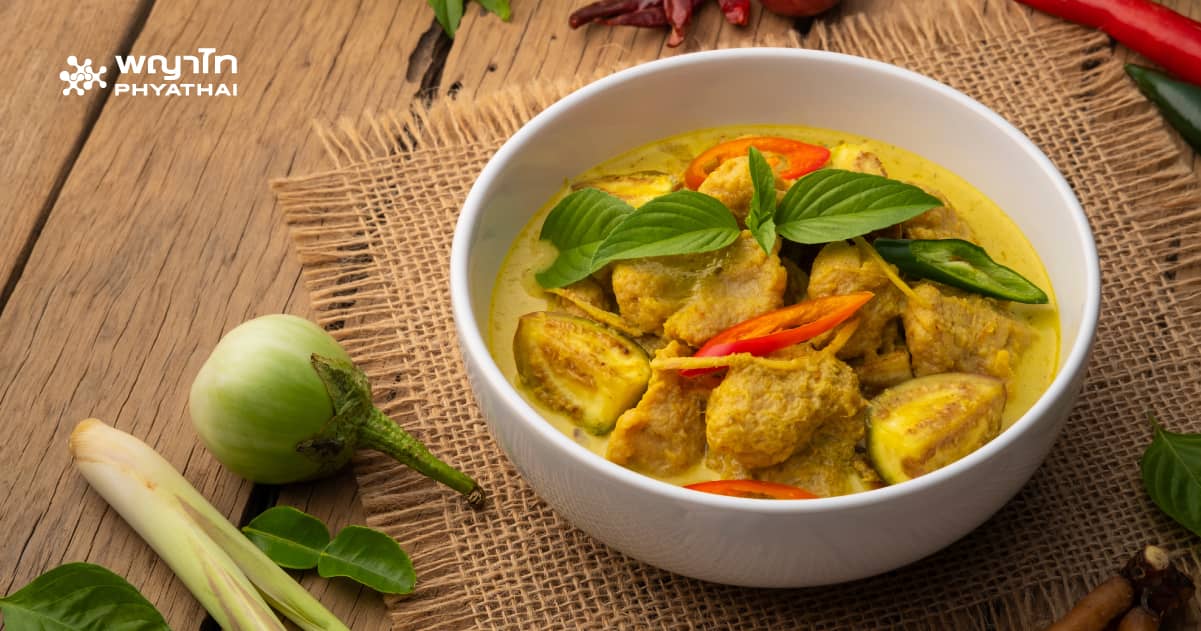
Thai Curries and Their Cancer Cell-Fighting Power
<!– –>
–>
Since the number one cause of death worldwide, including in Thailand, is cancer, any method that can help prevent cancer or inhibit the growth of cancer cells would be very beneficial…
The good news is… researchers hypothesized that Thai foods, especially various curries, might contain substances that can inhibit cancer cells. In 2013, Mahidol University, in collaboration with the Institute of Nutrition, studied four types of Thai curries believed to help inhibit cancer cell processes: 1. Kaeng Pa (Jungle Curry) 2. Kaeng Som (Sour Curry) 3. Kaeng Lueang (Yellow Curry) 4. Kaeng Liang (Mixed Vegetable Curry)
They conducted laboratory experiments by using the curry pastes of these four types in liquid form to test on leukemia cancer cells in culture dishes to observe the extent of cancer cell death. The results showed that…
- Kaeng Pa (Jungle Curry): Can naturally kill 38.82% of cancer cells and 43.93% unnaturally, meaning it may spread to healthy cells.
- Kaeng Som (Sour Curry): 29.08% of cancer cells survived, and 43.59% were killed without spreading to other cells. However, 27.33% of cells died unnaturally, which may spread to other cells.
- Kaeng Lueang (Yellow Curry): 22% died naturally, while 46.13% died unnaturally.
- Kaeng Liang (Mixed Vegetable Curry):Can kill cancer cells without affecting other cells at 38.98%, with only 3.78% of cells dying unnaturally and spreading.
However, from the experiment, it might seem that Kaeng Som kills the most cancer cells at 43.59%, but upon closer examination, the unnatural cancer cell death that may spread to healthy cells is also high in Kaeng Som. In contrast, Kaeng Liang kills slightly fewer cancer cells at 38.98%, but the spread to healthy cells is much lower. The main ingredients of Kaeng Liang include shallots, pepper, and shrimp paste, especially shallots, which are very beneficial because they contain flavonoids. In anti-aging medicine, flavonoids are natural substances with antioxidant properties that reduce cell inflammation, a cause of cancer. However, this does not mean one should consume Kaeng Liang more than other curries, as all four curries have benefits in cancer prevention but do not cure cancer.
Researchers further experimented by using the ingredients of Kaeng Liang, which include dried shrimp, shallots, shrimp paste, pepper, pumpkin, sponge gourd, ivy gourd leaves, and holy basil leaves. They prepared the food, blended it with water, and fed it to test mice. Mice with cancer that consumed 1 unit of Kaeng Liang for 6 weeks showed a 45% reduction in colon cancer cells, while mice consuming 2 units showed a 48% reduction. The preliminary conclusion is that the amount consumed did not significantly affect the outcome, but Kaeng Liang could reduce colon cancer cells by 45-48%. This research was conducted on animals (mice), so it is not yet recommended to consume Kaeng Liang as a treatment for colon cancer but rather as a supplement to treatment, as it may help reduce cancer cell spread. It should be used more for disease prevention.
The Key is Not to Overeat and Avoid Monotony
If cancer patients ask whether they can consume Kaeng Liang, the doctor advises that if you are ill, you must first consult a modern medicine cancer specialist. Kaeng Liang can be consumed but not every day or continuously with the hope of curing cancer. Proper consumption means eating a variety of foods that meet nutritional principles and avoiding monotony to maximize nutrient absorption.
Finally, the doctor would like to emphasize the importance of disease prevention, which is the core of Anti-aging Medicine. It helps you stay healthy, slows down the deterioration of organs and body cells, and reduces medical expenses from serious illnesses. As the saying goes, “Prevention is the best cure.”
Finally, I wish all readers good health.