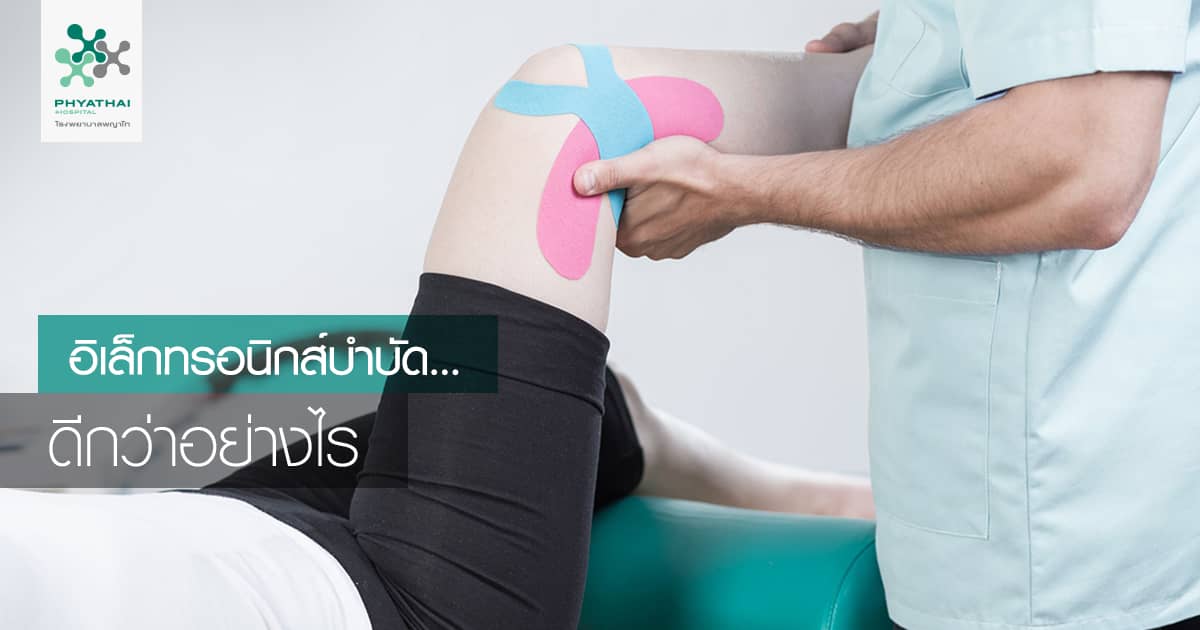
In all of our lives, we believe everyone has exercised, played sports, and may have accidentally been injured. Sometimes, when the symptoms are severe, surgery might be necessary, but the heart is not yet ready for treatment. Therefore, an alternative that helps relieve symptoms and physical therapy using electronic therapy technology (Electrotherapy) with ultrasound and laser devices is another answer that can help you increase options for life injured from sports.
Physical Therapy as an Alternative Treatment for Sports Injuries
When it comes to physical therapy, most people think of muscle stretching, hot compresses, and cold compresses. However, in reality, physical therapy is a treatment with various components. The choice of approach for physical therapy must be considered individually. The most common reason for patients receiving physical therapy is to treat injuries from sports or exercise. The main causes of injuries are (1) sudden and severe impact, and (2) overuse or frequent use of body parts.
Physical therapy has many treatment approaches and incorporates various technologies for physical therapy, similar to electronic therapy (Electrotherapy), using ultrasound and laser devices, which are innovative alternatives for treating sports or exercise injuries.
Ultrasound Therapy for Sports Injuries
Ultrasound Therapy is a technology used for physical therapy. The operation of ultrasound therapy uses electrical currents transmitted through wires to crystal crystals, which then convert into high-frequency waves inaudible to humans. The benefits of ultrasound therapy include stimulating tissue repair responses, helping to treat pain, muscle injuries, ligament joints, skeletal system, reducing muscle spasms, and contraction of tissues around joints. It provides treatment effects from thermal effects, suitable for chronic cases or deep injury layers. The non-thermal effects are used to treat early injuries, inflammation, or areas of joints, ligaments, and bones.
The selection of settings, frequency, and waveforms is considered by doctors and physical therapists based on the individual patient’s suitability.
An important component in ultrasound therapy is the gel, which acts as a medium to transmit waves through direct contact. It has properties that transmit ultrasound waves and increase lubrication, allowing the ultrasound head to move more easily to different positions.
Limitations of Ultrasound Therapy Areas where ultrasound therapy should not be applied include regions with bleeding, severe inflammation, the face, head, eyes, abdomen, heart, chest, areas without sensation, and pregnant women. Treating sports or exercise injuries with ultrasound is convenient, safe, and painless but has several limitations. Therefore, before receiving ultrasound therapy, it should be considered by the treating physician and physical therapist for the best treatment outcome.
Laser Therapy for Sports Injuries
Laser Therapy for treating sports or exercise injuries through physical therapy with laser devices is different from surgical lasers that cut or cauterize tissues at specific points. Laser therapy uses cold lasers that help reduce pain in musculoskeletal and nerve conditions by slowing the nerve conduction speed that transmits pain signals to the brain, thereby reducing the sensation of pain. It is as effective or more than taking anti-inflammatory drugs. It also helps reduce pain from osteoarthritis, stimulates tissue repair, reduces swelling, and inflammation of muscles and ligaments around joints.
Benefits of Laser Physical Therapy include immediate pain relief of over 50% after treatment. The treatment duration is about 3-5 sessions for acute pain and about 10-15 sessions for chronic pain. Each treatment session lasts approximately 2-5 minutes per area. Continuous daily treatment is not necessary; the frequency of treatment is determined by the doctor, such as every other day or once a week. This method can also treat pain about 4 cm deep, helping reduce pain from nerve compression in the neck and lower back. During treatment, patients feel warmth on the skin, no gel is needed, and there is no pain.
Laser for Physical Therapy is effective for many conditions, such as treating sports injuries, sprains in bones, ligaments, muscles, migraine headaches, shoulder pain, frozen shoulder from degeneration, neck and shoulder pain from cervical disc degeneration or displacement, knee pain from sprains or degeneration, muscle pain in the front and side of the thigh, and hip pain. However, despite the many benefits of laser therapy, treatment decisions must be at the discretion of the doctor to suit each patient.
..Because each person’s life has different limitations, the decision to choose a treatment approach can also vary accordingly.
