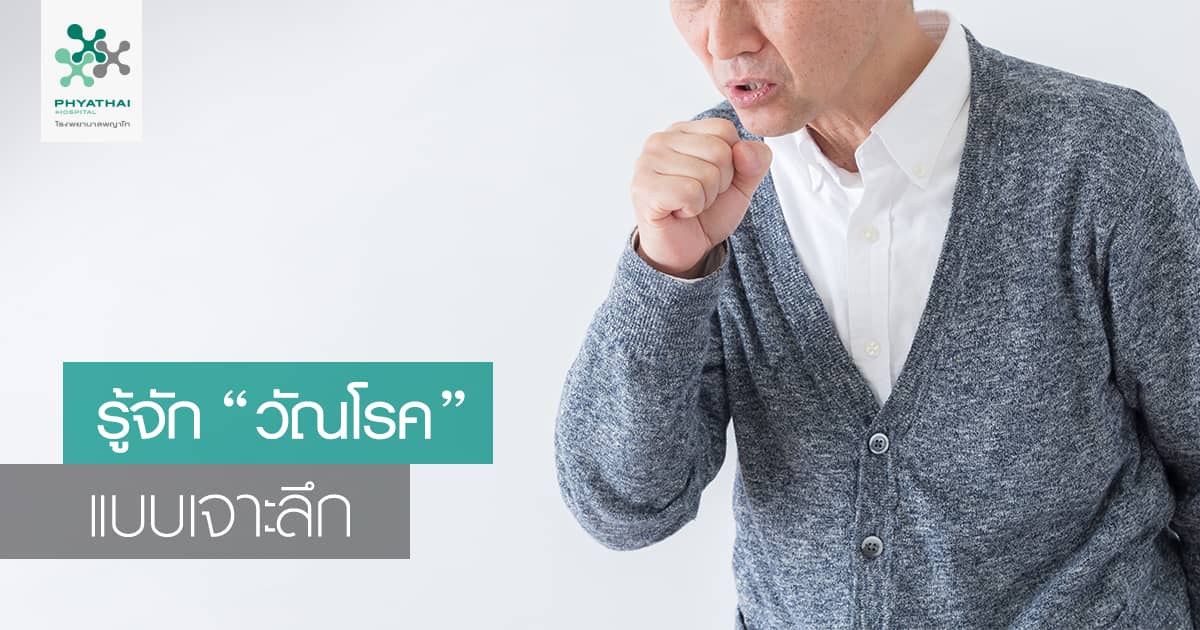
Although tuberculosis is one of the diseases well known to Thai people, it is believed that many still do not realize how dangerous tuberculosis is and how close it is to the Thai population. Currently, Thailand is ranked among the 14 countries with the highest number of tuberculosis patients, with an incidence rate of 120,000 cases per year. Among these, approximately 12,000 people die annually. However, what is more concerning than the number of deaths is that only about 60% of tuberculosis patients have access to treatment. This has led to a serious campaign to control tuberculosis. Since March 24th is approaching, which is “World Tuberculosis Day”, we took the opportunity to interview Dr. Winai Boveja, a respiratory specialist at Phyathai 3 Hospital, to help us better understand “tuberculosis” and how to take care of ourselves to stay away from tuberculosis.
What is the current situation of tuberculosis?
To lay the groundwork about tuberculosis, in 2019, the World Health Organization declared tuberculosis as an urgent condition and an emergency that requires collective efforts in campaigning, treating, and detecting cases. The number of tuberculosis patients has been increasing significantly, and the control measures have not been as effective as they should be. Therefore, it is necessary to push tuberculosis as an urgent issue. Moreover, tuberculosis in this century has started to shift towards “drug-resistant tuberculosis,” which is frightening because it is not just resistant to two drugs but to many drugs. Hence, the future of tuberculosis is increasingly worrisome and certainly a threat to our future generations.
What is a simple definition that helps us understand tuberculosis better?
Tuberculosis is a type of bacteria that slowly destroys the human body, unlike other bacteria that show symptoms immediately upon entering the body. Most tuberculosis bacteria reside in the lungs. Tuberculosis can cause disease in both humans and animals and exists in several strains. The most common and well-known strain in humans is “TB,” which is endemic in our region. Therefore, everyone has an equal chance of contracting tuberculosis at any time, depending on their immune system and the amount of bacteria they are exposed to.
How can we know if we are at risk of tuberculosis?
The most common symptom indicating possible tuberculosis is “chronic cough”, which can be either dry or productive cough with yellow or green sputum. Coughing up blood is also a sign. Other important symptoms include fever, night sweats, weight loss, and a fever that occurs specifically at night, which is a suspicious sign of tuberculosis. If these symptoms persist for more than two weeks without improvement, it is advisable to get screened and consult a doctor promptly.
Who is most at risk of contracting tuberculosis?
As the doctor mentioned, everyone has a chance because tuberculosis is endemic in our country. However, those at highest risk include people with weak immune systems, poor nutrition, whether underweight, thin, or overweight, and those already suffering from lung diseases, as their lungs can deteriorate immediately upon infection. The last group includes smokers and people working in occupations that increase the risk of tuberculosis, such as miners, construction workers, and those exposed to dust, stones, and pollution. Such lifestyles increase the likelihood of contracting tuberculosis.
What is the most important thing to be aware of when diagnosed with tuberculosis?
First, we must understand our responsibility and always remember that “we have a duty not to spread tuberculosis to others.” During the first two weeks, we must “isolate ourselves” from people and the community, wear a mask to cover the mouth, and when coughing or sneezing, do so into a cloth or tissue and dispose of it properly. Next, we must separate our eating utensils because tuberculosis can be transmitted through saliva. After eating, personal items should be washed and not mixed with others. It is crucial not to work during the first two weeks to avoid spreading the infection. After two weeks, patients can return to work because the medication taken during this period significantly reduces the ability to spread the bacteria.
If medication after just the first two weeks stops the spread, does that mean tuberculosis is definitely curable?
In medicine, there are only a few diseases that doctors can say with 100% certainty are “curable.” One of them is polio, and the other is “tuberculosis.” Therefore, what I want to assure all patients is that tuberculosis can be contracted but is 100% curable if it is not drug-resistant tuberculosis and if patients adhere strictly to their prescribed medication.
How can we easily take care of our lungs to stay away from tuberculosis?
Find good air for your lungs, exercise regularly, avoid polluted air and smoke such as vehicle exhaust. In our country, it is best to avoid these as they are harmful to the lungs. Spend time in nature to give your lungs a break from urban pollution. The lungs are like an air purifier; blood circulates through the heart to the lungs to be purified and oxygenated before being sent to nourish the body. Therefore, if we do not take care of this internal air purifier, it will be difficult to enjoy fresh and full breaths throughout life.
Any message to all Thai people about tuberculosis?
Finally, what I want to leave with you is that although tuberculosis is a dangerous disease, it is curable. Therefore, there is no need to worry. Some people mistakenly think and judge that they got tuberculosis because they are unclean or have been around unclean people, which is not true. Tuberculosis is not a disease of the lower class or something shameful. Everyone, regardless of social status, wealth, or poverty, has an equal chance of contracting tuberculosis at any time because it is endemic. So, there is no need to feel disgusted or think you are dirty because it can be contracted and cured 100%.
Dr. Winai Boveja
Internal Medicine Specialist, Pulmonary Clinic
Phyathai 3 Hospital
