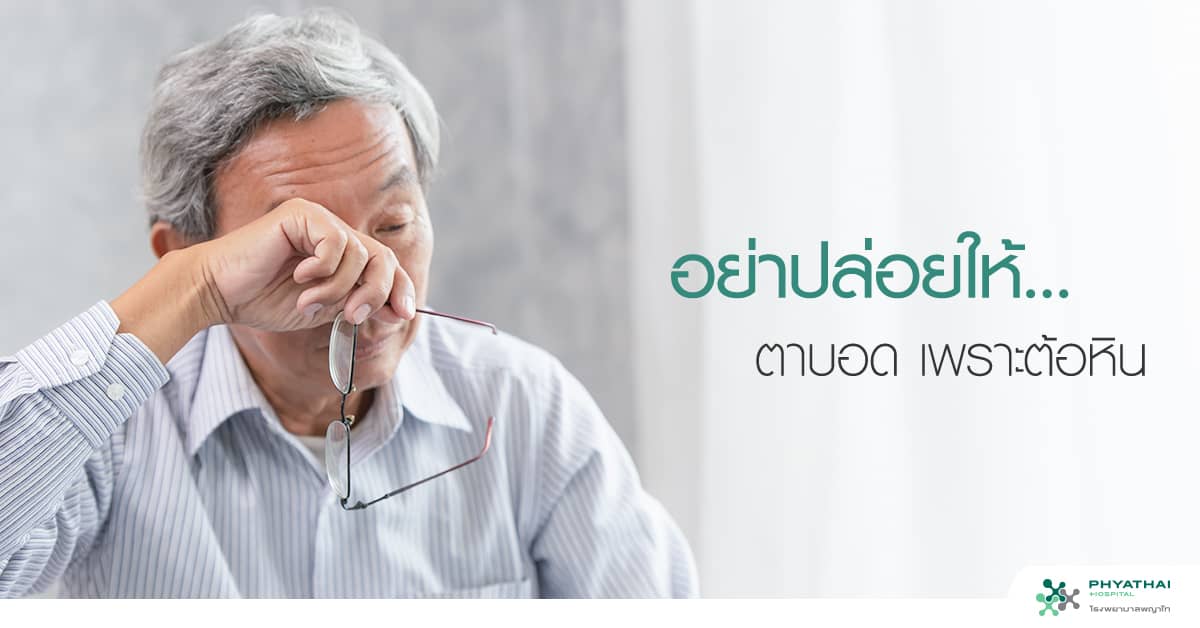
Glaucoma is another major eye problem that can cause severe damage leading to blindness. What is even more frightening is that glaucoma has no warning symptoms, its exact cause is unknown, and once it occurs, even with treatment, vision cannot return to normal. Therefore, it is important to regularly check your eye health with a specialist ophthalmologist closely to be prepared to respond promptly. The outcome of glaucoma does not necessarily have to end in “blindness”.
What is Glaucoma?
It causes the optic nerve to die, resulting in loss of vision eventually. The degeneration usually starts at the outer edges of the visual field, but the central vision remains clear. Patients are often unaware of this. If untreated, the field of vision will gradually narrow until it completely disappears.
Who is at risk of “Glaucoma”?
- People over 40 years old
- Those with a family history of glaucoma
- Diabetic patients
- Patients with high blood pressure
- People with severe nearsightedness
- Patients with thyroid disease
- Those who use steroid medications
Types of Glaucoma
- Open Angle Glaucoma: This type does not cause eye pain but gradually causes vision to become blurry. It takes a long time before changes are noticed. It can occur in people with both high and normal eye pressure.
- Angle Closure Glaucoma: Sometimes called acute angle closure glaucoma because the symptoms are quite clear, including eye pain, red eyes, blurred vision, and seeing halos around lights. It usually occurs with high eye pressure, causing severe eye pain. This type requires urgent treatment, or it may cause blindness within 48 hours.
- Glaucoma caused by other factors such as eye inflammation, trauma, diabetes, or steroid use. This type usually has mild symptoms.
- Glaucoma in young children and infants (CONGENITAL AND DEVELOPMENTAL GLAUCOMA): This type is often present from birth as an eye abnormality. Parents should observe if their child has larger than normal eyes, sensitivity to light, cloudy or white corneas, and excessive tearing. If these symptoms are present, consult a doctor immediately for treatment.
Glaucoma Diagnosis
Ophthalmologists will conduct a detailed eye examination along with taking medical and family history, measuring vision, measuring intraocular pressure, and examining the optic nerve and retina. If there is a risk of glaucoma, the eye angle will be examined to determine whether it is open-angle or angle-closure glaucoma.
Is Glaucoma Curable?
Glaucoma cannot be completely cured but can be controlled. Once diagnosed, patients should follow up with continuous treatment. The main treatment principle is to reduce intraocular pressure and prevent vision loss.
Glaucoma Treatment
- Use of eye drops and oral medications
- Treatment with laser therapy
- Surgery
Generally, ophthalmologists start with eye drops. If necessary, oral medications are added. In some cases, laser treatment may be considered. If the disease cannot be controlled with medication and laser, surgery will be required.
How to Take Care When Having Glaucoma
- Use eye drops as prescribed strictly
- Do not run out of medication; always prepare enough medicine
- Attend all ophthalmologist appointments. If unable to come, see the ophthalmologist as soon as possible
- Strictly control underlying diseases such as diabetes, high blood pressure, and high cholesterol
- Do not smoke
- Do not buy or use eye drops without consulting an ophthalmologist
- Family members who are at risk should be brought for eye health screening to check for glaucoma. Early detection allows for early treatment.
Dr. Jantana Sakunramrung
Ophthalmologist
Eye Center, Phyathai 3 Hospital
