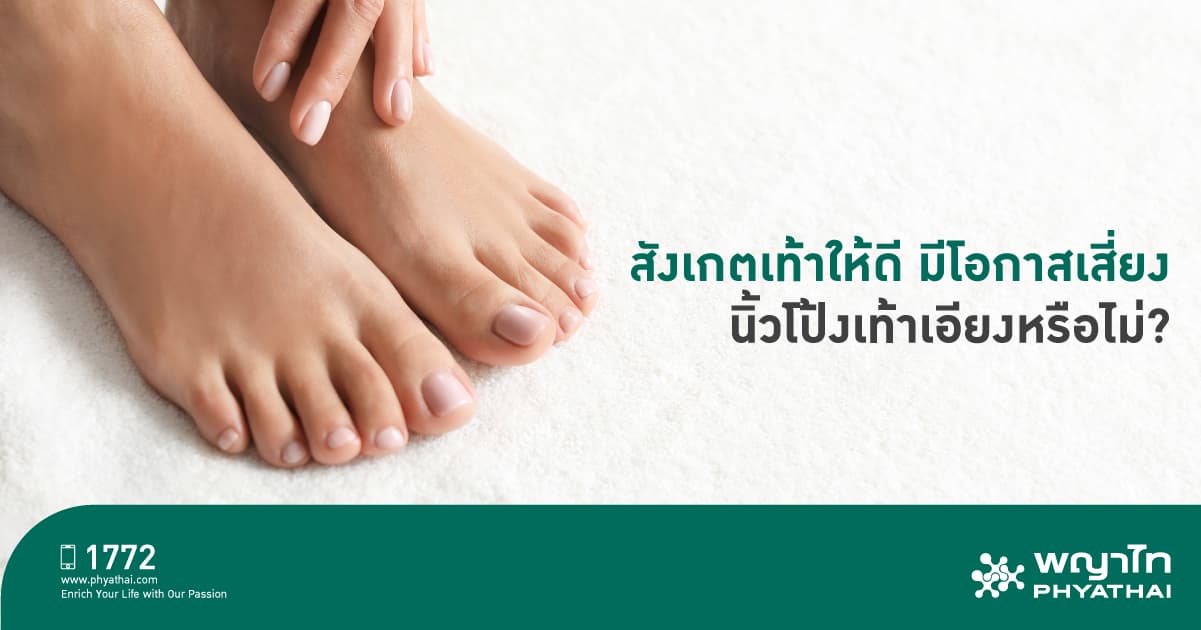
“Bunions” Hearing the name of this condition, many people might think it doesn’t exist in the world. However, in reality, it is one of the common foot abnormalities. In severe cases, the big toe tilts so much that it overlaps with the second toe, causing pain. To help us observe ourselves and those around us whether “there is a risk of having bunions or not”, getting to know this condition better is something that should not be overlooked.
What are bunions and who is at risk?
“Bunions” is a condition similar to “flat feet”. It is partly caused by genetics, but it is not directly inherited in a way that if the mother has it, the child will definitely have it. Instead, it occurs randomly. If a relative or someone in the family has had it, the children or later generations may have a chance of developing this condition. Another interesting observation is that it is more common in women than men, especially women of Chinese descent, who tend to have bunions more often than the general population.
The big toe tilts more when wearing inappropriate shoes
Bunions are usually present from the start, but wearing narrow-toed or high-heeled shoes can worsen the symptoms and increase the tilt. Although shoes are not the primary cause of bunions, they can exacerbate the condition and increase pain. Shoes with pointed, narrow toes squeeze the foot, causing the big toe to tilt more. High heels shift the body weight forward more than usual, and combined with narrow pointed toes, they further squeeze the tilted big toe, making it tilt even more. Therefore, if you have bunions, it is recommended to wear wide-toed shoes to reduce friction and low-heeled shoes to help alleviate pain from the condition.
What symptoms suggest you might have bunions?
Bunions can be noticed as early as around 10-12 years old. You will see the big toe tilting towards the second toe and a prominent bump at the base of the big toe. Patients usually visit the doctor due to pain at the bump, often misunderstanding it as just a protruding bump. In reality, the bump is caused by the abnormal tilt of the big toe bone, which causes the bone to protrude.
The level of pain correlates with foot usage; the more the foot is used, the more pain is felt. The main painful areas are the bump at the base of the big toe and the base of the second toe. In severe cases, even walking barefoot without the bump rubbing against shoes can cause pain. If symptoms are this severe, immediate consultation with a doctor for treatment is necessary.
How to treat bunions after diagnosis?
Treatment for bunions can be divided into two methods: surgical and non-surgical. Doctors will always consider non-surgical treatment first. If the patient comes with pain, the doctor will recommend changing shoes to wider ones, wearing socks to reduce friction that causes pain, and avoiding narrow-toed and high-heeled shoes.
Additionally, “big toe exercises” are recommended, which involve tilting, lifting, pressing down, and pulling the big toe outward, holding each position for 15 seconds, about 4-5 times a day. This helps the tilted big toe joint become more flexible and softer, which can reduce pain. Regularly pulling the big toe outward also slows down the progression of the toe tilting inward. However, toe exercises do not cure the condition but only help reduce pain.
If changing shoes, doing exercises, and taking anti-inflammatory medication do not improve symptoms, the doctor will consider surgery to realign the bones by correcting the tilted base bone inward and the tip bone outward, then inserting a metal pin to hold the bones in place. This will restore the normal shape of the big toe bone, eliminate the bump, and allow the patient to walk normally without pain. However, surgery is only performed when “pain prevents the patient from doing desired activities”, such as wanting to run but being unable to run long due to foot pain, or wanting to walk for a long time but needing to rest because of foot pain.
How to care for yourself after bunion surgery?
Bunion surgery to realign the bones requires a recovery period of about 6-8 weeks to allow the bones to heal well in the new position before normal foot use. Most patients have bunions on both feet, but surgery is done one foot at a time for convenience. After surgery, patients can use their feet like normal people and wear any type of shoes because the bones are fixed in the correct alignment. Most patients recover fully after surgery, with very few cases of recurrence.
Shoe selection guidelines for patients with bunions
If the pain is not severe, doctors do not recommend surgery but suggest behavioral changes, shoe adjustments, and exercises to reduce or relieve pain, allowing normal activities without pain. Recommended shoes for bunion patients should have a wide toe box. For women, an easy way to choose shoes is to buy men’s shoes but one size smaller. For example, if a woman normally wears size 8, she should buy men’s size 7 shoes. This provides the right length but with a wider toe box, making the shoes more comfortable for walking, running, and jumping, and preventing the bunion bump from rubbing against the shoe, thus avoiding pain.
Although bunions are a genetic condition that cannot be prevented, the abnormality can be easily noticed. Early consultation with a doctor will provide treatment options to reduce pain and improve quality of life. Even in severe cases, surgery can cure the condition. Therefore, if you or a family member notice an abnormal tilt of the big toe, whether accompanied by pain while walking or not, you should consult a doctor immediately. The doctor will examine, diagnose, and plan treatment to restore the patient’s quality of life and prevent severe pain in the future.
Dr. Korakot Thammaphongsri
Specialist in Foot and Ankle Surgery
Muscle, Bone and Joint Center
Phyathai 3 Hospital
