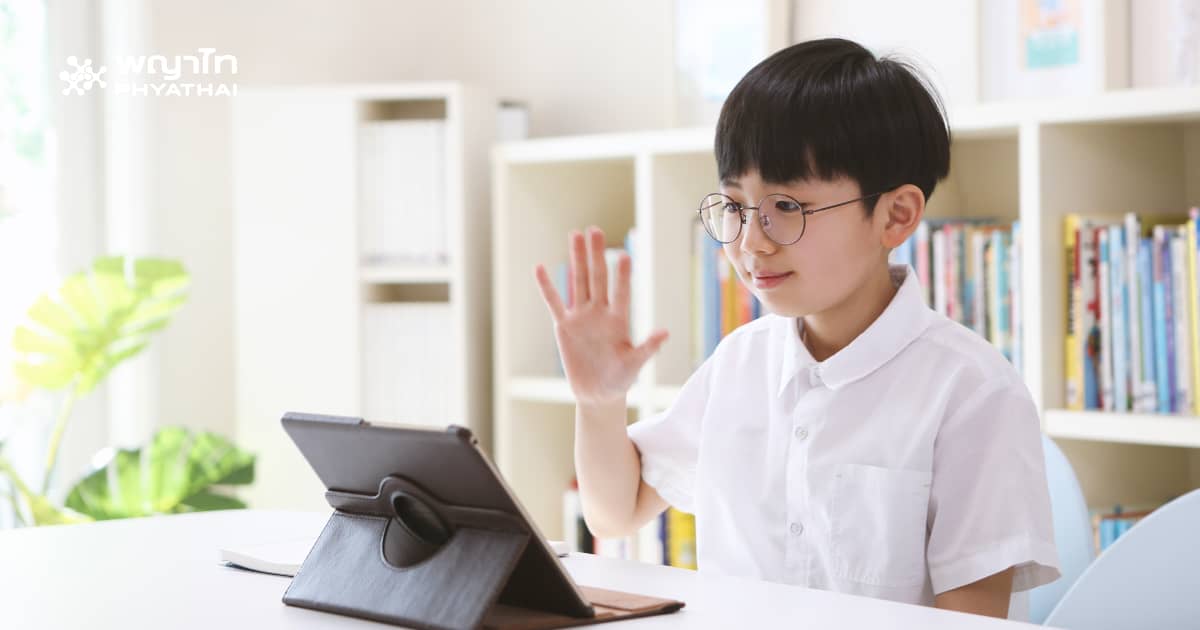
Although living in the digital age offers open learning and easy access to all information through mobile phones and tablets, it also carries hidden risks, especially to “children’s eyes” that are still in the developmental growth stage. Moreover, during the pandemic situation where children have to attend online classes every day, parents play a crucial role in monitoring and protecting their children’s eyes from being affected by prolonged screen time that may cause abnormalities.
What eye risks do children face from long hours of online learning?
Did you know that the recommended Electronics Time, or the duration children should spend looking at online media according to doctors, should not exceed 2 hours? In reality, this is almost impossible because just attending online classes takes from morning until evening, not to mention the time children spend doing homework or researching on the internet. Excessive screen time can lead to the following eye risks:
- Eye pain and eye fatigue
- Dry eyes and itching, especially in children with allergies, which may worsen symptoms
- Abnormal myopia (nearsightedness), causing blurred vision
- Possible strabismus (crossed or wandering eyes) due to overuse of eye muscles
- Abnormal development, such as difficulty communicating with others due to attention deficit or delayed speech
What symptoms should raise suspicion of abnormal vision in your child?
To protect children’s eyes from abnormalities caused by prolonged online learning or screen time, parents or guardians must closely observe for any abnormal symptoms. If any of the following symptoms are noticed, immediate consultation with a doctor is advised:
- After using a mobile phone or attending online classes for a while, the child blinks frequently or squints often. This may be due to dry eyes, similar to how dry skin causes itching. When using a computer or focusing on a screen for a long time, blinking decreases, causing dry and itchy eyes, which leads to frequent blinking or squinting.
- Headaches and eye strain after prolonged close-up viewing
- Strabismus with clear vision or intermittent squinting, complaints of double vision caused by overuse of eye muscles
- Short attention span, hyperactivity, delayed speech, difficulty communicating, or slower development compared to other children
How harmful is blue light to your child’s eyes?
We often hear that “blue light” from computer screens, mobile phones, or tablets harms the eyes. While it is indeed harmful, it may not be as severe as many think because the yellow tint of the human eye lens filters some blue light. However, blue light still has negative effects if the eyes are exposed to too much of it. The dangers of blue light to the eyes include:
- Causing eye muscle fatigue, leading to eye pain
- Disrupting sleep, causing insomnia. Normally, sunlight contains blue light, which keeps us awake during the day, and the absence of sunlight at night helps us sleep. Therefore, using devices late at night exposes the eyes to blue light, disturbing sleep patterns, leading to insufficient sleep and subsequent health problems.
As for causing macular degeneration, there is no clear research conclusion yet.
However, compared to blue light from mobile phone and computer screens, sunlight contains much more blue light. Therefore, to effectively protect the eyes from blue light damage, wearing sunglasses when exposed to sunlight during the day or avoiding looking directly at bright light is important and should not be overlooked.
How to care for your beloved child’s eyes to keep them safe from online media use?
Although it is difficult to limit screen time for children in the digital age who grow up with electronic media and online learning as part of their lives, parents can still protect their children’s eyes by following these simple guidelines:
- Keep the viewing distance as far as possible. For example, watching TV is better than a tablet, and a tablet is better than a mobile phone. Try to have your child watch on a larger screen so they can see from a distance without having to squint closely. The closer the eyes focus on the screen, the harder the eye lens works, causing eye fatigue, pain, and potentially other vision problems.
- Take frequent eye breaks as much as possible, using the 20:20:20 rule: every 20 minutes, look away from the screen and focus on something 20 feet away for at least 20 seconds. This helps reduce eye strain and delays eye muscle fatigue. Setting a timer can help remind children to take these breaks effectively.
- Encourage frequent blinking. Normally, people blink at least 20 times per minute while walking around, but when focusing on a screen for a long time, such as during online learning, homework, or gaming, blinking decreases, causing dry eyes. Encouraging children to blink often helps reduce dryness and eye strain, as blinking also gives the eyes a rest.
- Use blue light filter screens or glasses, which may help reduce eye fatigue or improve sleep quality. However, adjusting the computer’s brightness to a comfortable level—not too bright or too dark—and managing screen time appropriately can be an alternative to using blue light filters or glasses.
Children’s eyes need close care because they are still growing, and any abnormalities can affect other developmental areas. Nowadays, children are forced by their environment to use their eyes intensively from a young age, so regular eye care and health check-ups are essential. If vision problems such as myopia, strabismus, abnormal eye muscles, or lazy eye occur, timely treatment can help children recover and grow into adults with good vision, living a full and efficient life. Therefore, if parents notice any suspicious symptoms related to their child’s eyes during online learning or mobile phone use, they should not delay and consult a doctor immediately.
