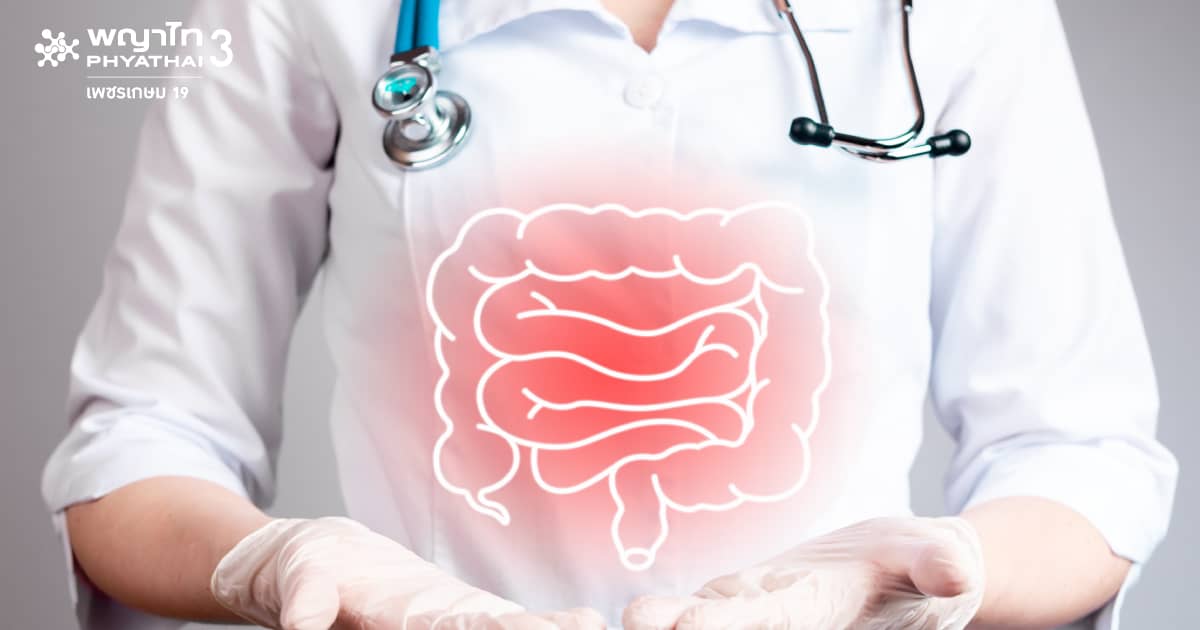
Did you know that colorectal cancer is the third leading cause of cancer death among Thais? One way to reduce the mortality rate is early detection. With advanced and safe technology for patients, such as endoscopy of the upper gastrointestinal tract, colon, and rectum, it is no longer something to fear or worry about.
What is a colonoscopy?
A colonoscopy is a small, flexible tube with a camera and light at the tip to provide clear images during the examination. This allows doctors to clearly see the pathology inside and accurately diagnose and treat various areas.
Who should be screened for colorectal cancer with a colonoscopy?
- Age 50 and above
- Having a family member with colorectal cancer
- Chronic abdominal pain, chronic bloating, blood in stool, or black stool
- Unexplained weight loss, fatigue, constipation, or alternating constipation and diarrhea
- Chronic irritation or inflammation of the intestines
- Previously detected abnormal polyps in the colon
- Frequent consumption of meat, especially red meat, high-fat, low-fiber diet
- Alcohol consumption and smoking
Benefits of colon and rectal endoscopy
- To find the cause and treat bleeding in the colon
- To investigate causes and abnormalities related to stool, such as chronic constipation or diarrhea, blood in stool, protruding polyps, bloating, abdominal fullness, anemia, and fatigue
- To detect colorectal cancer and assist in treating benign tumors (polyps) growing on the colon wall
How to prepare before the examination
- Patients must avoid high-fiber foods or fruits and vegetables about 2 days before the test
- Take medications as prescribed by the doctor to help clear stool from the colon
- Inform the doctor about any underlying diseases, drug allergies, chemical allergies, regular medications, as well as past treatments and surgeries
The endoscopy procedure is not as scary as you think
During a colonoscopy, the doctor will administer medication to relax and sedate the patient. Then, the scope is inserted through the rectum and gradually advanced to examine the colon and rectum. For upper gastrointestinal endoscopy, which includes the esophagus, stomach, and upper small intestine, the doctor sprays a local anesthetic on the throat, the patient lies on their side, and the scope is inserted through the mouth. Upper GI endoscopy helps diagnose swallowing difficulties, abdominal pain, internal bleeding, stomach ulcers, tumors, and more.
After the procedure, patients must be monitored for at least 2 hours. It is recommended to bring a relative on the appointment day. After the endoscopy, patients may experience abdominal fullness and rectal pain. If there are abnormal symptoms such as bloody stools or severe abdominal pain, they should see a doctor immediately.
Why is colonoscopy beneficial?
Because “cancer” is a serious disease, early detection in the initial stages allows for surgical treatment. Colonoscopy helps doctors clearly see the overall condition of the colon, and this procedure can also be used to remove polyps that develop.
