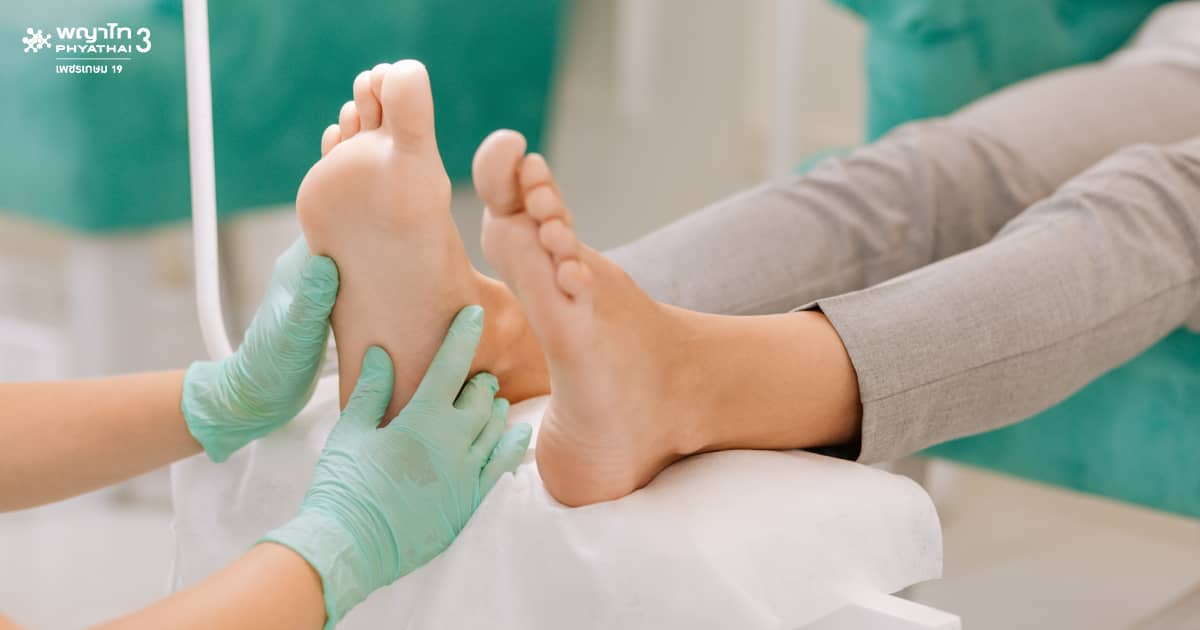
“Flat feet” may be a disease name that is not very familiar and sounds like it is not serious. However, did you know that flat feet can significantly reduce quality of life? Importantly, this condition can be noticed from childhood. Therefore, parents should get to know this condition to observe their children’s symptoms and find ways to prevent and treat it early, so that when the child grows into an adult, they will not have flat feet problems disturbing their happiness.
What is “Flat Feet” and who is at risk?
Flat feet is a condition where the inner arch of the foot is lowered along with the toes tilting outward. It can be found in both men and women, with a prevalence of about 16% in the general population.
How to recognize symptoms that may indicate “Flat Feet”?
Flat feet can be observed from childhood. The “foot shape” abnormality can be noticed around the age of 6-8 years, but most children do not experience pain because their body weight is still low, allowing normal use of the feet for walking, running, and playing. However, as they grow older or use their feet more, body weight increases, and the tendons in the arch begin to degenerate and become inflamed, causing pain. This pain usually starts from age 20 onwards, mostly between 30-40 years old. The severity of pain correlates with activity level; for example, excessive exercise, sports practice, running, walking, or jumping can cause pain, limiting normal foot movement and requiring frequent rest.
There are 2 types of flat feet to know for better understanding
Flat feet are divided into 2 types: flexible flatfoot and rigid flatfoot, which have different characteristics as follows:
- Flexible flatfoot is the most common type. The main cause is degeneration of the arch tendons, which do not function properly, causing the arch to lower and the foot to flatten. The tendons bear more weight during foot contact, leading to inflammation and pain.
- Rigid flatfoot is less common. The problem is due to abnormal bones, such as some bones being abnormally fused, causing the foot shape to be flat and deformed, resulting in pain when walking.
How to treat when diagnosed with “Flat Feet”?
Treatment approaches depend on the type of flat feet, detailed as follows:
- For flexible flatfoot, treatment is divided into two methods: “non-surgical” and “surgical.” Initially, non-surgical treatment is always considered first. The treatment includes using insoles to support the arch to restore proper foot shape, combined with tendon exercises and anti-inflammatory medication. After inflammation subsides and pain decreases, patients can live almost normally, using insoles inside shoes to maintain the foot’s normal arch. Doctors will schedule follow-ups every 2-3 months. Most cases improve, but if arch support is ineffective and the patient still experiences pain and limited activity, surgery will be considered. Surgery options include tendon repair to improve function or bone surgery to realign the flat foot. After surgery, the arch increases, pain decreases, walking improves, and activities can be performed without recurring pain.
- For rigid flatfoot, treatment is done by surgery to correct and reshape the bones. Since the cause is abnormal bone fusion, doctors will examine which bones are abnormal and surgically remove the fused parts.
How to take care of yourself after surgery to correct flat feet?
Surgery for flat feet does not restore the arch to a perfect normal shape but allows the foot to be used for activities normally without pain. Generally, surgery is done one side at a time, with a cast applied for about 6 weeks to 2 months to allow the bones or tendons to heal properly and bear weight normally. After recovery, doctors still recommend wearing arch-supporting insoles regularly to maintain the foot’s shape as best as possible. Once fully recovered, the foot can be used like a normal person’s without pain.
Although flat feet is not a dangerous disease, if left untreated, it can destroy happiness and quality of life. Prevention can start from childhood by parents regularly observing their child’s foot shape for abnormalities. If abnormal flat foot shape is noticed, it is important to see a doctor promptly to adjust shoes with arch support from an early age, which helps reduce long-term problems as the child grows.
