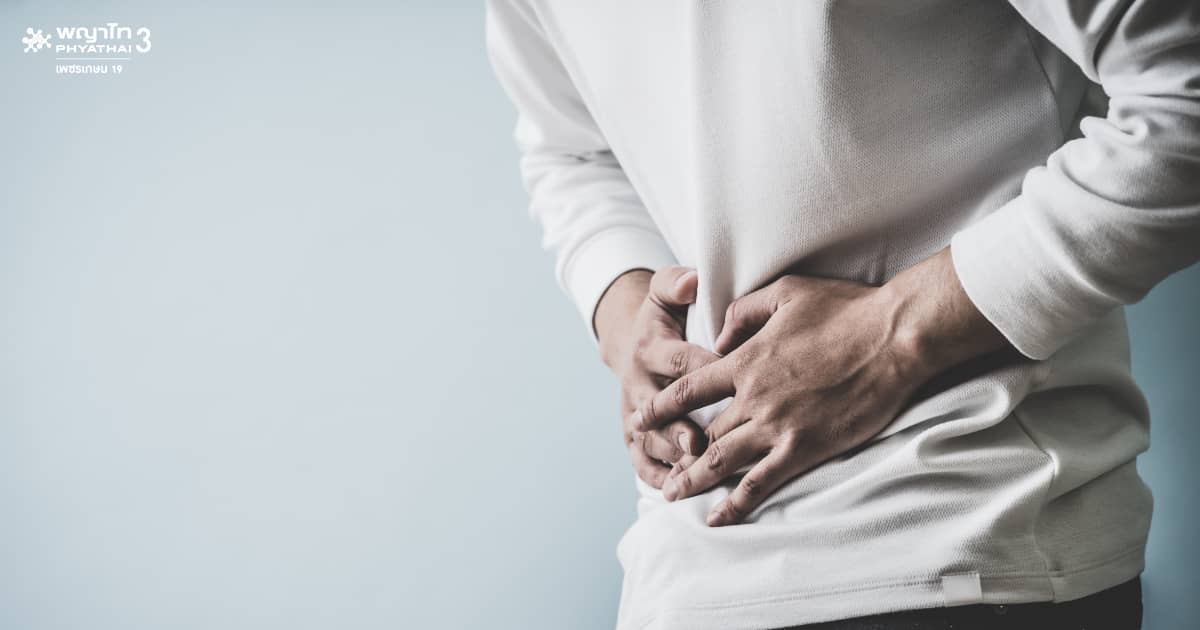
Do you or someone close to you have yellow eyes or yellow skin? Or do you have abdominal pain? If yes, don’t wait. Get examined and diagnosed immediately because you might have “bile duct obstruction from gallstones.”
When talking about yellow skin and yellow eyes, also known as jaundice, many people often think only of liver-related diseases. But in fact, it could be other diseases as well, especially the topic we will discuss this time: bile duct obstruction from gallstones. Patients with problems related to the bile duct and pancreas will start showing symptoms such as yellow skin, yellow eyes, or abdominal pain. Some may experience abnormal liver and pancreas function.
Because the bile duct system is important
All systems in the body are important. Bile is also important; it is produced by the liver and secreted through the bile ducts, stored in the gallbladder to concentrate the bile. When food reaches the upper small intestine, hormones are secreted to stimulate the gallbladder to contract and release bile into the bile duct. Digestive juices produced by the pancreas join together before flowing into the opening in the upper small intestine. Bile produced by the liver and pancreas plays an important role in digesting food and absorbing fats. Oh, don’t say it’s confusing yet. Try to open your mind and read through the process step by step again. It will help you see the importance of the bile duct system more clearly.
Why does the bile duct get obstructed?
Bile duct obstruction can occur at any position within the bile duct system. The obstruction is often caused by gallstones and tumors. When the bile duct is obstructed, bile backs up into the liver and then enters the bloodstream to various parts of the body, causing the patient to have yellow skin.
ERCP: 2-IN-1 diagnosis and treatment
If you notice abnormal symptoms, don’t wait. See a doctor for examination and treatment. But don’t worry too much because nowadays, ERCP (Endoscopic Retrograde Cholangio Pancreatography) is an important procedure that helps diagnose and treat diseases related to the bile duct and pancreas, whether it is bile duct obstruction from gallstones, tumors, fibrosis, and others. Pancreatic duct obstruction from stones or tumors, especially in cases of pancreatitis caused by gallstones blocking the common opening of the bile duct and pancreatic duct, can be well diagnosed and treated.
Is ERCP scary?
During ERCP endoscopy, an anesthesiologist will inject medication into the bloodstream to make the patient sleep, so you don’t have to worry about any sensations during the procedure. Then the doctor will insert the endoscope through the mouth, into the stomach, and down to the small intestine to find the bile duct opening. Contrast dye will be injected into the bile duct, and X-rays will be taken to check for abnormalities in the bile duct and pancreatic duct.
If gallstones are found in the bile duct, the doctor may widen the bile duct opening using an electric current passed through the scope to pull out the stuck stones into the small intestine. The incision from the cut will heal normally within one week. If there is a stricture, a stent will be placed to drain bile into the intestine. After the procedure, the patient will be observed for about 30-60 minutes. When waking up, the patient may feel abdominal fullness because air was introduced into the intestine during the procedure.
Precautions before and after ERCP
Before treatment: Stop taking blood-thinning medication about 5-7 days before the procedure. Do not eat or drink for at least 6-8 hours. Inform the doctor in detail about any drug or seafood allergies.
After treatment: If you experience severe abdominal pain, vomiting, or black, tarry stools, notify the doctor immediately.
#When abnormal symptoms occur, see a doctor immediately. Don’t let stress and worry harm you.
#Many diseases that may seem scary to the general public can be diagnosed and treated within a few hours. So whenever you are ill, be confident to let a specialist take care of you.
…
Dr. Wiriya Tanyawalak
Gastrointestinal Endoscopy and Liver Disease Center, Phyathai 3 Hospital
For more information, call 02-4671111 ext. 3260
