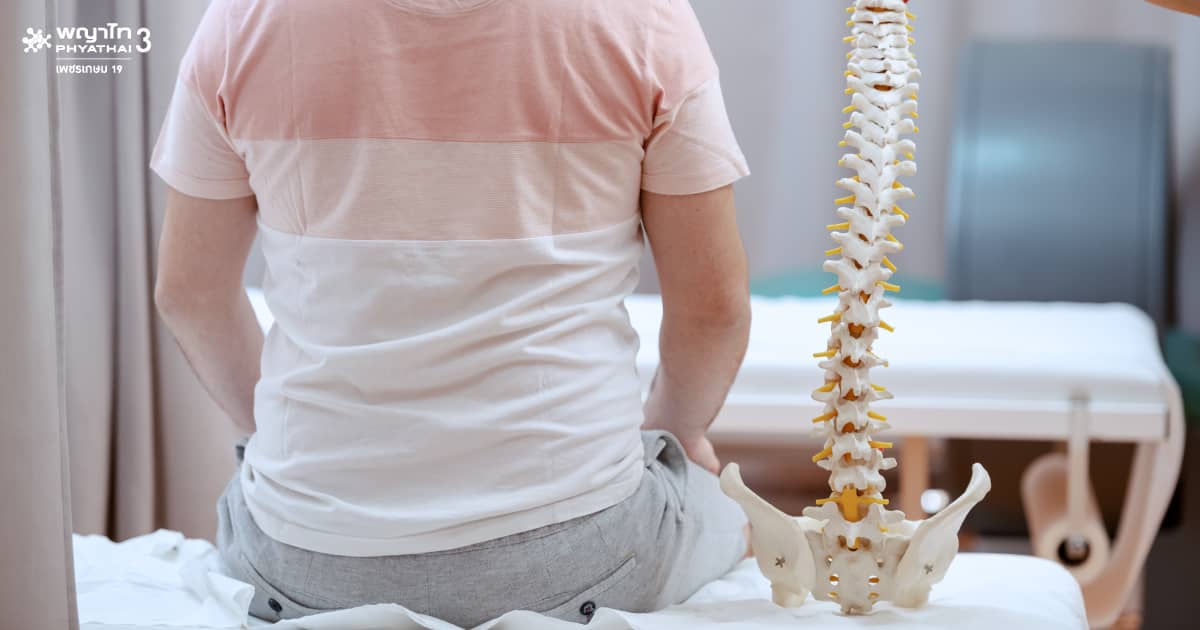
When it comes to spinal surgery, most people consider this type of surgery a major issue. It is a concern for both the patient and their relatives, which often leads to many questions. Additionally, it is commonly thought that spinal surgery is only for the elderly. However, the need for spinal surgery can occur in teenagers and working-age adults due to various causes, such as accidents involving car collisions that impact the spine causing fractures or dislocations, or from sports injuries affecting the spine like football, American football, bungee jumping, and diseases from degenerative bone structures, tumors, herniated discs compressing nerves, etc., which cannot be treated by other methods such as medication, physical therapy, or acupuncture. Therefore, surgery is the last resort that doctors use to treat patients.
What symptoms require “spinal surgery”?
Generally, before undergoing surgery, patients will have received treatment through other steps first. But when other treatments fail and the patient continues to suffer from the condition, the doctor will recommend spinal surgery. This also applies in cases of accidents and when diagnosis reveals severe symptoms. Some patients only see a doctor when symptoms are severe, so some may need surgery as the first treatment, such as those with severe back pain, weight loss, fever, muscle atrophy around the area, muscle weakness in the hands, arms, shoulders, legs, knees, ankles, inability to perform daily activities normally, and loss of control over bodily functions, especially the excretory system, etc.
Is spinal surgery dangerous for the elderly?
The term “elderly” here cannot be precisely defined by age alone as it depends on the individual. Some elderly people are physically strong and have no underlying diseases, so they can undergo treatment with minimal precautions. However, some elderly patients with multiple underlying conditions need thorough examinations by doctors regarding those diseases to assess overall health and the function of vital organs such as the heart, kidneys, and lungs. If found to be strong enough, the doctor will permit surgery.
Which spinal surgery method is safest?
Currently, spinal surgery using a microscope has been continuously developed and is widely accepted as a minimally invasive option. It is one of the surgeries that cause the least injury and minimal impact on tissues, especially muscles. The principle is surgery through a microscope, allowing the doctor to clearly see the defect. During surgery, the doctor views through a high-magnification microscope, reducing blood loss, lowering infection rates, shortening recovery time, enabling patients to return to normal life faster, reducing hospital stay, and minimizing scarring in the spinal canal, which makes any future surgeries easier.
Moreover, small-incision surgery through a microscope not only preserves the normal spinal structure but also focuses on maintaining spinal mobility as much as possible.
Will I fully recover after spinal surgery?
Almost all patients who undergo spinal surgery and follow the doctor’s instructions have good treatment outcomes. However, the results depend on the disease and its severity before treatment, such as the extent of nerve damage and impact on surrounding organs before treatment.
It also depends on the surgical technique used by each doctor. Choosing the appropriate surgical method and having a skilled surgeon can greatly benefit the patient while minimizing risks.
How to take care of yourself after spinal surgery
Some patients recover very well after surgery, but others may require a longer rehabilitation period. Physical therapy to restore muscle condition may take more time. It is important to strictly follow post-surgery care instructions, cooperate with exercise and physical therapy, and reduce risks such as lifting heavy objects and managing body weight.
