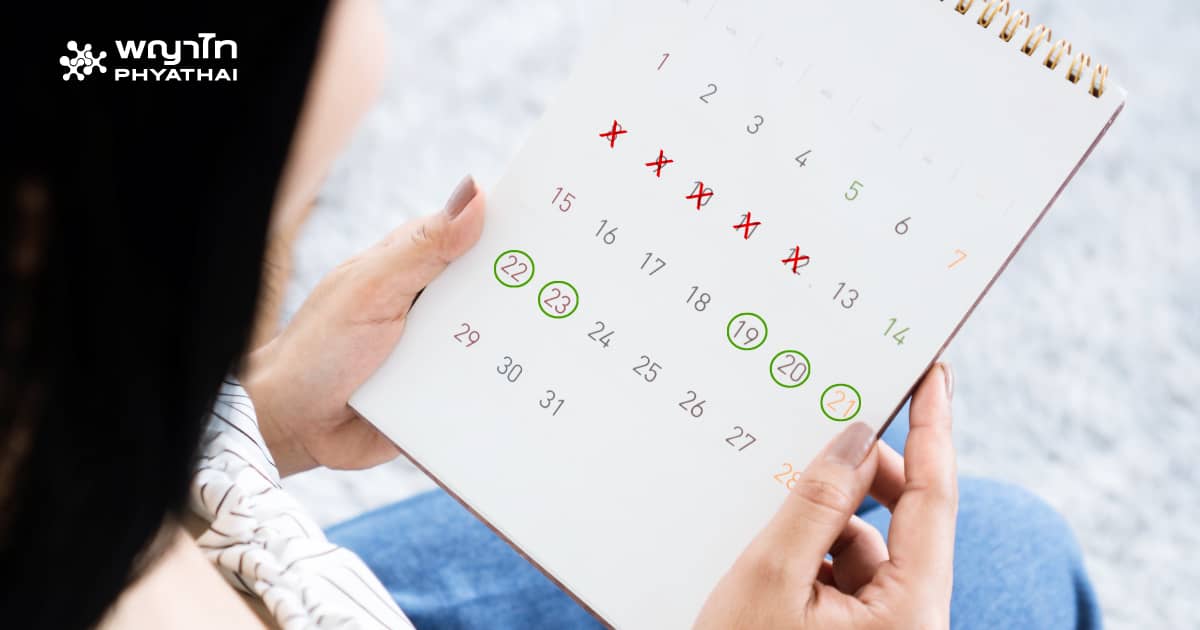
Menstruation or period occurs from the shedding of the uterine lining as blood that flows out of the vagina. This results from ovulation without fertilization each month. Even though menstruation occurs regularly each month, it does not always mean everything is normal because there may be some symptoms that are signs of abnormal illness hidden within. But what are they related to? Today, we will answer frequently asked questions to clear up the confusion.
Q: How can I tell if my menstrual cycle is normal?
A: Most women often wonder if they have some abnormalities related to their menstrual cycle but are not sure. There is a simple way to initially check if you are experiencing abnormal menstruation. Look for the following:
- Your menstrual cycles are more than 35 days apart or less than 3 weeks apart (a normal cycle should be between 21-35 days)
- You need to change sanitary pads every 1-2 hours due to heavy bleeding (more than 80 ml per cycle)
- Your period lasts longer than 7 days each cycle
- You experience severe lower abdominal pain that you have never had before or the pain increases each cycle, to the point that you cannot perform daily activities
- You have vaginal bleeding after your period has ended
- You are over 16 years old but have not yet had your period
If anyone has any of the above abnormal symptoms, they should consult a doctor immediately for examination and receive proper advice on how to proceed.
Q: Is menstrual pain a normal part of having a period?
A: During menstruation, most women experience some pain or dull aching to varying degrees due to uterine contractions, which is considered normal. However, if the pain is severe enough that you cannot go to work or perform daily activities, that is definitely not normal.
Initially, if the pain is not severe, doctors may recommend taking non-steroidal anti-inflammatory drugs (NSAIDs) to relieve menstrual pain, which may be accompanied by back pain or migraine headaches. For those with severe pain, a doctor should be consulted to investigate other causes of menstrual pain.
However, if the pain does not improve after taking these medications, you should see a doctor for a thorough examination because abnormal pain may be a sign of other health problems, such as endometriosis.
Q: My period is always late or sometimes doesn’t come at all. What could be the reason?
A: Normally, menstrual cycles occur every 28 days, with a variation of plus or minus 7 days. This means that periods occurring within 21-35 days are still considered normal. Before worrying, try to check when your last period was and whether you have a risk of pregnancy.
There are many reasons why your period may be late or missed, depending on your health condition and lifestyle. Factors that may cause late or missed periods include pregnancy, breastfeeding, eating disorders, excessive exercise, stress or anxiety, and the use of certain medications such as birth control pills, hormone-containing drugs, or medications for certain diseases that may affect menstruation.
Additionally, abnormalities in the reproductive and endocrine systems, certain ovarian diseases, and premature ovarian failure can also cause irregular menstruation. Regular health check-ups and consulting a doctor are recommended if you begin to suspect any abnormalities in your body or menstrual cycle.
