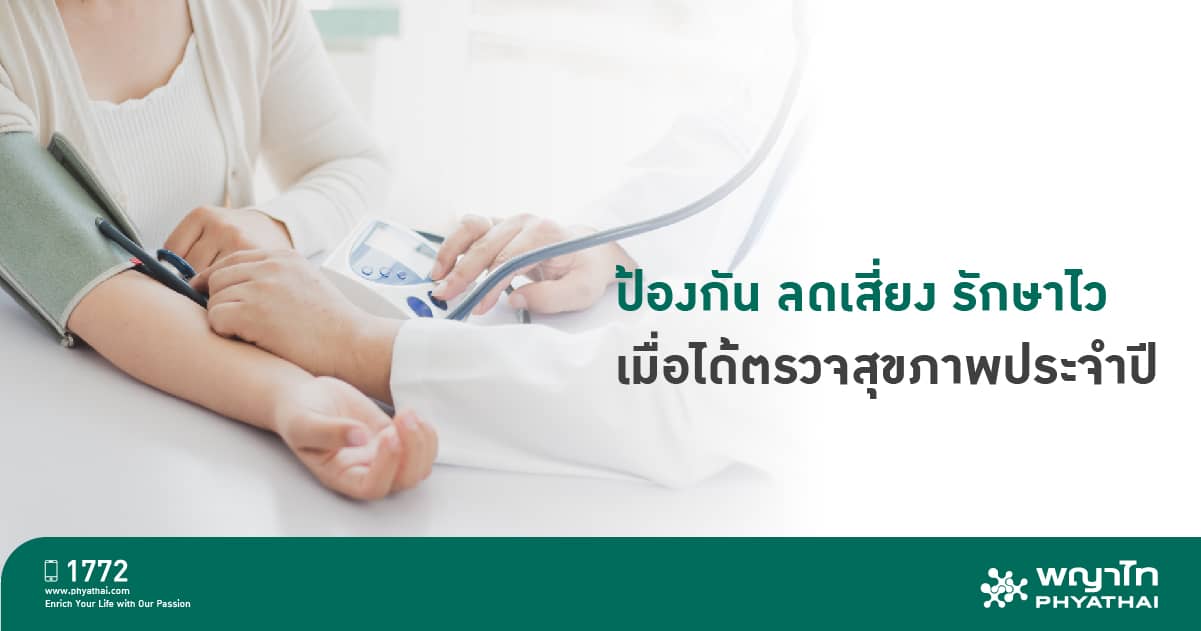
Health screening is a health promotion process for disease prevention and early detection of various abnormalities in the body. Providing advice on behavior or treatment from the early stages of the disease results in better treatment outcomes than detecting the disease at an advanced stage. It also helps reduce the chances of complications that often occur if timely and appropriate treatment is not received.
Currently, various agencies, both public and private, have organized annual health check-ups to screen for diseases, encouraging people in organizations to be aware of their health status and to modify inappropriate behaviors to prevent diseases. However, some people have never had an annual health check-up or any health screening at all.
According to the survey by the Thai National Health Examination Survey in 2014, the proportion of people unaware that they have diabetes increased from 31.2% in 2009 to 43.1% in 2014. Additionally, among those with high blood pressure, 54.2% of men and 35.2% of women had never been diagnosed with hypertension before.
Guidelines for Health Screening by the Royal College of Physicians of Thailand
The Royal College of Physicians of Thailand has proposed health screening guidelines for adults that should cover three main points:
- History Taking and Physical Examination Physicians should take a general history such as age, gender, ethnicity, type of work, underlying diseases, family history of illnesses, dietary habits, medication and substance use, exercise, and sexual behavior. The physical examination includes weighing, measuring height, waist circumference, blood pressure, pulse, eye examination, breast examination in women, and rectal examination.
- Laboratory Tests such as complete blood count, blood glucose measurement, blood lipid profile, liver and kidney function tests, and urinalysis.
- Counseling and Advice After the examination, the physician should evaluate and summarize the results to provide advice on behavior and follow-up care.
The Benefits of Annual Health Screening Are Greater Than You Think
Health screening is the process of detecting hidden diseases even when symptoms are not apparent, such as hypertension, diabetes, hyperlipidemia, early-stage cancer, and HIV infection. These diseases show symptoms only when they are severe or have been untreated for a long time. Early detection makes treatment easier and allows for prevention of long-term complications. Many diseases, if untreated, often lead to complications such as:
|
Asymptomatic Diseases That Cause Long-Term Complications |
Complications |
| Diabetes | Hypoglycemic shock, ketoacidosis, vascular and nerve damage, kidney failure, increased susceptibility to infections |
| Hypertension | Stroke, enlarged heart, aneurysm or rupture of blood vessels, kidney failure |
| HIV Infection | Fungal, bacterial, viral infections in various body systems, cancer |
| Hepatitis Virus Infection | Cirrhosis, liver cancer |
| Early-Stage Cancer | Metastatic cancer |
| Hyperlipidemia | Coronary artery disease, stroke, pancreatitis |
| Overweight/Obesity | Diabetes, heart disease, cancer |
| Fatty Liver | Chronic hepatitis, cirrhosis, liver cancer |
| Gallstones | Cholecystitis, pancreatitis |
When undergoing disease screening, individuals should receive treatment or advice if they are found to be at risk of disease, such as:
- Those found to have elevated blood sugar levels should receive advice on preventing diabetes.
- Those who are overweight should receive advice on diet control and exercise.
- Those with a family history of heart disease or gastrointestinal cancer should receive advice on behavior and additional screening as they are at risk.
For individuals undergoing annual health screening who have underlying diseases that lower immunity and increase susceptibility to infections, they are considered a high-risk group, such as people living with HIV, diabetes, kidney failure, liver disease, those without a spleen or who have had their spleen removed, as well as the elderly. They should receive advice on necessary vaccinations.
Dr. Phatthaya Riangchan
Infectious Disease Specialist
Internal Medicine Center, Phyathai Nawamin Hospital
