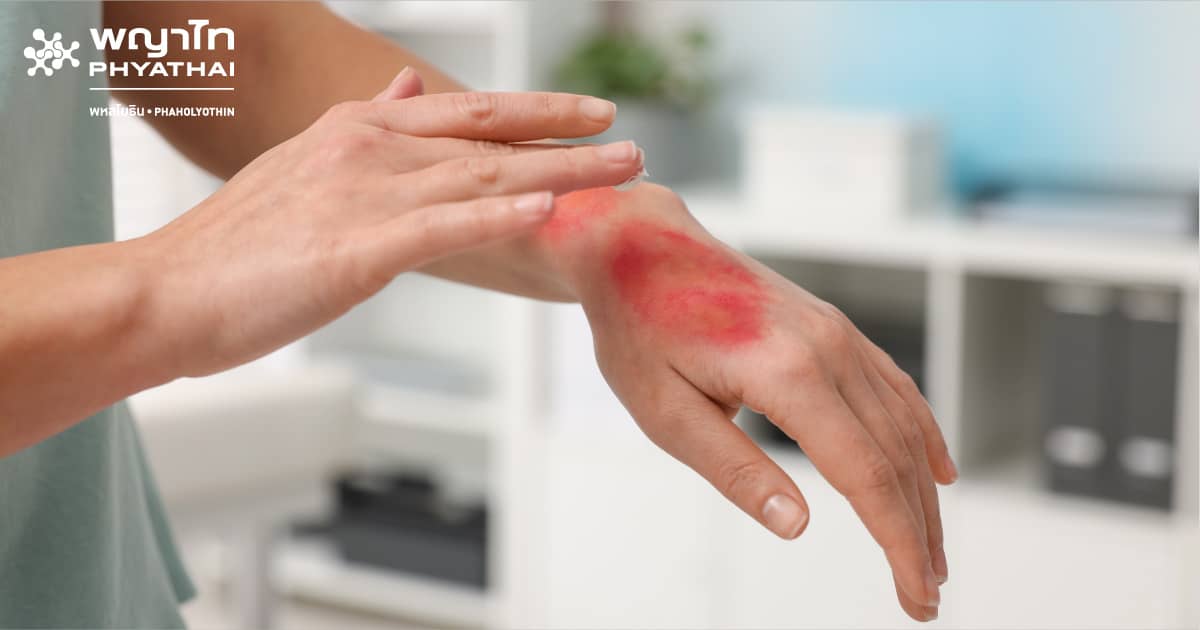
How to treat burn wounds always requires an assessment of the severity of the wound first. Proper wound cleaning, medication use, and wound dressing can help accelerate wound healing and effectively prevent infection. Correct burn wound rehabilitation, whether through medication or advanced treatment technology, is equally important. Today, we will look at how to effectively care for and rehabilitate burn wounds.
Importance and Objectives of Burn Wound Rehabilitation
Continuous good care of burn wounds and the use of appropriate medical technology help restore the skin or wound to its normal or near-normal condition, reduce the chance of scarring, and aid in restoring movement to reduce the risk of loss of function in muscles or related organs. This allows patients to confidently return to daily life and be safe from long-term complications.
How to Care for Burn Wounds for Effective Rehabilitation
The use of medication, creams, or products to accelerate wound healing should be considered based on the wound’s characteristics and severity, as well as age, health, and history of chemical or drug allergies, as follows:
- Deep or severe burns require specific medications for effective rehabilitation, such as Silver Sulfadiazine, which helps prevent infection and inflammation.
- Wounds with a high risk of infection, such as deep wounds or facial wounds, should use products with antimicrobial properties that promote wound healing, such as Mupirocin or Fusidic Acid, but always under medical advice.
- Moisturizing the skin to prevent dryness can be done using Hydrocolloid Dressing for dry wounds and Foam Dressing for wounds with mild to moderate exudate.
- For those with a history of chemical or cream allergies, Burnova Gel Plus containing aloe vera extract can be used to reduce pain and promote healing. It also contains extracts from gotu kola and cucumber to increase moisture and reduce inflammation. It can be used on the face and body but should be applied only after the wound is fully closed.
- For sensitive skin, products that help wounds heal faster may be needed, such as Scagel for fully closed burn wounds or Mebo Cream containing BETA-SITOSTEROL, which reduces swelling and inflammation, relieves pain, and accelerates healing. Dermazin Cream contains Silver Sulfadiazine, which prevents infection and reduces inflammation but should be used under medical supervision. There are also creams or gels containing onion extract (Allium Cepa) that help reduce dark spots and prevent scarring.
- Protecting the skin from sunlight and pollution requires using sunscreen with SPF 30+ applied to the wound area at least 15-30 minutes before sun exposure, avoiding sun exposure between 10:00 AM and 4:00 PM, and wearing protective clothing.
- Diet should focus on high-protein foods and zinc, which stimulate tissue repair, such as fish, eggs, seafood, and pumpkin seeds. Vitamin C helps fight free radicals and promotes collagen production. At the same time, avoid fermented, very salty, sweet, fatty, and fried foods as they may slow wound healing. Also, drink enough water as it helps transport nutrients and waste and keeps the skin hydrated.
Technologies for Burn Wound Rehabilitation and Scar Reduction
- Silicone Gel Sheets are used to cover scars after the wound has healed, worn continuously for 24 hours a day for 3 months to keep the skin moist and help reduce raised red scars, making them smoother. Silicone sheets last about 1-3 months depending on wound size and usage method and can be washed with plain water and air-dried before reuse.
- Laser Therapy helps reduce redness and dark spots on the skin by stimulating new collagen production, making the skin smoother and better in appearance. The choice of laser depends on the scar type and medical advice, such as Pulsed Dye Laser, Fractional CO2, or Picosecond Laser, but multiple sessions may be needed for the best results.
- Skin Grafting is an option for deep and wide wounds that cannot be rehabilitated by other methods, involving transplanting skin from another part of the body to the wound area.
- Therapeutic Ultrasound uses high-frequency sound waves to stimulate blood circulation and accelerate wound healing, aiding tissue repair and reducing inflammation.
Precautions or Avoidances During Burn Wound Rehabilitation
After skin or wound treatment, avoid behaviors or factors that may delay healing or cause complications, especially those that may affect the wound and newly healing skin, as follows:
- Touching the wound with unclean hands or wound care tools, which may lead to infection.
- Picking or scratching the wound area, which may cause skin abrasion, infection, or make scars raised or tighter.
- Puncturing blisters, which may cause infection or slow wound healing.
- Using harsh chemicals or products containing alcohol, which dry and irritate the skin.
- Direct sun exposure, which can irritate newly healed skin or cause scarring easily.
- Heavy exercise that may stretch or tear the wound, slowing healing.
- Smoking or alcohol consumption, which negatively affect blood circulation important for wound rehabilitation.
Observing Abnormal Symptoms of Burn Wounds During Rehabilitation
During burn wound rehabilitation, always observe the wound’s characteristics and other symptoms. If symptoms do not improve or the following abnormalities occur, promptly see a doctor, such as:
Burn wound care requires attention and continuous practice to ensure effective wound recovery and reduce possible complications. Current medical technology can effectively accelerate skin rehabilitation and reduce scarring. If abnormal symptoms or discomfort occur during rehabilitation, promptly consult a doctor for appropriate treatment. Phyathai Phaholyothin Hospital is ready to provide care with specialized doctors in burn wound treatment to ensure complete wound healing and minimize scarring as much as possible.
Dr. Kamthorn Wijitkamthorn
Surgeon, Surgery Center
Phyathai Phaholyothin Hospital
