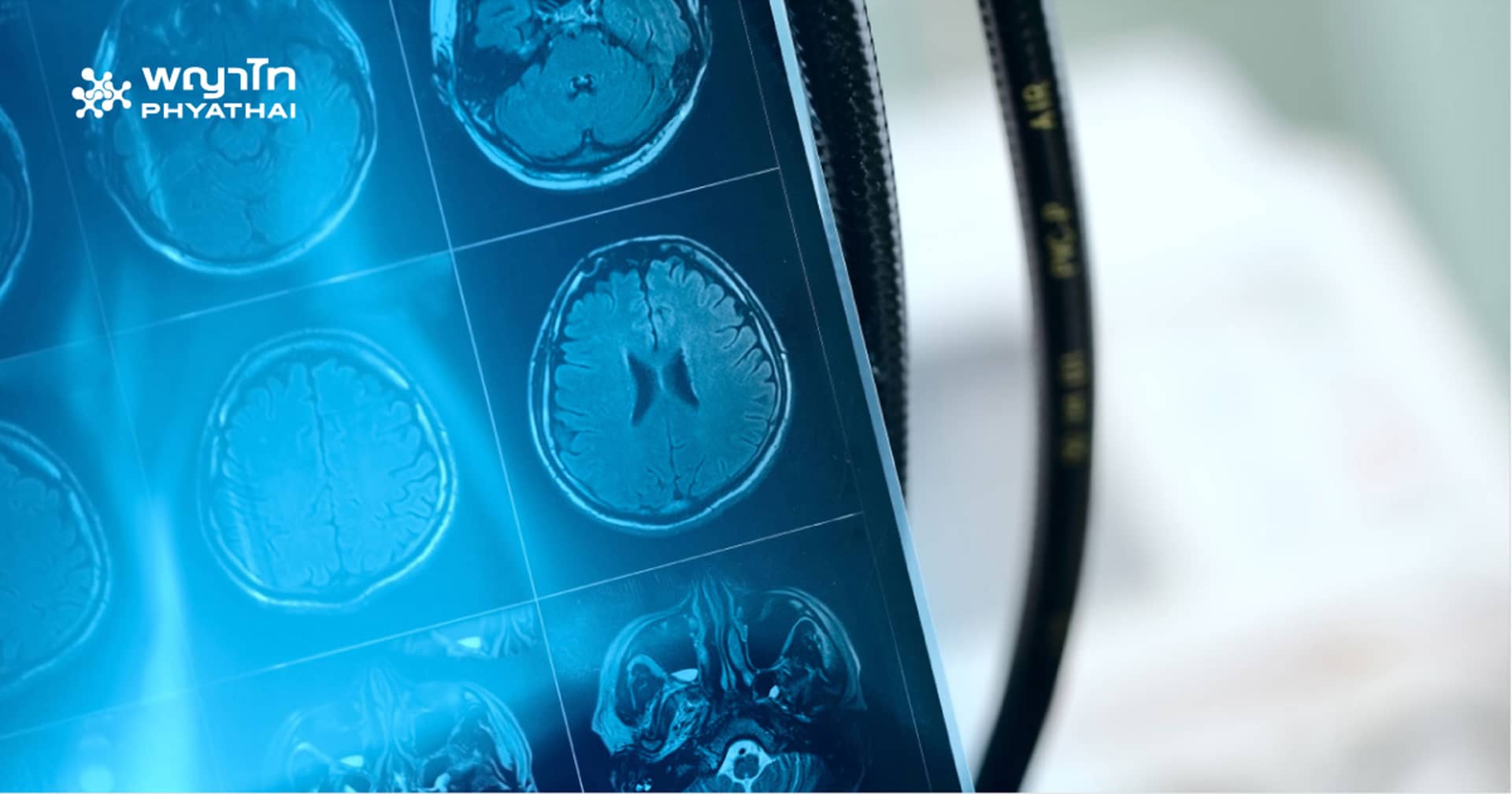
Don’t think that brain abnormality screening is scary or painful. Nowadays, there is advanced technology with efficient medical equipment such as Magnetic Resonance Imaging (MRI) that can be used to check for brain abnormalities without causing pain.
Get to Know MRI, a Diagnostic Tool
Brain examination using Magnetic Resonance Imaging (MRI Brain) is a medical device that uses radio waves combined with a high magnetic field to create images with electromagnetic fields without using X-rays to generate signals for 3-dimensional imaging that closely resemble real organs. Therefore, the resulting images allow doctors to quickly, clearly, and accurately detect abnormalities. It is often used to confirm diagnoses after other tests when compared to multiple examination methods.
Focus on Accuracy… Clearly Differentiate
MRI examinations can be used to examine almost every system of the body, such as the brain, spinal cord, entire abdominal system, bones, joints, muscles, heart, blood vessels, liver, uterus, prostate, or other internal organs. The images captured are highly detailed, providing not only high accuracy but also benefits in diagnosing diseases to assist in treatment and follow-up by doctors. It can clearly differentiate tissue and bone abnormalities and detect vascular abnormalities in the brain and torso without the need for contrast injection. During an MRI scan, the patient lies inside a machine resembling a tunnel about 60 centimeters wide, allowing imaging in all planes without moving the patient. Importantly, patients are not exposed to X-rays and do not feel any pain.
Confidence in Safety… Throughout the Examination Process
During an MRI scan, patients receive close monitoring throughout the process to ensure safety and accurate interpretation of results by a radiology specialist team (Sub-specialty radiologist) who reads the results with precision, correctness, and speed. Additionally, patients do not need much preparation and can undergo the scan immediately. The images show one organ system at a time; for example, a brain scan will display images of brain tissue and other brain-related organs but will not show organs in the chest or abdomen. The referring doctor will clearly specify which organ needs to be examined.
4 Key Advantages of Brain Abnormality Screening with MRI
- No pain
- No exposure to X-rays
- High accuracy
- Can image in all planes without moving the patient
MRI Diagnosis for Brain and Nervous System Examination
Magnetic Resonance Imaging or MRI is an electromagnetic imaging device used to diagnose patient lesions for treatment and follow-up. For brain and nervous system diseases, it can diagnose patients with the following symptoms:
- Tumors or brain cancer, mostly presenting with chronic headaches, migraines, or obstructed cerebrospinal fluid in the ventricles
- Memory loss caused by Alzheimer’s disease or cerebral ischemia leading to reduced memory
- Frequent dizziness or vertigo, possibly caused by cerebral ischemia
- Epilepsy caused by brain masses or congenital abnormalities
- Facial drooping, stiff tongue, facial numbness, ear fullness, abnormal tinnitus, or drooping eyelids caused by abnormal function of facial and ear nerves or tumors
- Detection of abnormalities in cerebral and carotid arteries, which tend to narrow with age and blood lipid levels, leading to cerebral ischemia and causing paralysis or hemiparesis
