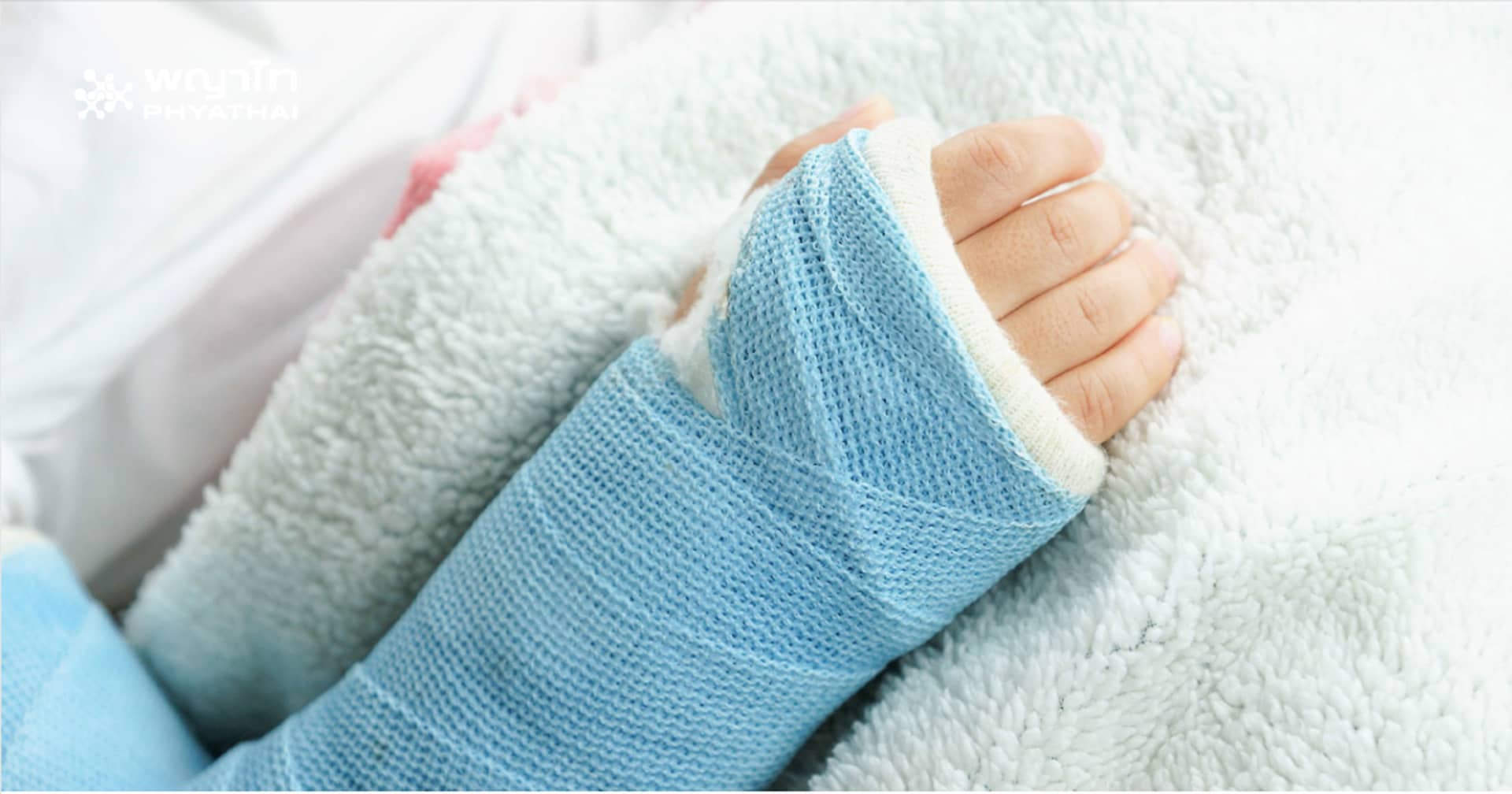
Splint is a device used to support bones and joints externally to keep the affected part still.
When should a splint be applied?
- When there is a bone fracture or joint dislocation
- To correct deformities, such as scoliosis
- To prevent muscle contracture, such as in patients with burn wounds or scalds
- To prevent bone fractures in cases of bone diseases, such as osteoporosis or bone tumors
- To support bones and joints after surgery to keep the operated joint still, promote faster wound healing, and prevent bleeding in the surgical wound or after tendon, blood vessel, or nerve repair
Precautions when wearing a splint
- Do not put weight on the splint immediately or walk on it until the splint is fully hardened. The amount of weight to bear should follow the doctor’s advice.
- Elevate the arm or leg with the splint above heart level, especially during the first 24 hours, to reduce swelling.
- Do not let the splint get wet or dirty, and avoid water entering inside the splint.
- If itching occurs, do not insert objects to scratch inside the splint as it may cause skin abrasions. Be cautious of small objects that may enter the splint, causing pressure sores and infections. Take anti-itch medication and use a hairdryer to help reduce itching.
- Regularly exercise the muscles by tensing both the muscles inside and outside the splint and moving the joints around the splinted area.
- Do not cut, trim, or remove the splint by yourself as it may cause harm to the bones, such as deformities.
- Avoid heavy objects pressing on the splint as it may cause cracks.
- Eat foods rich in meat, vitamins, and calcium to help repair damaged areas and speed up recovery.
- If there is persistent pain not relieved by painkillers, go to the hospital immediately.
- If the splint shortens or breaks, go to the hospital immediately.
- If there is numbness, or fingers or toes become pale or dark purple, go to the hospital immediately.
Signs to watch for
- The splint is cracked, feels too tight, or loose and slipping off
- Severe pain, especially where the splint presses
- The fingertips or toes on the splinted side are painful, swollen, bruised, pale, numb, have limited movement, and symptoms do not improve even when the splinted part is elevated
- Bleeding, lymph, pus, or foul odor coming from the splint
- The skin around the edges of the splint is abraded or swollen and red
Care after removing the splint
- Gently clean the skin in the area with soap and water. You may apply oil or lotion to keep the skin moisturized.
- Start moving the joints immediately when possible.
- If swelling occurs after walking or hanging the arm or leg down, elevate the arm or leg using a pillow or soft material as done when wearing the splint.
- Do not fully use the affected part until the muscles are strong or as advised by the doctor.
