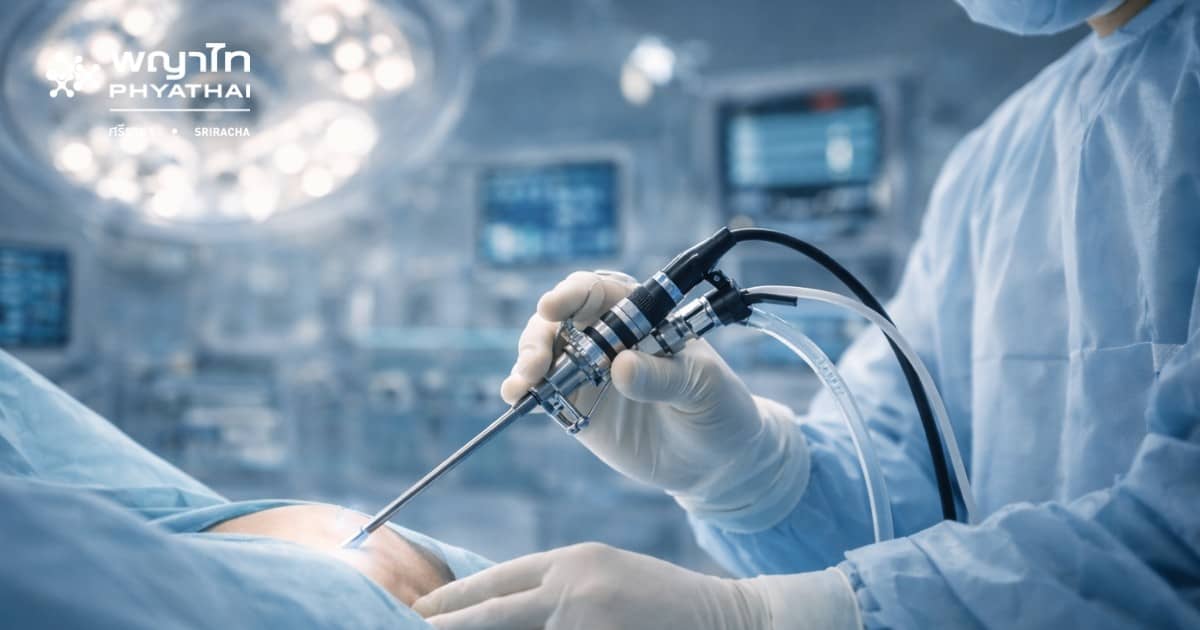
What is Arthroscopic Surgery Technology?
Arthroscopic surgery technology is a surgical procedure using a small camera inserted through an incision about 0.5–1 centimeter in size into the joint to accurately diagnose and treat abnormalities of bones, ligaments, and cartilage.
The images from the camera are enlarged on a high-resolution screen, allowing doctors to clearly see ligaments, cartilage, and cartilage inside the joint while minimizing damage to surrounding tissues compared to open surgery.
What conditions can this technology treat?
Arthroscopic surgery can be used to treat various areas such as
1. Knee Arthroscopy
- Torn meniscus
- Torn anterior cruciate ligament (ACL), posterior cruciate ligament (PCL)
- Damaged articular cartilage, injury to the knee joint surface bone
- Recurrent dislocation of the kneecap
- Stiff knee joint
2. Shoulder Arthroscopy
- Torn shoulder tendon, torn shoulder cartilage
- Recurrent shoulder dislocation
- Frozen shoulder
- Bone spurs compressing tendons
Patients with knee pain, shoulder pain, or torn ligaments from sports are often candidates for this method.
Advantages of Arthroscopic Surgery Technology
- Small incisions, reduced surgical scars
- Less blood loss
- Less pain compared to large open incisions
- Reduced risk of infection
- Faster recovery than open surgery
- Return to work or sports faster
- Suitable for working-age patients, athletes, or those who want to return to normal life as quickly as possible
How is it different from open surgery?
| Arthroscopic Surgery | Open Surgery |
|---|---|
| Small incision | Larger incision |
| Magnified images through a camera, increasing accuracy | Incision opened for direct visualization |
| Less tissue damage | More tissue damage |
| Faster recovery | Longer recovery time |
Who is suitable for arthroscopic surgery?
- Those with chronic joint pain
- Those with locked knee or shoulder joints
- Athletes with torn ligaments or damaged cartilage
- Those who want minimally invasive treatment and quick recovery
- Those with locked knee joints, unable to fully bend or straighten
- Unable to raise arm due to frozen shoulder
- Torn ligaments from accidents or sports
- Symptoms not improved after medication and physical therapy
Evaluation by an orthopedic specialist along with MRI examination of bones and joints will help plan the most appropriate treatment.
How is arthroscopic surgery different from joint replacement?
Arthroscopic surgery is “repairing inside the joint” without replacing the original joint.
Joint replacement surgery is suitable for severe osteoarthritis where the cartilage is completely worn out and requires replacement of the joint surface with artificial materials.
Therefore, arthroscopic surgery technology is usually suitable for patients in early to mid stages or those with localized injuries.
FAQ Frequently Asked Questions about Arthroscopic Surgery
Q: Does arthroscopic surgery hurt?
A: Because the incision is small, it is less painful than open surgery, with faster recovery, and pain can be controlled with medication.
Q: How many days do I need to stay in the hospital?
A: It depends on the surgical site and complexity of the condition. Some patients can go home within 1–2 days.
Q: Does arthroscopic surgery require a long recovery time?
A: Generally, recovery time is shorter than open surgery, and physical therapy can begin sooner.
Q: Does everyone with knee pain need surgery?
A: Not necessarily. Patients should be evaluated by a specialist to choose the appropriate treatment.
Summary
Arthroscopic surgery technology is a modern treatment option for joint diseases with small incisions, high accuracy, reduced pain, and rapid recovery. It is suitable for those who want targeted treatment with minimal impact on daily life.
Treatment planning should be under the care of an orthopedic specialist to assess severity and ensure safe and appropriate outcomes for each patient.
