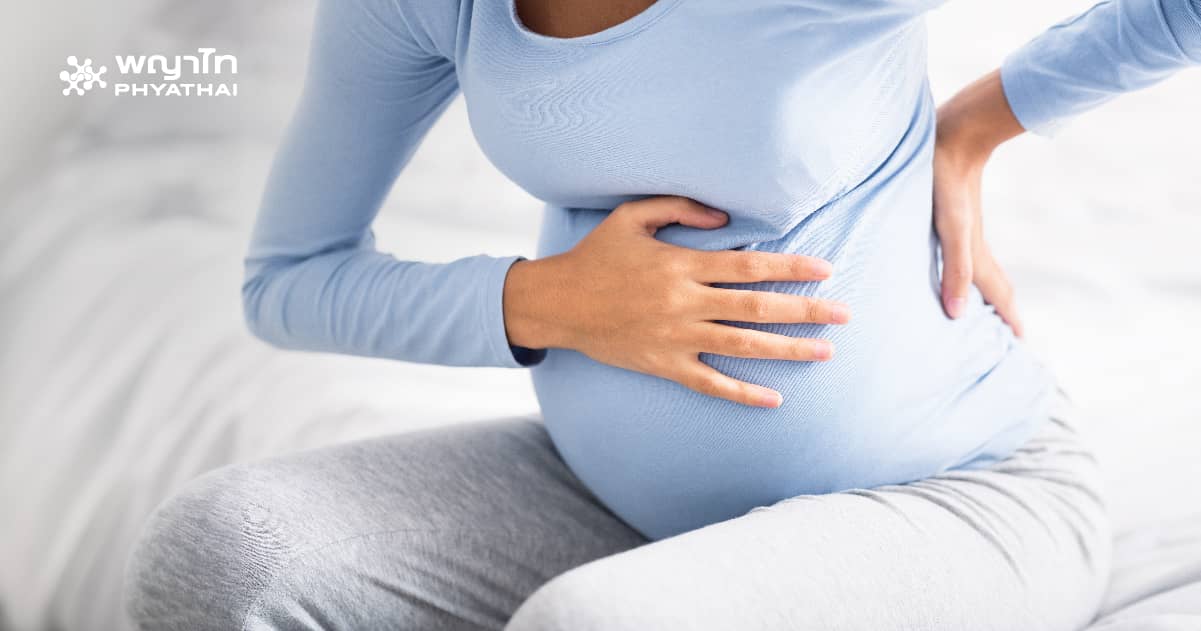
Vaginal Bleeding During Pregnancy
Danger Sign 1 is vaginal bleeding. If it occurs in the early stage, be cautious of miscarriage, ectopic pregnancy, and molar pregnancy (abnormal fertilization of egg and sperm), which appears like tapioca pearls. When these conditions expand, they grow rapidly, causing vaginal bleeding. In some cases, the bleeding resembles tapioca pearls. These are complications in the first trimester of pregnancy. In the later trimester, pregnant women should be cautious of preterm labor, issues with the placenta surrounding the fetus, and low-lying placenta, which are the first signs of vaginal bleeding.
Lower Abdominal Pain
Sign 2 is lower abdominal pain, divided into two parts: early and late stages. Early lower abdominal pain occurs due to the expansion of the pregnant uterus, causing tightness and occasional pain but not continuous. However, if the pain is on one side, continuous, worsening, or accompanied by fever, pregnant women should be cautious in both early and late pregnancy stages. This may indicate an ovarian cyst with torsion, appendicitis, or ectopic pregnancy. Therefore, pregnant women must be careful.
Late-stage abdominal pain refers to preterm labor and commonly urinary tract infections, including bladder, ureter, and kidney infections. If a pregnant woman experiences lower abdominal pain, she should promptly see a doctor to determine whether it is due to uterine contractions or infection.
Severe Morning Sickness
Sign 3 is severe morning sickness. Generally, pregnancy causes morning sickness only in the early stage. However, if the morning sickness is severe to the point that swallowing saliva is impossible and the woman can barely crawl, it is necessary to be cautious about what might be happening and why hormone levels are abnormally high. For example, if the pregnant woman is carrying twins, hormone levels will be very high. The same applies to molar pregnancy, which also causes very high hormone levels, leading to severe morning sickness. Sometimes, fetal abnormalities can also cause severe morning sickness. However, morning sickness usually decreases in the later stages, and only about 5-10% of pregnant women experience morning sickness until delivery.
Preterm Labor
Sign 4 is preterm labor. Normally, pregnancy lasts 40 weeks, but it is considered full term from 37 weeks onward. If a pregnant woman experiences labor pain before 37 weeks, it is medically considered preterm labor, which may result in the baby being born prematurely and possibly needing to stay in an incubator or require extended hospital care. Therefore, pregnant women must take good care of their health, especially during the first 37 weeks of pregnancy.
Symptoms That Require Medical Attention as They May Indicate Preterm Labor
- Intermittent abdominal pain accompanied by uterine contractions
- Back pain radiating to the tailbone, along with intermittent abdominal pain
- Pelvic pain that may radiate to the thigh
- Fluid leaking from the vagina
- Bloody mucus or vaginal bleeding
Preeclampsia
Sign 5 is preeclampsia, which has three main symptoms: headache, blurred vision, and epigastric pain. The headache occurs in the temples, forehead, and back of the head. The second symptom is blurred vision, characterized by seeing flashing lights and blurred sight. The third is epigastric pain. If these symptoms occur, when the pregnant woman arrives at the hospital, the doctor will immediately check blood pressure for hypertension and test urine for protein leakage. If both conditions are present, it indicates preeclampsia, which requires urgent delivery as it is an emergency. If left untreated, it can cause fetal death in utero, maternal cerebral hemorrhage, and potentially death of both mother and child. This is a critical emergency, so pregnant women must be vigilant and monitor for signs of preeclampsia carefully.
Normally, every prenatal visit includes blood pressure measurement because hospitals screen for preeclampsia and perform urine tests to detect protein leakage, which indicates preeclampsia. The key indicators are high blood pressure and proteinuria combined with any of the three symptoms: headache, blurred vision, or epigastric pain. At least the first two symptoms must be present. Therefore, preeclampsia is a serious condition requiring prompt delivery to prevent death. Preeclampsia usually occurs after 20-28 weeks of pregnancy.
Water Breaking
Sign 6 is water breaking. Normally, the uterus contains the amniotic sac with fluid, placenta, and fetus. When clear fluid leaks and it is not urine, it is amniotic fluid. The amount can vary depending on the leak. Water breaking usually occurs during labor. However, if water breaks early or the umbilical cord protrudes, and the cervix is open, water can leak out. If the umbilical cord protrudes and the cervix contracts, it can cause oxygen and nutrient supply problems. This is the issue with water breaking, so pregnant women must be aware that once water breaks, it increases the risk of infection entering the vagina, potentially causing uterine infection. Pregnant women should not experience water breaking for more than 12-14 hours. If water breaks before 37 weeks, it affects the fetus, so delivery will be induced early if it occurs at 37 weeks.
Decreased Fetal Movement
Sign 7 is decreased fetal movement, occurring between 32-37 weeks. After 30 weeks, the fetus moves more frequently and regularly. From 30 weeks onward, fetal movements should be counted, such as kicks. There should be at least 4 movements or kicks per hour. If fewer than 4 movements occur in the first hour, count the second hour. If still fewer than 4, it indicates a problem, such as umbilical cord entanglement or fetal death. Therefore, after 32 weeks, if fetal movement decreases, the pregnant woman should promptly visit the hospital for oxygen monitoring to determine if early delivery is necessary. Causes of decreased movement include umbilical cord entanglement, infection, oxygen deprivation from other causes such as placental abruption or low amniotic fluid.
Fever During Pregnancy
Sign 8 is fever during pregnancy, which must be taken very seriously because pregnant women have lowered immunity and are more susceptible to infections. Dr. Tharinee emphasizes caution during the first and third trimesters. In the first trimester, be cautious of fever with rash, which may indicate rubella, causing fetal abnormalities or disabilities such as cleft lip, cleft palate, or limb deformities. Fever caused by pyelonephritis, cystitis, influenza with cough and fever, or pneumonia can lead to preterm labor. Fever and abdominal pain may indicate appendicitis, which can cause miscarriage. If fever occurs, pregnant women must promptly see their prenatal doctor to identify the cause through history, blood tests, and physical examination for timely and targeted treatment.

