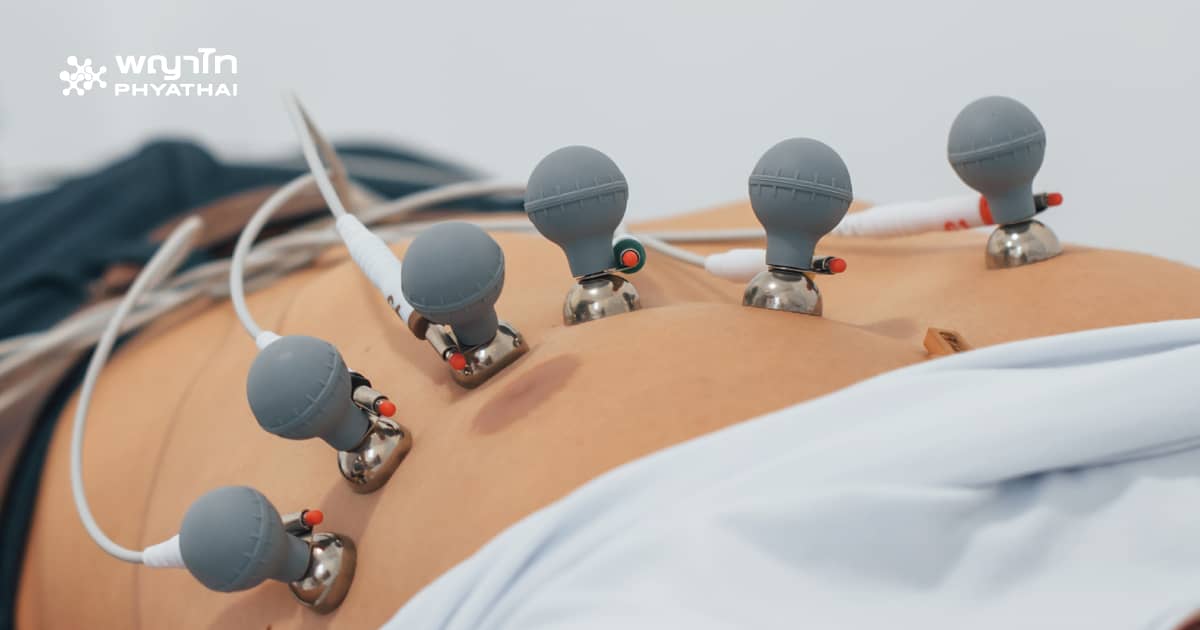
What is an Electrocardiogram (EKG)?
An electrocardiogram (Electrocardiography or EKG) is a test that detects the electrical signals released by the heart during each beat or the rhythm of contraction and relaxation. It is used to find abnormalities to assist in diagnosing various diseases such as arrhythmia, risk of heart failure, hypertension, or to find the cause of other chest pain symptoms. It is also used to check the heart condition of patients taking medications that affect the heart. EKG is usually one of the first tests chosen when a patient has a history or symptoms suspected to be related to heart disease. The test results serve as a starting point for considering further tests as appropriate.
Who should get an EKG?
- People aged 40 and above or those with a family history of heart disease
- People with symptoms suspected to be heart-related, such as palpitations, chest pain, or easy fatigue
- People with high blood lipids, high blood pressure, high blood sugar, or diabetes
- People who smoke or regularly consume alcohol
- People who do not exercise regularly
EKG Procedure
The patient will lie on their back on the examination bed. The technician will apply a small amount of gel on the chest, wrists, and both ankles, then attach electrodes at 6 points on the chest, wrists, and both ankles, one point at a time. When the technician turns on the machine, the patient should lie still. The machine will process and display the heart’s electrical activity as a graph. The entire process takes about 5-10 minutes.
Preparation before an EKG
- Avoid exercising before the test
- No need to fast or avoid drinking water
- If you are taking medication or supplements, inform the doctor before the test as they may affect the results
Interpretation and evaluation of EKG results
The doctor will interpret the results by analyzing the EKG graph to determine if the heart rate is regular or if there is arrhythmia. It also shows the coordination between the upper and lower chambers of the heart to see if it is normal. The results help diagnose other heart conditions such as:
- Myocardial ischemia
- Enlarged or thickened heart muscle
- Arrhythmia
- Coronary artery stenosis
- Pericarditis
If any heart abnormalities or diseases are found after the test, the next steps will involve care, prevention of progression, and targeted treatment to ensure a good quality of life and recovery from symptoms or diseases.
