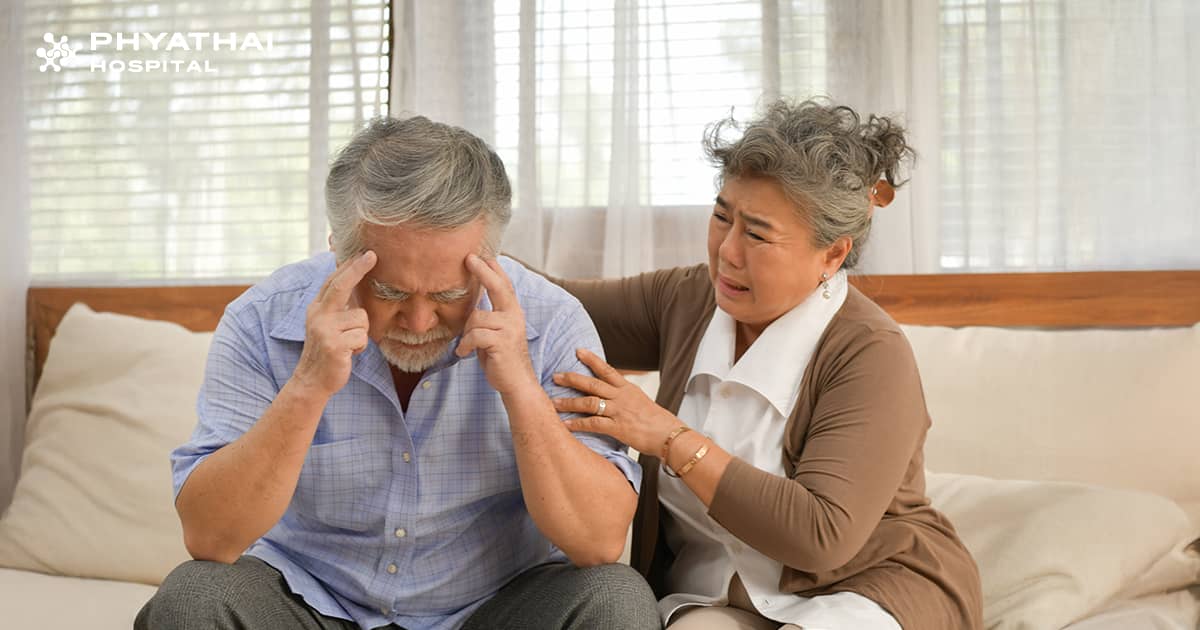
Living and working in Thailand offers many opportunities, but healthcare can be a concern. At Phyathai Hospital, we understand these worries, especially regarding critical events like ischemic stroke. We provide human-centric, specialized, multilingual care to international patients. This guide will inform you about ischemic stroke, from causes and symptoms to diagnosis, treatment, and recovery, ensuring you feel confident and cared for.
Key Takeaways
- Stroke and TIA are medical emergencies that demand immediate action.
- Timely and rapid treatment for ischemic stroke is crucial for positive outcomes.
- Most strokes are preventable by managing modifiable risk factors.
- Comprehensive rehabilitation and long-term prevention strategies are essential for recovery and preventing recurrence.
Table of Contents
- What is an ischemic stroke?
- Symptoms of an ischemic stroke
- warning signs of an ischemic stroke
- Causes of ischemic stroke
- Ischemic stroke risk factors
- How to diagnose ischemic stroke?
- Treatment for ischemic stroke
- What is the ischemic stroke survival rate?
- How do I take care of myself after an ischemic stroke?
- Ischemic stroke at Phyathai Hospital
What is an ischemic stroke?
What is ischemic stroke? A stroke occurs when blood flow to the brain is interrupted, depriving brain cells of oxygen and nutrients. This rapid cell death can cause lasting brain damage, disability, or even death. The two main types are ischemic and hemorrhagic. Ischemic strokes, making up 87% of cases, happen when a brain blood vessel is blocked or narrowed, cutting off blood flow. Even brief blockages can damage brain cells. There are two main ischemic stroke types, in which the main difference lies in the origin of the blockage :
- Thrombotic stroke : This happens when a blood clot (thrombus) forms directly inside an artery that supplies blood to the brain, obstructing blood flow. This often follows atherosclerotic disease, where plaque builds up inside the artery.
- Embolic stroke : This occurs when a blood clot, a piece of plaque, or another foreign object forms in another part of the body, such as the heart or a major artery in the neck, and then travels through the bloodstream to the brain, where it blocks a smaller vessel.
Symptoms of an ischemic stroke

Ischemic stroke symptoms often appear suddenly. It’s crucial to recognize these signs immediately, as prompt action is vital for effective treatment and better outcomes. Common symptoms include :
- Sudden numbness or weakness of the face, arm, or leg, particularly affecting one side of the body, also known as Hemiparesis. If the stroke occurs on the brain’s right side, the left side of the body will be affected, and vice versa.
- Sudden confusion, trouble speaking, or difficulty understanding speech. This can manifest as slurred speech, inability to find words (aphasia), or difficulty processing spoken language.
- Sudden trouble seeing in one or both eyes. This could be a rapidly developing vision problem, loss of vision, or visual field cuts.
- Sudden trouble walking, dizziness, loss of balance, or coordination. This might appear as falling without an identifiable cause.
- Sudden severe headache with no known cause. This is often described as the “worst headache of one’s life” and can signal a serious issue.
Warning signs of an ischemic stroke
Recognizing the warning signs of an ischemic stroke quickly is one of the most critical steps to saving a life and improving recovery prospects. The F.A.S.T. test is an easy and effective way to remember how to identify a stroke :
- F – Face Drooping : Ask the person to smile. Does one side of their face droop or feel numb? An uneven smile or if their tongue moves to one side could be a sign.
- A – Arm Weakness : Ask the person to raise both arms. Does one arm drift downward or is one arm weak or numb?
- S – Speech Difficulty : Ask the person to repeat a simple sentence. Is their speech slurred, strange, or difficult to understand? Are they unable to speak or repeat a sentence clearly?
- T – Time to Call : If you observe any of these signs, even if they go away, call emergency services immediately. Note the time the symptoms first started, as this information is crucial for treatment.
Causes of ischemic stroke
Ischemic stroke pathophysiology involves a blockage disrupting blood flow to the brain. The primary causes of this blockage are typically related to blood clots and the condition of your blood vessels :
- Blood Clots (Thrombosis and Embolism)
- Atherosclerosis or Atrial Fibrillation (Afib)
- Irregular Heart Rhythms
- Other Heart and Blood Conditions
The specific location of the brain injury from an ischemic stroke will dictate the resulting functional deficits. For instance, blockages in the middle cerebral artery (MCA) can affect motor control and speech, while those in the anterior cerebral artery (ACA) may lead to motor and sensory deficits in the lower extremities and speech difficulties.
Ischemic stroke risk factors
Understanding the risk factor of ischemic stroke is crucial for both prevention and managing recurrent events. These factors can be broadly divided into non-modifiable (those you cannot change) and modifiable (those you can manage or control).
Studies indicate that approximately 90% of strokes can be attributed to modifiable risk factors, and optimal control of these factors can prevent up to 80% of recurrent strokes.
Non-Modifiable Risk Factors :
- Age : Stroke risk significantly increases with age, doubling every decade after 55. Three-quarters of strokes occur in those 65 and older due to age-related cerebrovascular changes.
- Sex/Gender : Younger women face higher stroke risk, possibly due to pregnancy, postpartum, and hormonal contraception. Estrogen may protect premenopausal women through vasodilation.
- Family and Personal Medical History : A family or personal history of stroke, Transient Ischemic Attack (TIA), or heart attack significantly raises your risk. A Transient Ischemic Attack (TIA) is a key predictor of future stroke.
- Race : Certain racial and ethnic groups have a higher risk of stroke.
Modifiable Risk Factors :
- High Blood Pressure (Hypertension)
- Diabetes Mellitus
- Dyslipidemia (High Cholesterol)
- Smoking
- Physical Inactivity/Sedentary Lifestyle
- Obesity and Being Overweight
- Unhealthful Diet
- Atrial Fibrillation (Afib) or Other Heart Disease
- Excessive Alcohol Intake
- Sleep Apnea
- Hyperhomocysteinemia (a medical condition characterized by abnormally high levels of homocysteine in the blood)
How to diagnose ischemic stroke?

Prompt ischemic stroke diagnosis is vital for survival and minimizing long-term damage. The rapid diagnostic process includes :
- Medical History and Examination : Reviewing history and performing a physical or neurological exam to assess deficits.
- Laboratory (Blood) Tests : Checking for underlying conditions and ensuring safe treatment (e.g., blood glucose, platelet count, PT/INR).
- Brain Imaging Studies : Critical for determining stroke type and injury extent.
- Non-contrast CT scan : Quickly rules out brain bleeds.
- MRI scan : Provides more detailed images.
- Noninvasive intracranial vascular study : Recommended, but shouldn’t delay IV alteplase.
- Other Diagnostic Tests : Heart tests like ECG may identify stroke causes (e.g., atrial fibrillation).
Treatment for ischemic stroke
Acute Ischemic Stroke (Clot) Treatment :
- Thrombolysis (Clot-Busting Medication) :
- IV Alteplase (tPA) : Intravenous administration within 4.5 hours of symptom onset dissolves clots, restoring brain blood flow, saving lives, and reducing stroke effects. Earlier administration increases benefits.
- Tenecteplase : A single IV bolus can be an alternative, especially for patients eligible for mechanical thrombectomy.
- Mechanical Thrombectomy (Clot Removal Procedure) : This procedure physically removes large blood clots from brain arteries. A catheter is threaded through an artery (usually in the groin) to the brain’s blocked artery, and a stent retriever device removes the clot. Recommended within 6-16 hours (up to 24 hours in selected patients with anterior circulation large vessel occlusion), it often follows alteplase if eligible.
What is the ischemic stroke survival rate?
Ischemic stroke survival rates vary based on stroke severity, treatment speed, age, health, and care access. While 80-85% survive the initial event, 15-30% have a recurrent stroke within two years, often leading to greater impairment and higher mortality.
How do I take care of myself after an ischemic stroke?
Life after an ischemic stroke involves a journey of recovery, adaptation, and proactive prevention. Your commitment to self-care and adherence to medical advice will significantly influence your long-term health and independence.
Stroke recovery involves rehabilitation, leveraging the brain’s neuroplasticity for regaining strength and independence. A multidisciplinary team guides personalized goals, with family involvement crucial. Recovery extends beyond inpatient care, often lasting months.
Preventing another stroke is key, managed by lifestyle changes like quitting smoking, regular exercise, healthy diet, and weight management. Adhering to prescribed medications (antiplatelets, blood pressure, cholesterol, diabetes, anti-seizure, antidepressants) is critical. Life after stroke is an ongoing process requiring patience, persistence, and support.
Ischemic stroke at Phyathai Hospital
Phyathai Hospital offers world-class, human-centric stroke care for Thailand’s international community. We provide multilingual support in over 20 languages, including English, Chinese, Burmese, and Arabic, ensuring clear communication for diagnosis, treatment, and recovery.
Phyathai Hospital’s Stroke Center provides 24/7 multidisciplinary care, including mechanical thrombectomy and robotic-assisted therapy aimed at enhancing patient mobility and functional recovery. Our care extends to long-term ischemic stroke prevention through integrated risk factor management. We prioritize a holistic patient experience, inviting you to connect with us for expert advice and care.
Contact Phyathai Hospital today :
- Call Center 1772 (press 9 for ENG)
- Email: [email protected]
- Facebook Page: Expat Health & Wellness by Phyathai
References
- American stroke Association. (2019). GUIDELINES FOR THE EARLY MANAGEMENT OF PATIENTS WITH ACUTE ISCHEMIC STROKE: 2019 Update to the 2018 Guidelines for the Early Management of Acute Ischemic Stroke A Summary for Healthcare Professionals from the American Stroke Association. https://www.stroke.org/-/media/Stroke-Files/Ischemic-Stroke-Professional-Materials/AIS-Toolkit/Guidelines-for-Mangaging-Patients-with-AIS-2019-Update-to-2018-Guidelines.pdf
- Berry, J. (2019, July 12). Ischemic stroke: Causes, symptoms, and risk factors. Www.medicalnewstoday.com. https://www.medicalnewstoday.com/articles/318098
- Innovative Treatment Solving All Stroke Problems. (2023). Phyathai Hospital – Specialist Doctor and the Source of Health Knowledge . https://www.phyathai.com/en/article/3593-%E0%B8%99%E0%B8%A7%E0%B8%B1%E0%B8%95%E0%B8%81%E0%B8%A3%E0%B8%A3%E0%B8%A1%E0%B8%81%E0%B8%B2%E0%B8%A3%E0%B8%A3%E0%B8%B1%E0%B8%81%E0%B8%A9%E0%B8%B2_%E0%B9%81%E0%B8%81%E0%B9%89%E0%B8%97%E0%B8%B8
- MedlinePlus. (2019). Ischemic Stroke. Medlineplus.gov; National Library of Medicine. https://medlineplus.gov/ischemicstroke.html
- Tipayamong-Kholgul, M., Butsing, N., Mawn, B., Suwannapong, N., & Tipayamongkholgul, M. (n.d.). LONG-TERM SURVIVAL OF ISCHEMIC AND HEMORRHAGIC STROKE PATIENTS: AN ANALYSIS OF NATIONAL THAI DATA. https://www.tm.mahidol.ac.th/seameo/2018-49-2/16-7353-9-322.pdf