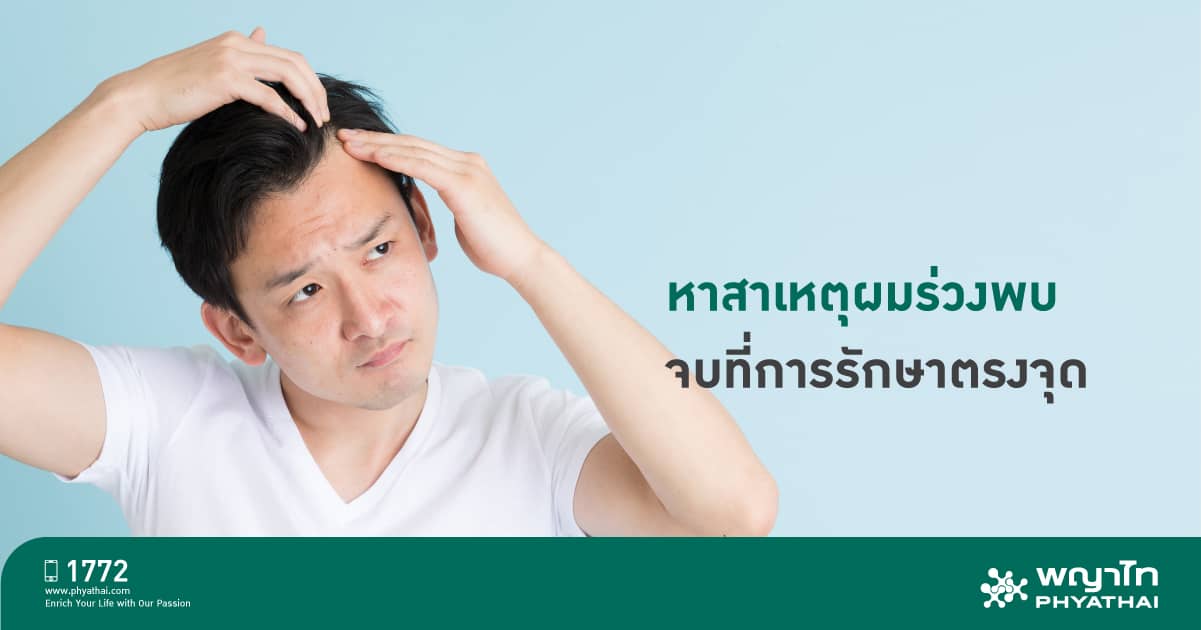
Hair, although a small thing, if problems arise, it can be a big issue because hair or hairstyle is an important part that helps enhance our personality and appearance, giving us confidence in daily life. One of the most common major problems with hair is thinning hair and hair loss.
What can hair loss tell us?
Dr. Polinee Rattanasiriwilai, a hair and scalp disease specialist at Phyathai 1 Hospital, stated that hair loss and weak scalp conditions not only affect personality, cause lack of confidence, and make one look older than their age, but may also be a sign of illness or imbalance of nutrients and hormones in the body.
Hair loss can occur in children, teenagers, adults, and the elderly. Currently, many Thais suffer from thinning hair or hair loss to the point of baldness, especially men, with over 17 million affected. However, today we have innovations that help diagnose and treat these problems effectively, so there is no need to worry anymore.
What causes hair loss?
Hair loss can be caused by many factors, but the most common cause is “genetic hair loss,” which occurs in both men and women. Other conditions that can cause hair loss include:
- Hormonal imbalance
- Overactive or underactive thyroid gland
- Deficiency of certain nutrients
- Rapid weight loss
- Use of certain medications
- Cancer treatment with chemotherapy
- Fungal infections on the scalp or severe dermatitis
- Alopecia areata (spot baldness)
- Allergic reactions to certain chemicals or shampoos
What is genetic hair loss?
Dr. Polinee Rattanasiriwilai explained that genetic hair loss occurs in both men and women, but the characteristics differ between genders:
- Women usually visit doctors because of hair thinning or hair loss in the middle of the scalp, especially where the part widens and the scalp becomes more visible.
- Men typically have genetic hair loss characterized by thinning hair with age, mostly men aged 40-50 years, with fewer hair strands per area, thinner hair strands, a wider forehead, thinning at the temples or crown, leading to baldness.
How to know if you have thinning hair or hair loss??
Thinning hair and hair loss are clearly noticeable in daily life, but often the exact cause is unknown. Sometimes people blame shampoos or hair dyes and keep trying new products, which may increase the risk of allergies.
Diagnosis of hair loss causes
Medical diagnosis can be done using a “Dermoscope and VDO microscope” (high magnification microscope and video microscope) to examine the true cause. We can use a high magnification microscope to observe scalp inflammation and hair roots, as well as hair characteristics, which helps differentiate various diseases and monitor treatment progress without the patient having to undergo painful biopsy procedures.
How to treat hair loss problems?
For hair loss treatment, Dr. Polinee Rattanasiriwilai, a dermatologist at Phyathai 1 Hospital, advises that if you experience hair loss, you should see a specialist to find the true cause for targeted treatment without unnecessary delay.
Genetic hair loss can be treated in various ways, including topical medications that increase blood circulation to the hair roots, stimulate hair growth, and reduce the effect of male hormones that cause hair loss. There are several oral medications available.
In men, treatment includes medications for benign prostatic hyperplasia to stimulate new hair growth, balance hormones affecting hair roots, and some contraceptive pills. However, these are contraindicated in pregnant women or those who may become pregnant or are breastfeeding. Doctors will plan treatment based on gender, age, and severity of the condition. Medication should be taken under close supervision by specialists due to contraindications and side effects. Additionally, avoiding chemicals, adjusting shampoos, hair care, using hair nourishing agents, and stimulants to strengthen hair roots are important complementary treatments.
New option for scalp and hair restoration: Autologous Conditioned Plasma (ACP)
Hair roots, the origin of hair strands, require nutrients and growth stimulators. If these nutrients are insufficient, it may cause hair loss. These nutrients are found in our bloodstream but may not be concentrated enough to stimulate hair growth.
Autologous Conditioned Plasma (ACP), or Platelet Rich Plasma, is an important source of these substances. It uses the patient’s blood processed through a biomedical process to separate parts rich in various Growth Factors that stimulate hair root cells to naturally regrow hair roots and also help existing hair strands become thicker and stronger.
Additionally, ACP has other properties such as promoting wound healing, new blood vessel formation, bone regeneration, and collagen synthesis. Therefore, ACP is also used in anti-aging, tendon inflammation, osteoarthritis, and chronic wound treatment.
Key components in ACP
- Platelet-derived growth factor helps hair root formation, hair transplantation, and strengthens hair strands
- Epidermal growth factor increases skin layer and hair production
- Insulin-like growth factor enhances the function of other growth factors, repairs damaged skin and hair, and slows aging
- Basic fibroblast growth factor accelerates healing of skin wounds and weak hair roots
- Copper tripeptide-1 speeds up hair root repair and protects skin from damage
Advantages of treatment with Autologous Conditioned Plasma (ACP)
- Stimulates hair growth naturally
- Highly effective with quick results
- Highly safe
- No risk of allergy
- No surgery required
- No scarring
- Convenient and fast
Contraindications for treatment with Autologous Conditioned Plasma (ACP)
- Not allowed in patients with hematologic and lymphatic cancers
- Patients with blood clotting disorders and platelet abnormalities
- Patients undergoing chemotherapy
- Patients with bloodstream infections or severe infections
- Patients with autoimmune diseases
- Patients taking blood thinners
