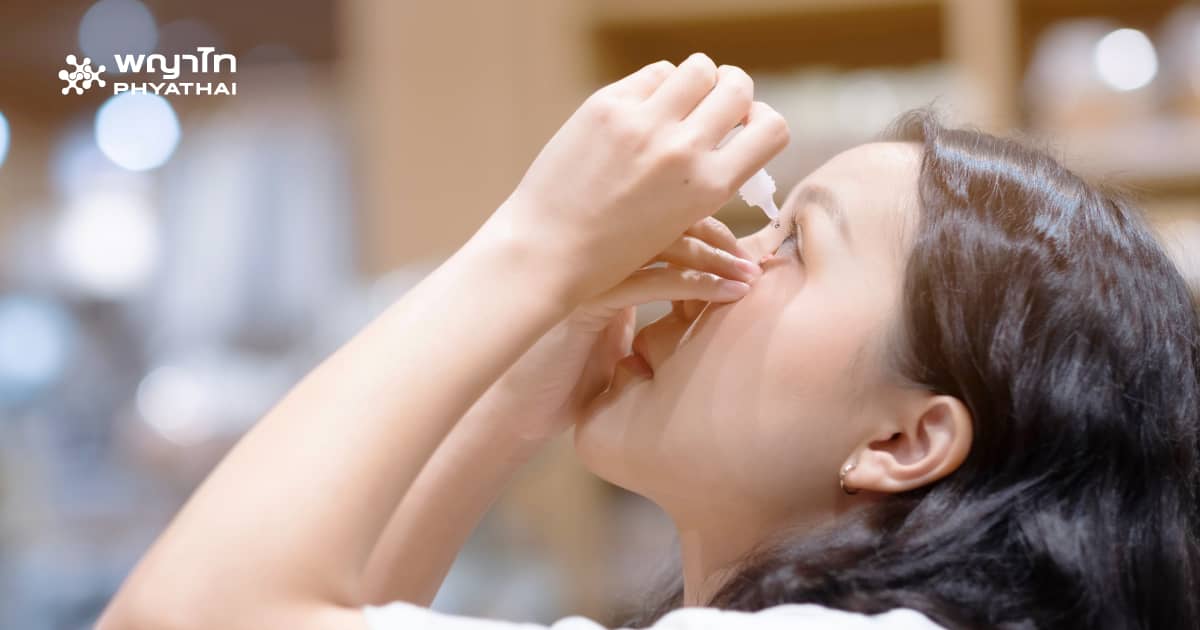
Dry Eye Disease (DED) is a condition found in approximately 5-50% of the general population, depending on age, gender, and ethnicity. According to the 2017 workshop of the Tear Film and Ocular Surface Society International Dry Eye Workshop (TFOS DEWS II), ‘Dry Eye Disease’ is defined as… a disease caused by an imbalance of tears along with ocular symptoms, which include:
- Tear film instability and hyperosmolarity
- Ocular surface inflammation and damage
- Neurosensory abnormalities, which are the main cause of dry eye disease
When having dry eye disease, it causes discomfort, fatigue, and abnormal vision, significantly affecting quality of life. Currently, there is no treatment that can restore the natural tear production process to normal.
‘Artificial tears’ help increase tear volume and are a popular treatment for dry eye disease because they are safe, easy to use, available in various formulas, and have low side effects or risks.
Types of Artificial Tears
Most artificial tears available on the market are classified as medical devices or medicines that can be purchased over the counter or at pharmacies without a doctor’s prescription. Artificial tears are divided into 3 groups based on their reaction to the eyes, including:
- Wetting agents that help lubricate the eyes and remain in the eyes for a limited time
- Multiple-action tear substitutes that improve tear quality and increase tear volume without affecting the ocular surface
- Ocular surface modulators that directly affect the ocular surface and help reduce dry eye symptoms
Other Eye Conditions Treated with Artificial Tears
Besides being used to treat dry eyes and the ocular surface, artificial tears are also used to treat other eye conditions, including:
Corneal abrasion and wound healing (Corneal Abrasion and Wound Healing)
Corneal abrasions may result from foreign bodies, injuries, chemicals, or ingrown eyelashes, causing eye pain, redness, tearing, and light sensitivity, which…
- Artificial tears help heal the outer layer of the eye surface
- Preservative-free artificial tears provide better treatment results and are better tolerated by patients
- Most artificial tears contain hydrogels, which are water-based gels that swell and do not dissolve in water. Hydrogels help stimulate and enhance wound healing on the corneal surface


Figure 1: Lower eyelid eyelashes that poke the cornea may cause corneal abrasion or inflammation
Pain and Inflammation Management
Using artificial tears combined with cold compresses helps reduce inflammation of the episcleral layer (episcleritis) after corneal surgery, such as laser eye surgery (Photorefractive Keratectomy: PRK). Preservative-free artificial tears help reduce discomfort after surgery and speed up visual recovery. Additionally, chilled artificial tears reduce corneal and conjunctival sensitivity, with 4 degrees Celsius being the most comfortable temperature. However, in some patients, artificial tears may not relieve discomfort.
Conjunctivitis
- Allergic conjunctivitis causes itching, watery discharge, swollen eyelids and conjunctiva. Artificial tears and cold compresses help reduce these symptoms. If symptoms do not improve, other medications should be considered.
- Viral conjunctivitis (not caused by herpes) causes red eyes, discomfort, and tearing. Artificial tears have been found to reduce symptoms as effectively as steroid eye drops and NSAID anti-inflammatory eye drops.

Figure 2: Viral conjunctivitis showing redness and swelling
- Bacterial conjunctivitis causes red eyes, discomfort, sticky discharge, and crusting on the eyelids. It usually resolves on its own. Using artificial tears provides comfort and helps clean the eyes. If symptoms persist after 3-4 days, antibiotic eye drops should be used for further treatment.
Keratitis
Corneal inflammation can be caused by various factors such as herpes, bacteria, fungi, contact lenses, UV light, dry eye disease, and photokeratitis. Artificial tears alone are recommended for dry eye disease and photokeratitis. For other causes of keratitis, treatment should be combined with specific therapies according to the cause.


Figure 3: Corneal inflammation from dry eye disease. The special stain shows raised spots of inflammation on the central horizontal corneal surface.
Artificial Tears Help Rewet Contact Lenses and Ease Removal
Using preservative-free artificial tears lubricates the eyes, providing comfort and keeping contact lenses moist during wear. After use, contact lenses often dry and stick tightly to the eyes. Artificial tears reduce friction between the contact lenses and cornea, making removal easier.
Foreign Body Removal
Foreign bodies on the cornea cause irritation, tearing, blurred vision, and redness. Loosely attached foreign bodies may be removed by rinsing the eyes with medical saline (normal saline) or artificial tears.
After removing foreign bodies, besides using antibiotic and pain-relief eye drops, artificial tears remain essential for continuous use to help heal the outer layer of the eye or cornea.

Figure 4: Black eyeliner ink loosely attached in the lower conjunctival sac, which may be washed out with artificial tears
