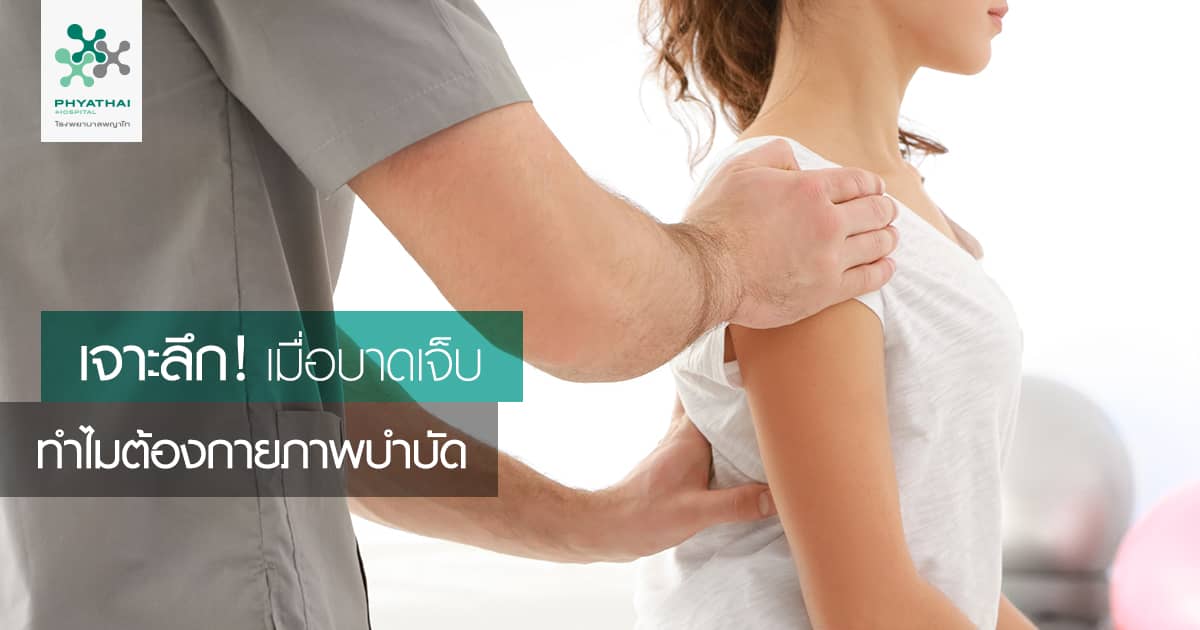
For the structure, “bone” is treated by doctors. However, for the structure such as “soft tissue”, which includes ligaments, tendons, and muscles, physical therapy is required to reduce inflammation, increase flexibility, and build stability in various movements or postures. In other words, the role of physical therapy is to push the patient’s potential… to be ready for training and further development until reaching the patient’s desired goal.
Physical Therapy Assessment.. for Injury Rehabilitation
It starts with history taking to determine the stage of inflammation, divided into two phases: the “acute phase,” characterized by pain, swelling, redness, and heat, lasting about 2-3 days depending on the patient’s strength and severity; and the “chronic phase”
Then, physical examination is performed, such as if there is shoulder pain, the shoulder will be moved to see which direction causes pain. Muscle strength and joint condition are checked to identify the exact painful structure. Next, the mechanism is examined, for example, when throwing a ball, which point hurts. Sports injuries can occur in various ways, such as from the joint alone, muscle strain, or impact. Examining the mechanism helps provide targeted treatment so the patient can return to normal or improved physical function.
Main Equipment in Physical Therapy
The first step is to stimulate repair and reduce pain quickly… but without increasing strength use yet. The three main tools are ultrasound, laser (suitable for patients in the acute phase), and shock wave (suitable for patients who have had the condition for some time or in areas appropriate for this tool).
Besides pain relief tools, other physical therapy equipment includes bicycles, weights, and resistance bands, similar to a small gym. Sports physical therapy differs from general patient therapy by including running and jumping exercises to closely match the patient’s activities.
What Kind of Injury… Should See a Doctor
Initial self-assessment involves checking the level of pain, swelling, redness, and heat. For first aid, apply cold compresses, elevate the affected limb, or wrap it to reduce swelling. If there is no improvement after 24-48 hours, a doctor should be consulted.
Pain… but Enduring is the Main Cause of Repeated Injuries!
We often hear that “once injured, it keeps happening”. This is because many people ignore the pain and continue walking despite feeling pain until it seems healed. Using muscles that are still injured causes repeated tears. Frequent inflammation leads to poor muscle fiber repair or disorganized fibers, resulting in “scar tissue”, which often leads to repeated tears in the same place, unless the person changes the type of sport they play.
“Warm-up” is an Important Technique… to Prevent Injuries
Previously, warm-ups only involved stretching muscles. In reality, muscles need blood circulation. Currently, dynamic stretching techniques are used, which involve continuous bending and stretching of the legs for about 5-10 minutes or until you feel more agile, moving lightly without stiffness or tightness.
Another important factor is “heart rate”. After warming up for a while, observe if the heart rate has increased by 10-20 beats per minute. This heart rate indicates that the muscles are warmed up because blood circulation delivers energy to the muscles. Therefore, if muscles have little or no blood flow, fatigue and injury can occur.
Enduring pain while still injured causes more structural damage, making recovery difficult. Proper care from the beginning allows muscle recovery or orderly muscle fiber arrangement, reducing the chance of repeated injury. This is why “physical therapy for injury rehabilitation” is so important!!
