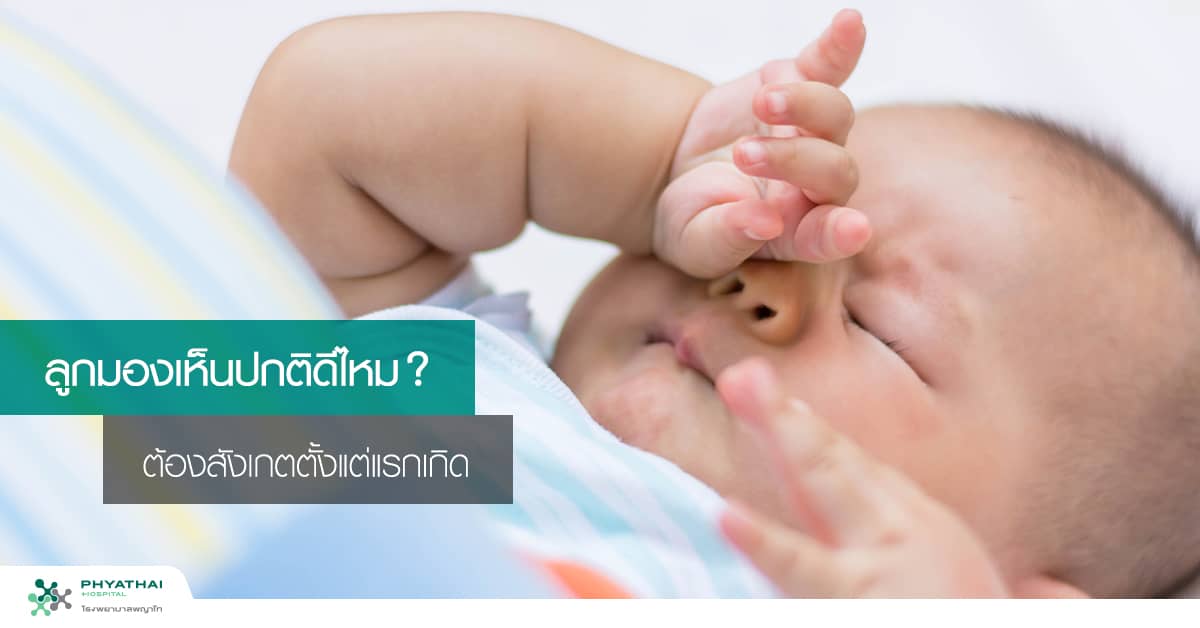
If your child is a full-term infant without any problems at birth, you still need to observe whether their visual development is abnormal. If any suspicious abnormalities are found, you should promptly take them to see an ophthalmologist. The criteria for parents to observe their child can be divided according to the child’s age as follows:
1. Age 0-2 years (infant and toddler)
- Strabismus (crossed eyes)
- Excessive tearing
- Nystagmus (involuntary eye movement)
- White or bright spots in the eye
- Cornea larger than normal
- At 3 months old, still does not follow objects with eyes
- Drooping eyelid on one or both sides, be cautious of complications such as amblyopia (lazy eye)
- Children with Down’s syndrome should be evaluated and monitored for vision
-
2. Age 2-5 years (preschool child)
- Strabismus (crossed eyes)
- Learning slower than peers
- Children who tilt their head or neck when looking
- Symptoms of itchy eyes, rubbing eyes, or blinking abnormally often
- Family history of vision problems, such as myopia before age 6
-
**It is recommended that every child should have an eye examination to assess vision at least once before starting school from age 3-4 years onwards to screen for visual abnormalities and amblyopia.
3. Age 5 years and above (school child)
- Strabismus (crossed eyes)
- Children who experience headaches, especially headaches triggered by visual tasks
- Children who squint when watching TV, looking at the board, or always need to move closer to see clearly
-
If your child has these symptoms, do not be complacent or assume they will get better on their own. You should take them to consult a doctor before your child experiences vision problems that are difficult to treat.
Dr. Warakorn Thiamthat
Ophthalmologist, Eye Center
Phyathai 2 Hospital
