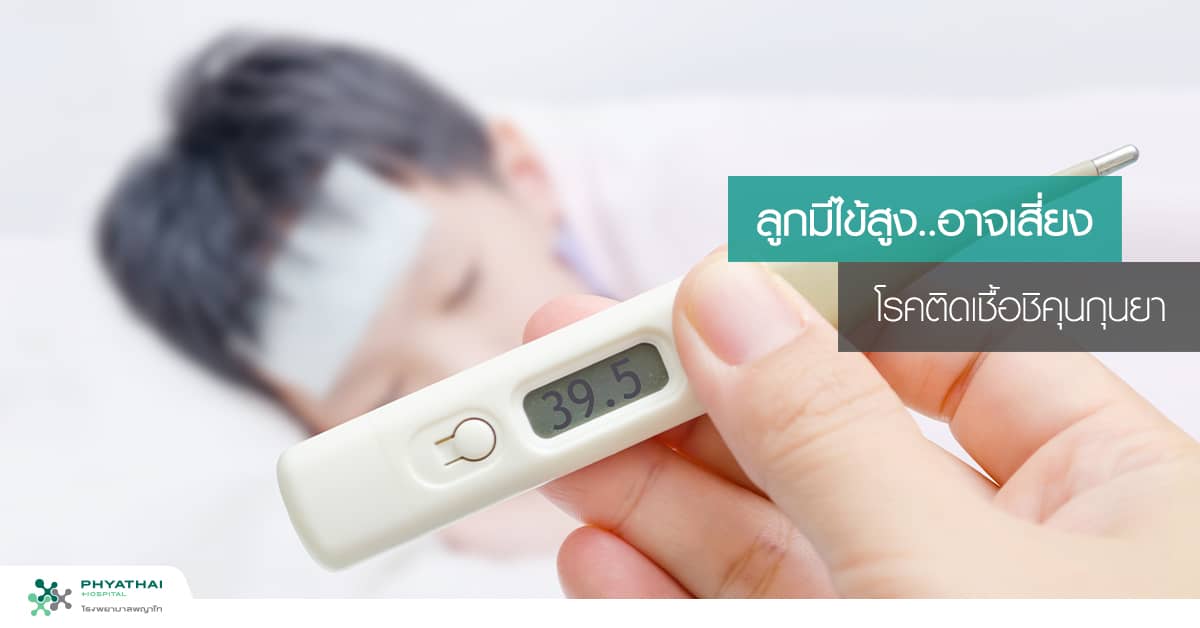
Chikungunya Infection is caused by the Chikungunya virus, transmitted by Aedes mosquitoes, including the Asian tiger mosquito (Aedes albopictus) and the yellow fever mosquito (Aedes aegypti). The incubation period is mostly 3-7 days (ranging from 1-14 days). After infection, it usually causes fever along with joint pain or arthritis. Therefore, it is commonly known in Thai as “mosquito-borne joint pain fever.”
What are the symptoms of Chikungunya?
- High fever over 39 degrees Celsius, lasting about 3-5 days (1-10 days)
- Joint pain, with about 70% of patients experiencing joint pain. Usually, more than one joint or multiple joints are affected simultaneously, starting in small joints such as fingers, toes, wrists, and ankles, extending to larger joints in the body. There may be swelling and inflammation of the joints, often on both sides, and joint pain can last for several weeks or months from the onset of symptoms.
- Skin symptoms occur in 40-70% of cases between days 3-7 after symptom onset, characterized by red spots that can be raised or flat, spreading over the trunk, arms, and legs. Most rashes are not itchy, but itching occurs in about 25-50% of cases. The rash usually resolves on its own within 7-10 days. Other less common rash types, more often seen in children than adults, include clear blisters.
- Other symptoms and conditions associated with Chikungunya include headache, fatigue, red eyes, conjunctivitis, gastrointestinal symptoms, abnormal lymph node enlargement, encephalitis, confusion, and myocarditis.
How is Chikungunya different from Dengue fever?
Chikungunya usually does not cause severe thrombocytopenia (low platelet count) leading to severe bleeding as seen in dengue fever, nor does it cause severe capillary leakage resulting in low blood pressure and shock as in dengue hemorrhagic fever.
However, Chikungunya is characterized by more prominent joint pain than dengue fever. Nevertheless, clinical symptoms can only provide preliminary diagnosis. Confirmation of infection requires additional laboratory testing.
Infected with the virus… Is it Chikungunya? Find out with this test
The best diagnosis requires laboratory testing to confirm, which includes several methods such as:
- Virus culture from the patient’s blood, where the doctor draws blood and sends it for virus culture. If the Chikungunya virus is cultured, the diagnosis is confirmed. However, due to low success rates, this method is not commonly used.
- Genetic material detection using PCR from the patient’s blood, where the doctor draws blood and sends it to the lab for PCR testing to detect parts of the Chikungunya virus.
- Serology testing from the patient’s blood, where the doctor draws blood and sends it to the lab to detect proteins produced by the body after infection with the Chikungunya virus. These proteins are specific to the Chikungunya virus.
If you have Chikungunya, how is it treated?
Since there is no specific medication for treating Chikungunya infection, treatment is symptomatic to relieve patient symptoms, such as antipyretics and pain relievers to reduce fever and joint pain, along with monitoring for complications from the infection.
Don’t want to get infected! Chikungunya prevention
Because Chikungunya is transmitted by Aedes mosquitoes, avoiding mosquito bites is the best prevention method. This can be done by sleeping under a mosquito net or in rooms with window screens. Additionally, wearing long-sleeved clothing and using mosquito repellent can help prevent mosquito bites. Eliminating mosquito breeding sites, such as removing stagnant water in holes or containers, is also important.
Dr. Renuka Charaspongpisut
Pediatric Neurology Specialist
Child and Adolescent Health Center, Phyathai 2 Hospital
