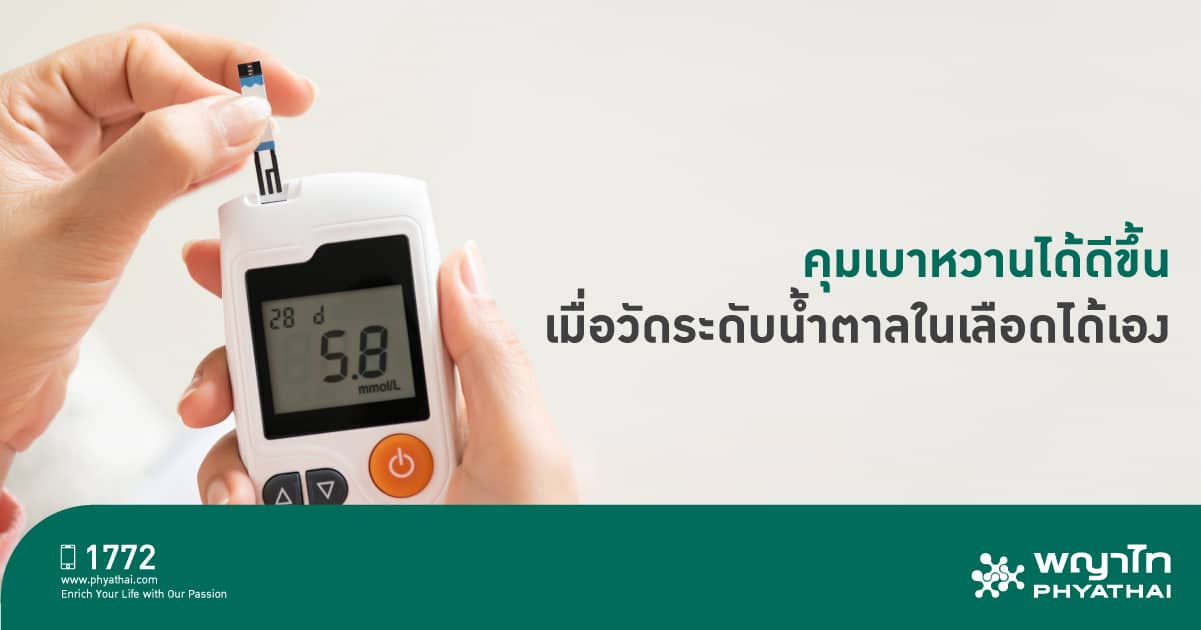
Self-Monitoring of Blood Glucose (SMBG) is an important tool to enhance the effectiveness of diabetes treatment because patients can regularly check their blood sugar levels themselves. This allows timely self-care adjustments, such as when a patient experiences hypoglycemia (dizziness, palpitations, sweating, hunger), they can immediately use the device to measure their blood sugar level and use the results to manage hypoglycemia according to the doctor’s recommendations.
In addition, regular self-monitoring of blood glucose serves as an indicator reflecting the effects of medication and helps understand how diet and exercise behaviors affect blood sugar changes in each patient. This enables better planning for appropriate blood sugar control.
Benefits of Blood Glucose Monitoring
- To screen and diagnose individuals with symptoms or risk factors for diabetes
- To monitor blood sugar levels in diabetic patients
- To evaluate treatment outcomes and assess the risk of diabetes-related complications
- To help prevent and immediately address dangers that may arise from high or low blood sugar levels in diabetic patients
How Often Should Monitoring Be Done for Each Individual and Type of Disease
The frequency of self-monitoring blood glucose should be appropriate according to the type of diabetes and treatment received, which varies for each individual. General recommendations are as follows:
- Pregnant diabetic patients should monitor blood sugar before meals and 1 or 2 hours after meals for all 3 meals, and before bedtime (a total of 7 times per day), but the frequency may be reduced when blood sugar is well controlled
- Type 1 diabetic patients treated with an insulin pump should monitor blood sugar 4-6 times per day
- Diabetic patients injecting insulin 3 or more times daily should monitor blood sugar before all 3 meals every day
- Diabetic patients injecting insulin twice daily should monitor blood sugar before breakfast and dinner to use as information for medication adjustment
- Blood sugar should be checked before and after exercise, as this is a condition with a risk of hypoglycemia
- During illness, blood sugar should be monitored 4 times daily to check for trends of hypoglycemia or hyperglycemia
- Diabetic patients injecting insulin before bedtime should monitor blood sugar before breakfast every day or at least 3 times per week
Diabetic patients should have knowledge of the correct techniques for using portable blood glucose meters, the age of test strips, storage, device maintenance, and test procedures for measuring blood glucose levels.
In cases where blood sugar is ≤ 75 mg/dL, the test results may differ from the true value by ± 15 mg/dL.
In cases where blood sugar is ≥ 75 mg/dL, the test results will be within 20% of the true value.
Patients can verify the accuracy of the device by using the fingerstick glucose meter simultaneously with laboratory venous blood glucose testing.
