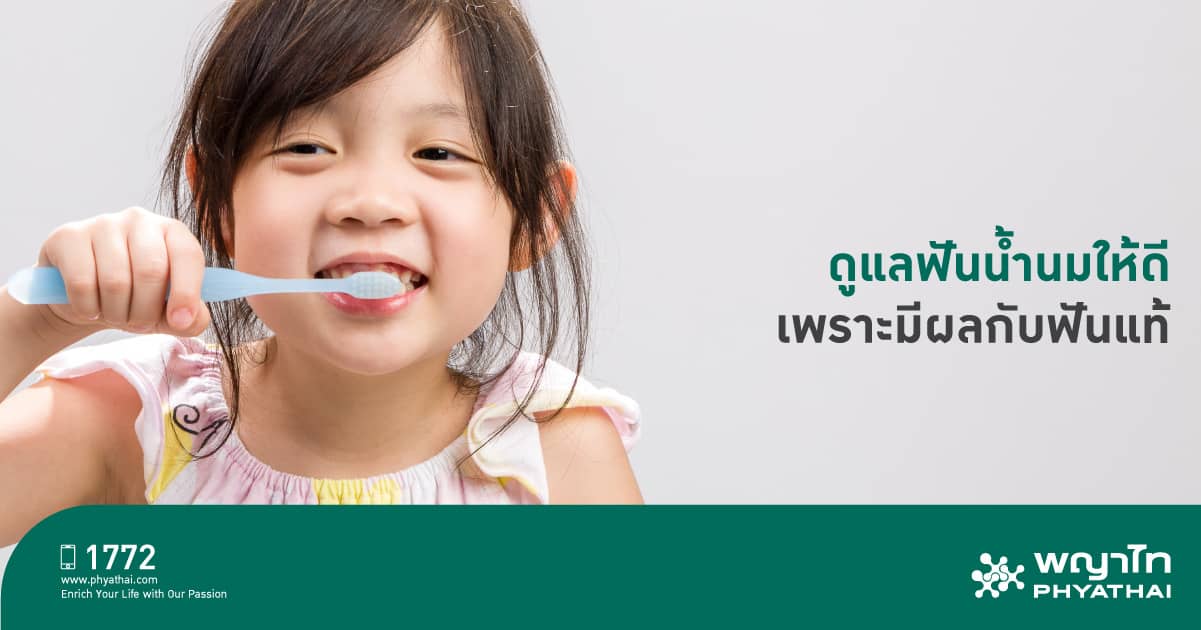
Baby teeth are a set of teeth that fully emerge when a child is about 3 years old and will start to be replaced by permanent teeth at the age of 6. Generally, between the ages of 3-6 years, baby teeth are often spaced apart in the front teeth area, which occurs in about 60% of cases. The spacing of baby teeth is beneficial for the growth of permanent teeth, allowing them to emerge without crowding because permanent teeth are much larger than baby teeth.
Problems in children with closely spaced baby teeth
In children whose baby teeth are closely spaced or crowded, it is often due to having a small jaw size or large teeth, which results in the following issues:
- There is a chance that permanent teeth will emerge crowded
- Food debris easily gets stuck between teeth, increasing the risk of baby teeth decay due to trapped food particles
If it is found that a child’s baby teeth are crowded with no spacing, continuous monitoring of tooth eruption is recommended because permanent teeth may emerge crowded or misaligned. Attention should also be given to cleaning the teeth regularly using dental floss to prevent tooth decay.
When permanent teeth emerge, especially the lower front teeth, if there is enough space around, once the baby teeth become loose and fall out on time, the tongue’s pressure can gradually push the permanent teeth to replace the baby teeth. However, if there is insufficient space or a history of closely spaced or crowded baby teeth, the emerging permanent teeth may not come in straight.
Is orthodontic treatment necessary… for baby teeth?
Orthodontic treatment during the baby teeth stage cannot guarantee that permanent teeth will come in straight, so it may be a waste of resources. However, orthodontic treatment in the baby teeth stage is necessary in cases of severe abnormalities where permanent teeth cannot emerge, or if left untreated, it may affect jaw growth and development. A major drawback for children who receive orthodontic treatment early is that if they do not understand the importance and do not cooperate, it may lead to a negative experience with dental care in the future. Additionally, orthodontic treatment during the baby teeth stage often requires further orthodontic treatment during the permanent teeth stage.
Dr. Phonkor Burana Prasertsuk
Orthodontic Specialist
Dental Center, Phyathai 2 Hospital
