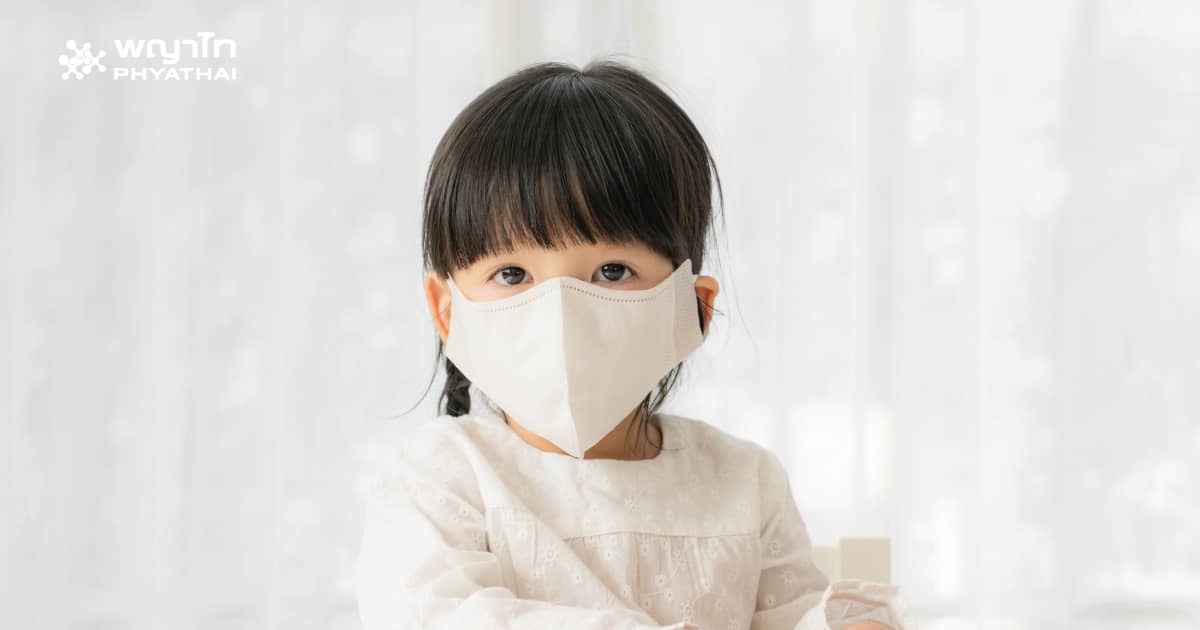
Report on Covid-19 Infection in Children from newborn to 18 years old between April 1, 2021, and November 24, 2021, with as many as 310,648 cases and a cumulative death of 59 cases (mortality rate approximately 0.019%). Most of the children who died were under 1 year old and in the age group of 12-18 years, often children with pre-existing conditions.
Symptoms of children infected with Covid-19 range from common cold to pneumonia, with the following symptoms:
- Fever, some cases with high fever up to 39-40 degrees Celsius
- Runny nose, cough, sore throat
- Noisy breathing, swollen larynx
- Rapid breathing, shortness of breath, chest retraction, wheezing lungs
Treatment of Covid-19 in children
- The treating physician will assess symptoms and consider prescribing Favipiravir for symptomatic patients
- If a child is infected with Covid-19 but asymptomatic, care should be provided at the physician’s discretion
- Use of Andrographis paniculata (Fa Thalai Chon) is not recommended due to insufficient data to advise its use in children
When children are ill from Covid-19 infection, a syndrome to watch for is Multisystem Inflammatory Syndrome, abbreviated as MIS-C, which is a multi-system inflammatory condition
MIS-C is a severe complication following Covid-19 infection. This condition is rare but serious, involving myocarditis. Symptoms may begin as early as recovery from the illness or about 2-6 weeks after infection, with all of the following symptoms:
- Fever higher than 38 degrees Celsius
- Evidence of Covid-19 infection
- At least 2 of the following symptoms:
- Gastrointestinal symptoms such as vomiting, diarrhea, abdominal pain
- Respiratory symptoms such as sore throat, cough
- Inflammation of various mucous membranes such as red eyes, rash
- Swelling of hands or feet
- Enlarged lymph nodes
- Neurological abnormalities such as seizures, confusion
**If these symptoms occur, you should immediately return to see a doctor before the scheduled appointment
How to prevent various infections?
- Children should receive vaccines against respiratory bacterial infections including conjugated pneumococcal vaccine (IPD), Hib vaccine, and pertussis vaccine. These vaccines are given to children from 2 months to 1.5 years of age.
- Children aged 6 months and older should receive the influenza vaccine annually. For children under 9 years old, the first influenza vaccination requires 2 doses one month apart, then annually thereafter like adults.
- It is recommended that children aged 5 years and older receive the Covid-19 vaccine according to the recommendations of the Royal College of Pediatricians of Thailand.
- Parents and caregivers should receive influenza vaccine, pertussis vaccine, and Covid-19 vaccine.
- Infants who are breastfed should continue breastfeeding as breast milk contains antibodies that help protect and reduce the severity of respiratory and gastrointestinal infections.
- Avoid taking children to crowded and congested places.
- Wash hands before eating or after touching shared objects.
- It is recommended that children aged 2 years and older wear face masks.
