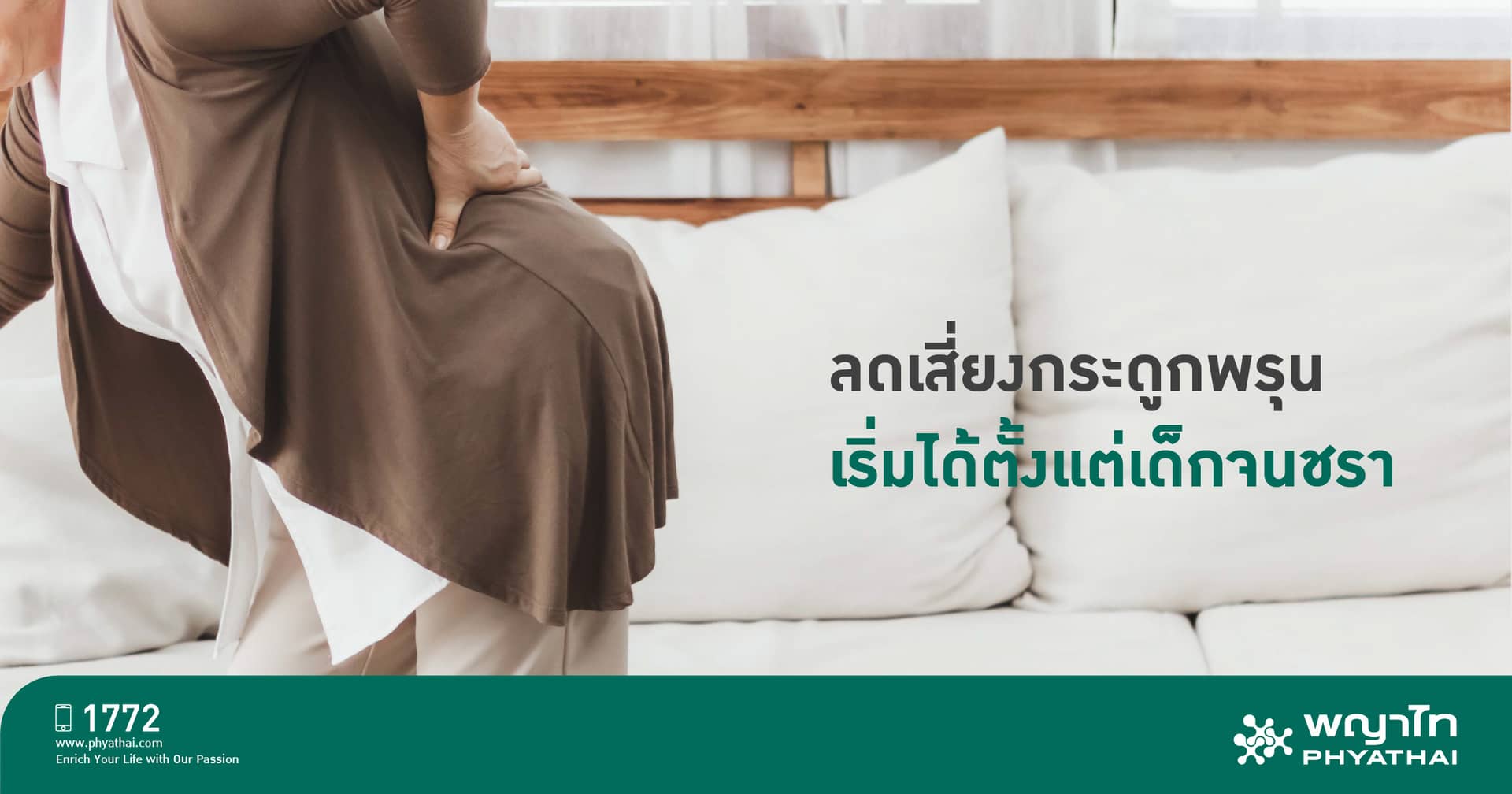
Elderly people will develop many diseases that accompany age-related degeneration. A disease that is becoming increasingly common is osteoporosis. It is disease caused by an imbalance in the bone tissue modification or replacement, which occurs naturally when the body repairs bones to ensure strength and durability.
As for why there is an imbalance in the bone modification process, there is more destruction of the bone tissues than generation, so the bones continue to deteriorate until they lose their strength, quantity and volume, thereby causing decreased ability to absorb external impacts and forces and a high likelihood of breaking.
We might be able to notice osteoporosis from decreased high and greater hunching of the back. In some cases, the hip bone or spine can also become broken. These are severe breaks that prevent patients from living daily as well as before and severely impact the quality of life of the patients and the people around them. When patients are unable to assist themselves and have to remain bedridden, they will have to spend a considerable amount of treatment expense, and this does not yet mention another serious outcome, which is premature death.
Therefore, we should pay attention to this problem through preventive screening and caring for the self to delay or slow onset of osteoporosis.
For people who experience osteoporosis or broken bones, medically speaking, the best way to try to prevent additional breaks is to maintain a balance in their bones, i.e., to have bone synthesis be greater than bone destruction, or at the very least to delay bone loss by as much as possible.
Continuous bone loss is a cause of severe osteoporosis.
People who develop osteoporosis experience continuous bone destruction. As a result, their osteoporosis increases in severity. After time passes or with the presence of additional risk factors like lack of exercise, very low birth weight, lack of calcium and vitamin D intake, consuming more than 3 cups of coffee per day, smoking, lack of sunlight exposure, regular use of steroids, chronic liver disease, kidney failure, rheumatoid arthritis, and use of anti-clotting drugs, all of these factors can contribute to rapid bone degeneration.
Elderly people also often have weak hip muscles as a comorbidity. This is caused by degeneration of the spinal discs that cause the spinal cord to become narrow, thus causing bone growth and fibrosis to put pressure on the spinal cord, leading to weak hip and leg muscles and increasing risk for slipping, losing balance, falling and tripping over one’s own legs while walking, due to muscle weakness or inability to raise the feet. It is why people with osteoporosis often cannot avoid experiencing broken bones.
Factors and Risks for Osteoporosis
Osteoporosis is a disease more commonly found in women than men and in thinner than heavier people and in people who do not often exercise. It is also very common among women older than 60 years, because premenopausal women experience rapid bone losses, especially in the first 10 years after menopause, since the estrogen hormone that is responsible for triggering cells to generate bones and halt bone cell destruction rapidly decreases in level, causing them to lose about 1-2% of their bone mass per year, and this number can increase to as high as 5-7%.
There are also other risk factors for osteoporosis like the following:
- Being a small woman with light skin and low body weight, i.e., body mass index below 19 or body weight less than 50 kilograms with a height not exceeding 160 centimeters.
- Lack of sunlight exposure, which causes Vitamin D deficiency.
- Lack of calcium intake from milk and vegetable products.
- Family history on the maternal side of broken bones caused by minor impacts.
- Rheumatoid arthritis, kidney failure and chronic liver disease.
- Being a patient who have to regularly take prednisolone or a steroid.
- Having bone cancer.
- Being on an immunosuppressant drug.
- Being on an anti-clotting drug.
- Having history of falling frequently.
How can osteoporosis be prevented?
Osteoporosis can be prevented and treated, but most people think that they must naturally develop osteoporosis as they get older, so they don’t bother to care for or treat it, which is a great pity.
Prevention should be divided by age. In childhood, the child should consume a lot of milk or dairy products and be encouraged to engage in impact exercises like running, jump rope, jumping jack, basketball, volleyball and female and male soccer. Women, in particular, should be encouraged to play non-impact sports like badminton, volleyball and jump rope.
- Adults should be encouraged to engage in impact exercises like running, jump rope and cardio.
- For elderly people, high-impact exercises might be inappropriate, since they can affect their knee joints. Therefore, we recommend light impact exercises like walking, dancing and ballroom dancing along with balance exercises like Tai Chi to train hip muscles for good balance. They should also practice standing on one leg often, although they need to have something to hang on to while exercising in order to avoid falling.
