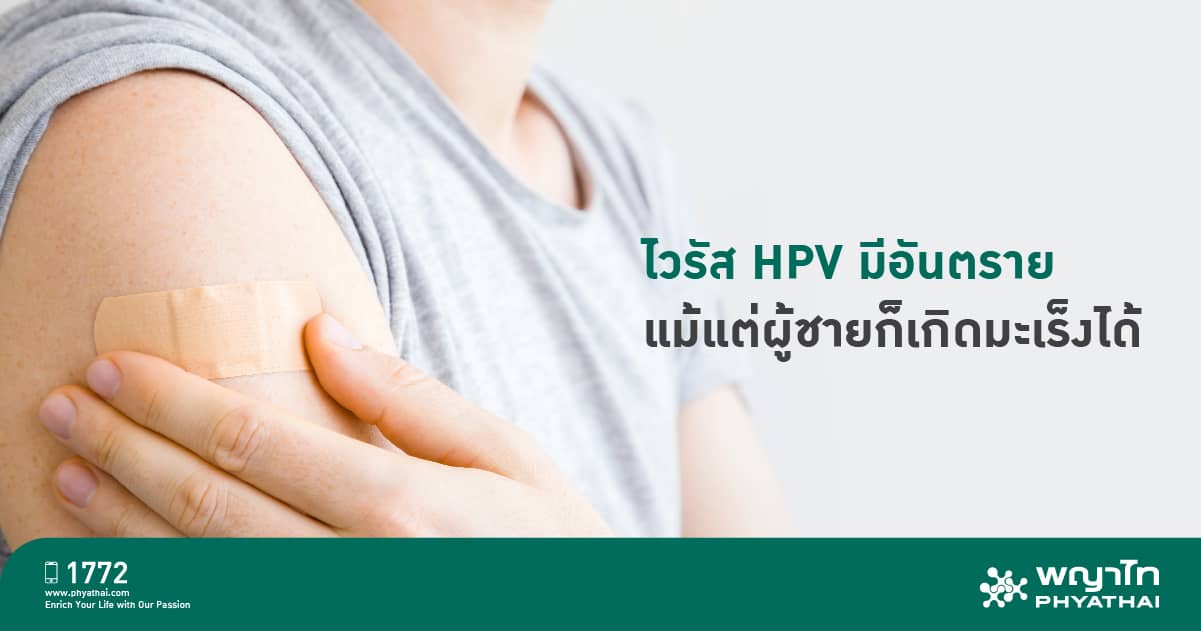
“Cervical Cancer” is the third most common cancer found in women. Statistics show that on average, 8-10 Thai women die from cervical cancer every day. So, how is cervical cancer important or related to men, and why is the cervical cancer vaccine or HPV vaccine important for everyone? Today, we have the answers for you.
‘What causes cervical cancer?’
It is widely accepted that the cause of cervical cancer is infection with the Human Papilloma Virus or HPV. Generally, when the body is infected with HPV, the natural mechanism tries to eliminate the virus completely. However, if the virus is not fully cleared, it can hide in the body for more than 10 years. The virus gradually increases in number and at some point causes changes in normal cells to become lesions, eventually leading to cervical cancer.
The effectiveness of HPV depends on health factors as well. The immune system of a person often weakens or declines with age. Therefore, it is not surprising that cervical cancer is commonly found in working-age women between 40-60 years old, due to weakened body conditions combined with long-term HPV infection.
HPV is transmitted through sexual contact
We can contract HPV or Human Papilloma Virus on the epithelial tissue, which can cause diseases in the genital and anal areas in both women and men. The virus resides in epithelial cells and mucous membranes in various parts of the body such as the mouth, throat, inside the skin, urethra of the penis, vagina, cervix, external genitalia, and anus.
This virus is usually transmitted through sexual intercourse. Current research shows that oral sex increases the risk of oral cancer. HPV infection in men who have sex with men can develop into anal or genital cancer. Therefore, men are also considered a high-risk group. Regardless of gender, having multiple sexual partners or even having a single partner who has had multiple partners increases the risk of infection.
Additionally, people with immunodeficiency, such as those living with HIV or those receiving immunosuppressive drugs for treatments like organ transplantation, are more susceptible to HPV infection than the general population.
HPV vaccination helps, but when should you get vaccinated?
Vaccination is the most effective way to prevent HPV infection. Although behavioral recommendations such as having a single sexual partner, not frequently changing partners, or screening for early detection and treatment are advised, vaccination not only prevents infection but also reduces the risk of spreading the virus. Especially for men, vaccination helps reduce transmission to partners or wives.
The vaccine can be given to both females and males, starting from ages 9 to 26 years. For those aged 9-15 years, two doses are required. For those older than 15 years who have never received the HPV vaccine, three doses are necessary.
The earlier you get vaccinated, the more benefits you gain
Knowing this, we should change our perspective on the ‘HPV vaccine’ because it is not only women who are at risk of cervical cancer from HPV infection. Men can also develop anal or genital cancer from this virus. Vaccination protects oneself and prevents spreading the virus to partners. The sooner you get vaccinated, the sooner your body develops immunity, increasing the chance of having immunity before exposure, which is definitely better.

