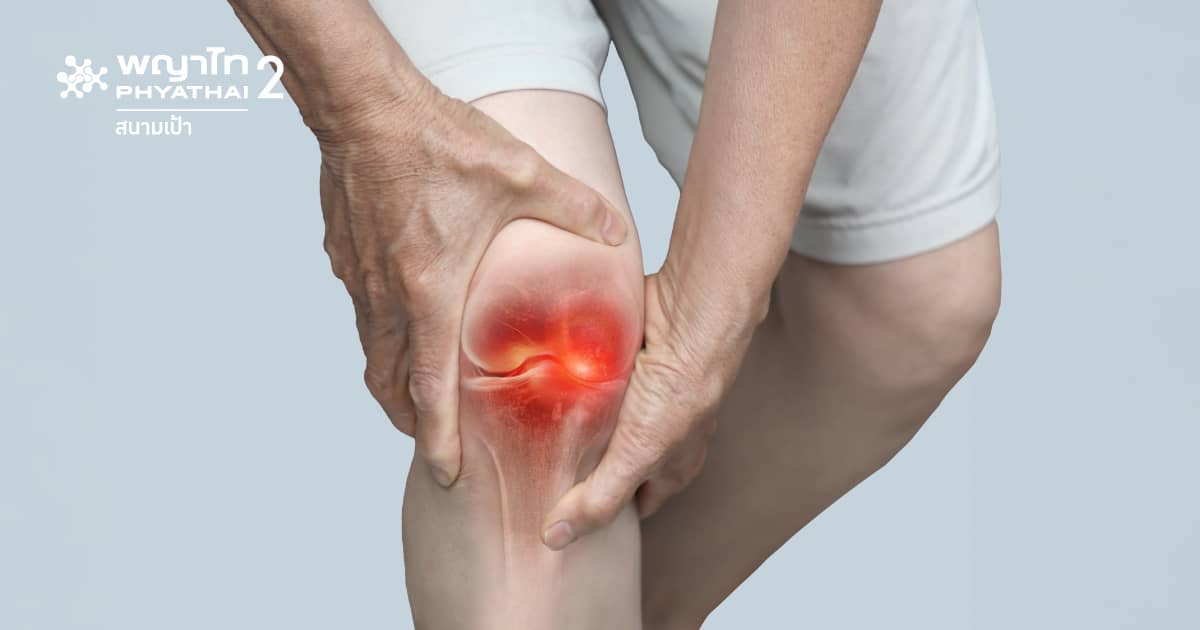
Knee osteoarthritis is a common condition, especially among the elderly—particularly those aged 60 and above. It affects approximately one-third of the Thai population in this age group. Nowadays, it is increasingly being found in working-age and middle-aged individuals as well.
If left untreated, the gradual degeneration of the knee joint can lead to serious consequences, such as chronic joint pain, joint deformity, or bowed legs, all of which can negatively affect walking, climbing stairs, and overall quality of life.
Treatment Options for Knee Osteoarthritis
There are various treatment options for knee osteoarthritis, ranging from lifestyle modifications, medications, and physical therapy to surgery in severe cases. However, due to limitations and side effects of traditional treatments, new therapeutic technologies have been developed. One of the most promising and widely discussed options today is Platelet-Rich Plasma (PRP) therapy, which offers a safe and effective non-surgical alternative for managing knee osteoarthritis.
What is PRP (Platelet-Rich Plasma)?
PRP therapy is a regenerative treatment that helps slow down the progression of knee osteoarthritis and promotes healing—especially effective for patients in the early to moderate stages of the condition. The procedure involves drawing a small amount of the patient’s own blood (about 11–22 ml, depending on the extent of the injury), and then processing it through a centrifuge to isolate platelet-rich plasma. This concentrated plasma is rich in biological substances within platelets that aid in tissue repair and healing. The PRP is then injected back into the affected area, such as the knee joint, tendons, or muscles.
PRP contains multiple growth factors—such as PDGF (Platelet-Derived Growth Factor), TGF-β (Transforming Growth Factor Beta), and VEGF (Vascular Endothelial Growth Factor)—which help reduce inflammation, promote new tissue formation, and stimulate the activity of fibroblasts and endothelial cells for tissue regeneration.
However, these biological components are often degraded during the conventional centrifugation process. To address this, a new technique known as PRP Cold Brew has been developed to better preserve these healing factors during preparation.
What is PRP Cold Brew?
PRP Cold Brew is an advanced technique for preparing Platelet-Rich Plasma (PRP), developed to address the loss of bioactive substances that often occurs during traditional centrifugation. This method controls both temperature and centrifugation speed to better preserve the efficacy of essential growth factors in platelets. Compared to conventional PRP preparation, PRP Cold Brew offers several enhancements:
- Blood collection: Approximately 20–60 ml of the patient’s blood is drawn using an anticoagulant to prevent clotting.
- Low-temperature control: The temperature is maintained at around 4°C throughout the process. This reduces heat generated by friction during centrifugation, which can prematurely activate platelets and cause early degradation of vital growth factors.
- Adjusted centrifugation speed: The process begins with a moderate-speed spin (approximately 1,500–2,000 RPM), followed by a higher-speed spin (around 3,000–3,500 RPM). This two-step method helps increase PRP concentration while maintaining platelet integrity and minimizing the breakdown of growth factors.
- Cryopreservation: The PRP is either freeze-dried or immediately stored at -80°C. This preserves its stability, prevents the formation of ice crystals that could damage platelet structures, and allows for multiple injections or long-term storage before the first use.
PRP Cold Brew is designed to maximize the therapeutic potential of PRP, offering a more effective and stable treatment option—especially in regenerative therapies like knee osteoarthritis.
Differences Between Standard PRP and PRP Cold Brew
| Component | Standard PRP | PRP Cold Brew |
| Platelets | 3–5 times the concentration of whole blood | 5–8 times the concentration of whole blood |
| TGF-β | 25–35 ng/ml | 40–60 ng/ml |
| PDGF | 15–25 ng/ml | 30–45 ng/ml |
| VEGF | 200–300 pg/ml | 400–600 pg/ml |
| White Blood Cells | High concentration | Significantly reduced |
| Stability | Stable for 4–6 hours at 4°C | Stable for 6–12 months at -80°C |
PRP Cold Brew demonstrates improved concentration of growth factors and better storage stability, making it a more potent and practical option for regenerative treatments.
How Does PRP Cold Brew Help Treat Knee Osteoarthritis?
PRP Cold Brew works primarily through the release of growth factors, which are biological substances with regenerative properties. These factors help treat knee osteoarthritis through the following mechanisms:
- Stimulating cartilage cells to increase the production of collagen, proteoglycans, and elastin—key components of cartilage—thereby strengthening and repairing knee joint tissue.
- Promoting new blood vessel formation (angiogenesis), which improves blood circulation and enhances nutrient delivery to the knee joint tissues.
- Reducing inflammation by inhibiting the release of inflammatory substances, helping to slow down the breakdown of cartilage cells and delay the progression of cartilage degeneration.
- Restoring synovial fluid quality, improving joint lubrication and reducing friction during movement.
- Relieving pain and improving mobility, allowing patients to move more comfortably and enjoy a better quality of life.
Benefits of PRP Cold Brew in Treating Knee Osteoarthritis
PRP Cold Brew is a regenerative treatment that helps restore knee joint function and offers several key advantages:
- Uses the patient’s own biological substances, significantly reducing the risk of allergic reactions or immune system rejection.
- Non-surgical and minimally invasive, with no open wounds—thereby lowering the risk of complications and avoiding long recovery times associated with surgery.
- Reduces the need for painkillers and anti-inflammatory drugs, which may have long-term side effects on the liver and kidneys.
How Often Should PRP Be Injected?
To achieve optimal results, PRP injections are typically administered three times over a six-month period, depending on the severity of the condition and the physician’s recommendation.
The initial injections are usually spaced 3–4 weeks apart, and subsequent sessions are scheduled based on each patient’s response to the treatment.
PRP Cold Brew is a cutting-edge treatment for knee osteoarthritis that effectively reduces inflammation, stimulates tissue repair, and helps decrease the need for surgery. However, the treatment should always be guided by an orthopedic specialist to ensure it suits the patient’s individual condition and overall health.
At the Orthopedics Institute of Phyathai 2 Hospital, our experienced orthopedic team offers a wide range of treatment options, including PRP Cold Brew injections, under the concept of Value Healthcare—a blend of medical excellence and cost-effectiveness.
Patients can customize their treatment plans according to their budget, all while receiving safe, attentive, and internationally standardized care every step of the way.
