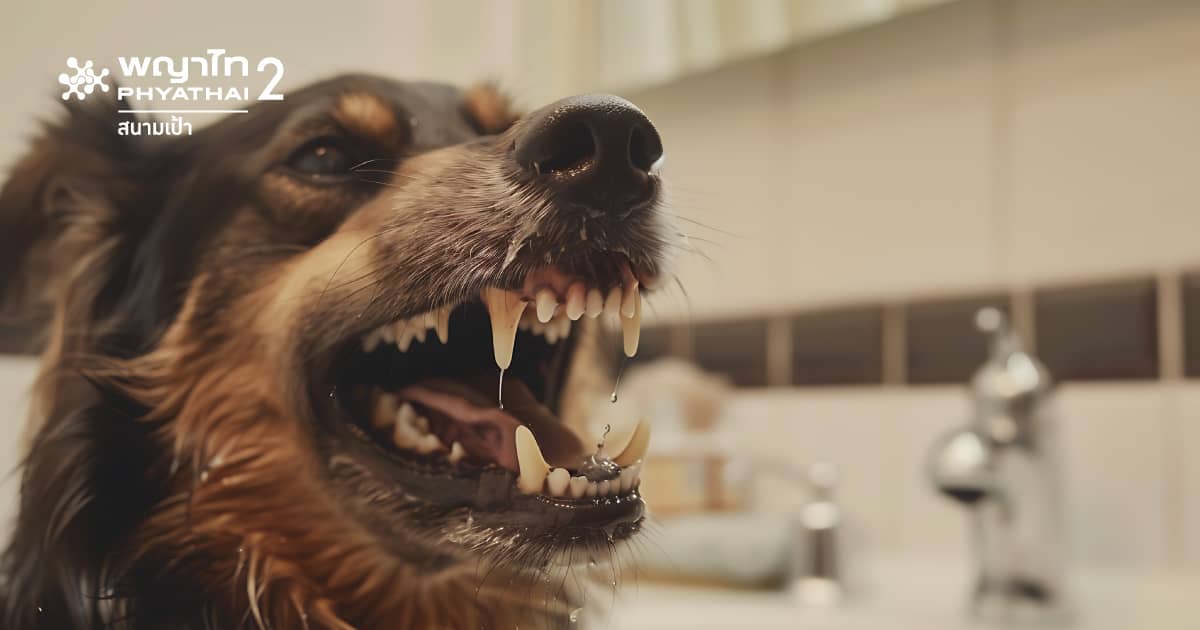
Rabies is a highly severe viral infectious disease. Once neurological symptoms appear, the mortality rate is nearly 100%. However, this disease can be prevented if the wound is cleaned and vaccination is given immediately after exposure. In Thailand, rabies is still occasionally found, especially from mammals such as dogs, cats, monkeys, or stray animals.
What is Rabies?
It is caused by a virus in the Lyssavirus group, which affects the central nervous system. The virus can be transmitted from mammals to humans through saliva, such as by biting, scratching, or contact with open wounds. After entering the body, the virus travels through the nerves to the brain, causing encephalitis, a severe condition that can lead to death.
How is Rabies Transmitted?
All mammals can be carriers. It is commonly found in
- Dogs
- Cats
- Monkeys
- Bats
- Unvaccinated stray animals
Risky exposures include
- Bites that break the skin and cause bleeding
- Scratches that cause skin abrasions
- Animal saliva contacting open wounds, eyes, or mucous membranes of the mouth
Even small wounds can pose a risk.
Symptoms of Rabies in Humans
The incubation period averages about 1–3 months but can be shorter or longer depending on the wound location and viral load.
Initial Stage
- Low-grade fever
- Headache
- Fatigue
- Burning pain or numbness at the wound site
Neurological Stage
- Fear of water (Hydrophobia)
- Fear of wind
- Difficulty swallowing
- Restlessness
- Seizures
- Paralysis
At this stage, the disease is very severe.
What to Do If Bitten by a Dog?
The correct first aid approach is immediate management after exposure, which is the most important step.
1. Wash the Wound Immediately
- Rinse continuously with running water for at least 15 minutes
- Use soap to clean the wound area
- Apply an antiseptic such as povidone-iodine
Proper wound washing helps reduce the amount of virus.
2. Seek Medical Evaluation
- Rabies vaccination
- Rabies Immunoglobulin (RIG) administration in high-risk cases
Do not wait to see symptoms because the disease usually develops slowly but severely.
Types of Rabies Vaccines?
1. Post-Exposure Prophylaxis (PEP) is used in cases of bites, scratches, or risky exposure. The full course must be completed for maximum effectiveness.
2. Pre-Exposure Prophylaxis (PrEP) is suitable for high-risk individuals such as
- Veterinarians
- Animal control personnel
- People working closely with wildlife
- Children who frequently have contact with animals
Rabies Prevention
- Vaccinate pets annually
- Avoid contact with stray animals
- Teach children not to play with unknown animals
- Clean wounds and see a doctor immediately if bitten
Rabies is a serious disease that should not be overlooked, even with minor wounds. Medical evaluation is the most important step. Immediate wound cleaning and proper vaccination can prevent the disease. If you or your family members are bitten, scratched, or suspect exposure, seek medical evaluation immediately.
