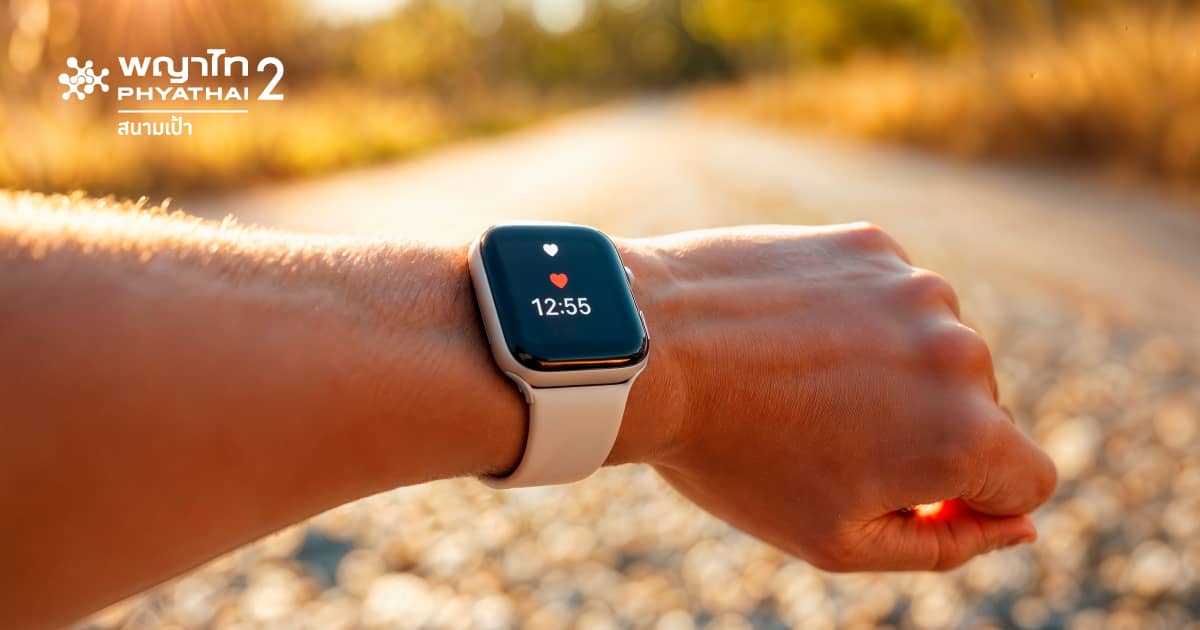
Nowadays, Smart Watches are no longer just devices for telling time or counting steps, but have evolved into Health Tech Devices that can monitor vital signs and heart health data in real-time.
For those at risk of heart disease or even the general public who want to take preventive health care, Smart Watches have become a “primary assistant” that helps you understand your body better every day.
What can a Smart Watch measure about the “heart”?
1. Heart Rate (Heart Rate)
-
- Measures the number of heartbeats per minute (BPM)
- Detects both at rest and during exercise
- Can alert when the heart rate is abnormally fast or slow
Health benefits help assess physical fitness and may be an early sign of arrhythmia.
2. Electrocardiogram (ECG / EKG)
Some Smart Watch models can measure a 1-lead electrocardiogram, initially detecting conditions such as arrhythmia (e.g., Atrial Fibrillation – AF), irregular heart rhythms.
3. Blood Oxygen Level (SpO₂)
Measures blood oxygen levels, reflecting the combined function of the heart and lungs. Abnormally low levels may be associated with certain heart diseases, lung diseases, or sleep apnea.
4. Heart Abnormality Alerts
Smart Watches can be set to alert for conditions such as tachycardia (fast heart rate), bradycardia (slow heart rate), and irregular rhythms. This is suitable for people with heart disease, a history of arrhythmia, and those who need continuous self-monitoring.
5. Behavioral Health Data (Lifestyle Data)
Smart Watches also analyze data affecting the heart, such as sleep quality, stress levels, exercise, and daily step count. This information helps doctors get a clearer overall picture of heart health.
Smart Watches help with “screening” but not “diagnosis”
Although Smart Watches have advanced capabilities, they still have important limitations. It should be understood that they are tools for initial monitoring and alerting and cannot replace medical diagnostic equipment. There may be inaccuracies in some situations.
What signals from a Smart Watch should not be ignored?
If abnormal values are found along with abnormal symptoms, you should see a doctor immediately, such as:
-
- Abnormally fast heart rate at rest (>100 bpm)
- Abnormally slow heart rate (<50 bpm)
- Alerts for “irregular rhythm”
- Dizziness, lightheadedness, palpitations, or chest tightness
These symptoms may be related to
-
- Arrhythmia
- Coronary artery disease
- Electrical system abnormalities of the heart
Can a Smart Watch replace hospital heart examinations?
The answer is no. A Smart Watch is only a screening tool, but accurate diagnosis still requires additional tests such as:
-
- Electrocardiogram (ECG)
- Holter Monitor (24–48 hours monitoring)
- Exercise Stress Test
- Echocardiogram
Who should use a Smart Watch to take care of their heart?
-
- People with heart disease or risk factors (diabetes, hypertension, high cholesterol)
- Elderly people
- People who work hard and have little rest
- People who exercise regularly
- Those who want preventive health care
Heart care should be more than just looking at data
Although Smart Watches help detect early warning signs of heart issues well, true heart care should be holistic, connecting data, behavior, and in-depth medical examinations, including:
- Heart health examinations (ECG, Echo, CT Calcium Score) help detect abnormalities that may “not yet show symptoms,” such as early-stage coronary artery disease or structural heart abnormalities, which Smart Watches cannot detect.
- Diet control Reduce sugar, fat, and salt; increase vegetables, fruits, and healthy fats to reduce long-term risk of coronary artery disease.
- Regular exercise At least 150 minutes per week helps strengthen the heart, control weight, and balance blood pressure.
- Stress management Chronic stress affects heart rate and blood pressure. Adequate rest or relaxation activities are important.
FAQ Frequently Asked Questions about Smart Watches and Heart Health
Q: Are Smart Watches accurate for heart monitoring?
A: They are accurate for initial screening but cannot replace medical diagnostic tools.
Q: How is the ECG in a Smart Watch different from a hospital ECG?
A: Smart Watches use a single-lead ECG, while hospitals use multi-lead ECGs, which are more detailed.
Q: What should I do if my Smart Watch gives an alert?
A: Observe your symptoms. If you have abnormal symptoms, see a doctor for further examination.
Q: Who should use a Smart Watch to monitor their heart?
A: People who exercise, those with chronic diseases, and those who want preventive health care.
Smart Watches may help you “start noticing heart abnormalities” earlier, but confident heart care should involve evaluation by a specialist doctor along with accurate medical equipment.
At the Heart Center, Phyathai 2 Hospital, we are ready to provide care from screening, diagnosis, to treatment and rehabilitation with a team of specialists and standard technology.
-
- In-depth heart examinations such as ECG, Echo, CT Calcium Score
- Personalized heart disease risk assessment
- Long-term care planning to prevent disease
If your Smart Watch starts giving warning signs or you have abnormal symptoms such as palpitations, easy fatigue, or chest pain, do not ignore them. Getting checked today may help reduce future risks because the heart is not just about numbers but about long-term quality of life.
