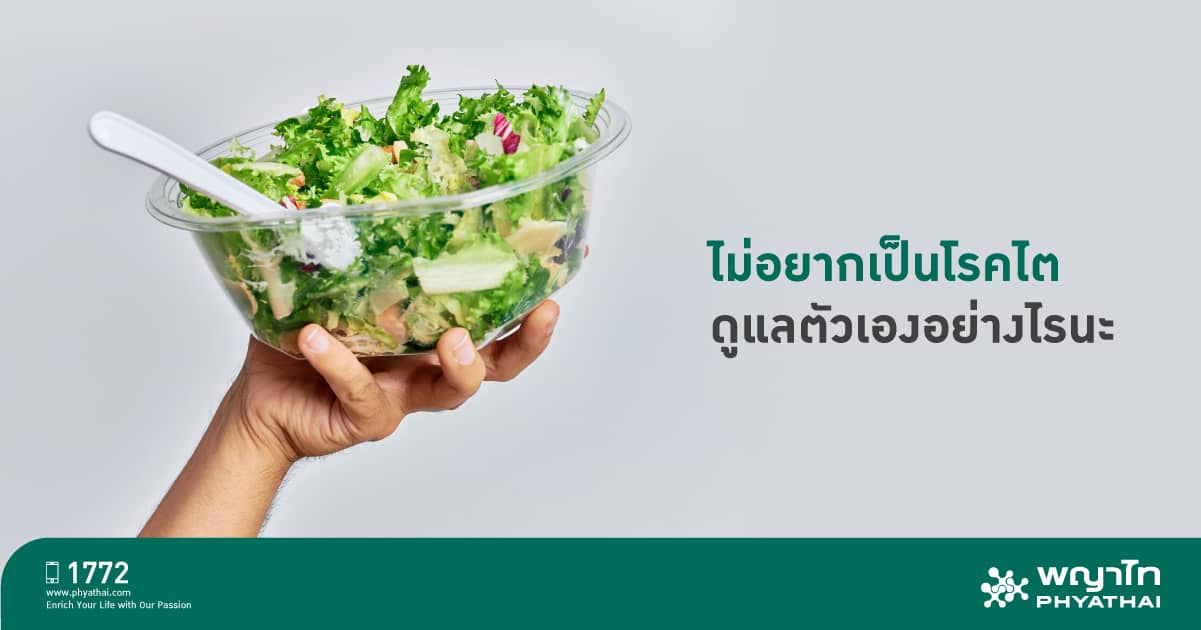
“Once it occurs, it does not heal. High costs. Must be extremely careful with health.” These make kidney disease a frightening condition because every patient has to face it. But did you know that we can avoid this disease? Let’s listen to the kidney disease prevention methods from Dr. Chotima Phisetkul, a clinical nephrologist at Phyathai 3 Hospital… How to prevent “kidney deterioration”
“Having underlying diseases vs. no underlying diseases” Different precautions
To maintain health and stay away from kidney disease, Dr. Supitcha says it can be divided into 2 main groups:
- Group with underlying diseases such as diabetes, hypertension, heart disease. These individuals must manage and control their underlying diseases to stay within good parameters.
- General population. The routine practice should be annual health check-ups to detect abnormalities and monitor disease risks.
“Food and drinks” are key factors
We all should drink enough plain water, about 2 liters per day. Regarding food, Dr. Supitcha advises reducing both sweet and salty tastes, with details as follows:
- Salty food – The World Health Organization recommends consuming about 2,000 milligrams of salt per day. Meanwhile, most Thai dishes contain at least twice the amount of salt the body needs daily. For example, 1 teaspoon of fish sauce contains 400 mg of salt, so daily intake should not exceed 5 teaspoons. Therefore, what we can start doing ourselves is cooking at home, avoiding processed foods, fermented foods, canned foods, and eating more vegetables and fruits.
- Sweet food – The World Health Organization recommends consuming no more than 25 grams or 6 teaspoons of sugar per day. Reduce the amount of sweets, sugary drinks, and sweet fruits. For starchy foods and tuber vegetables with high sugar content, such as taro and yam, do not eat too much.
What weight is not at risk for kidney disease?
We should control our weight to be within the range, and the body mass index (BMI) should be between 18-25 kilograms per square meter.
- Men – Waist circumference should not exceed 90 cm or 35.5 inches
- Women – Waist circumference should not exceed 80 cm or 31.5 inches
Do not overlook exercise
Dr. Supitcha recommends exercising regularly, about 30 minutes per day or at least 150 minutes per week. The important thing is to choose activities suitable for your body, eat nutritious food, and balance protein intake with the chosen activity or sport to ensure the body receives complete nutrients and sufficient rest.
Exercise guidelines are divided into
- Cardiovascular exercise (Cardio) focuses on stimulating the heartbeat and managing the circulatory system, such as walking, cycling, aerobics, swimming.
- Strength training (Weight Training) uses weights to create resistance, which may involve equipment like dumbbells, barbells, or large machines.
- Flexibility exercises such as yoga and Chinese martial arts.
How much protein is considered balanced?
- Those who sit and work without exercising should consume 1 gram of protein per 1 kilogram of body weight.
- Those who do cardio exercise should consume 1.5 grams of protein per 1 kilogram of body weight.
- Those who do both cardio and weight training should consume 1.5-2 grams of protein per 1 kilogram of body weight for women, and 2-3 grams per 1 kilogram of body weight for men. For example, 100 grams of chicken breast contains about 23-25 grams of protein. If you weigh 50 kg, you need to eat 300 grams of chicken breast for cardio exercise.
The protein amounts mentioned are not suitable for those at risk of kidney disease or with kidney deterioration because patients with kidney deterioration require only 0.6-0.8 grams of protein per 1 kilogram of body weight. The protein amount depends on the level of kidney deterioration because when protein is metabolized, the kidneys excrete the waste. If the kidneys are deteriorated, waste excretion is limited, and excess waste causes high waste accumulation in the blood.
As for “whey protein”, commonly heard among exercisers, it is a product containing about 80% protein and is a convenient supplement. However, if we get enough natural protein from eating meat, eggs, and milk, there is no need to take additional whey protein because besides the cost, it may cause the body to receive more protein than needed.
Be careful when using drugs and chemicals
We live in a country where drugs are easily accessible, leading most people to consume drugs unnecessarily. This often affects kidney function, especially “painkillers”. Elderly people or those with underlying diseases such as leg pain or gout often buy and take these drugs themselves, increasing the risk of reduced kidney function. Additionally, some herbs and supplements can cause kidney deterioration, and in some cases, patients with kidney deterioration who choose to take herbal medicine may experience worsening kidney function.
Besides the methods mentioned, alcohol consumption and smoking should be avoided. These are things everyone can do, not for anyone else but for ourselves.
Dr. Chotima Phisetkul
Internal Medicine Physician, Nephrology
Dialysis Center, Phyathai 3 Hospital
