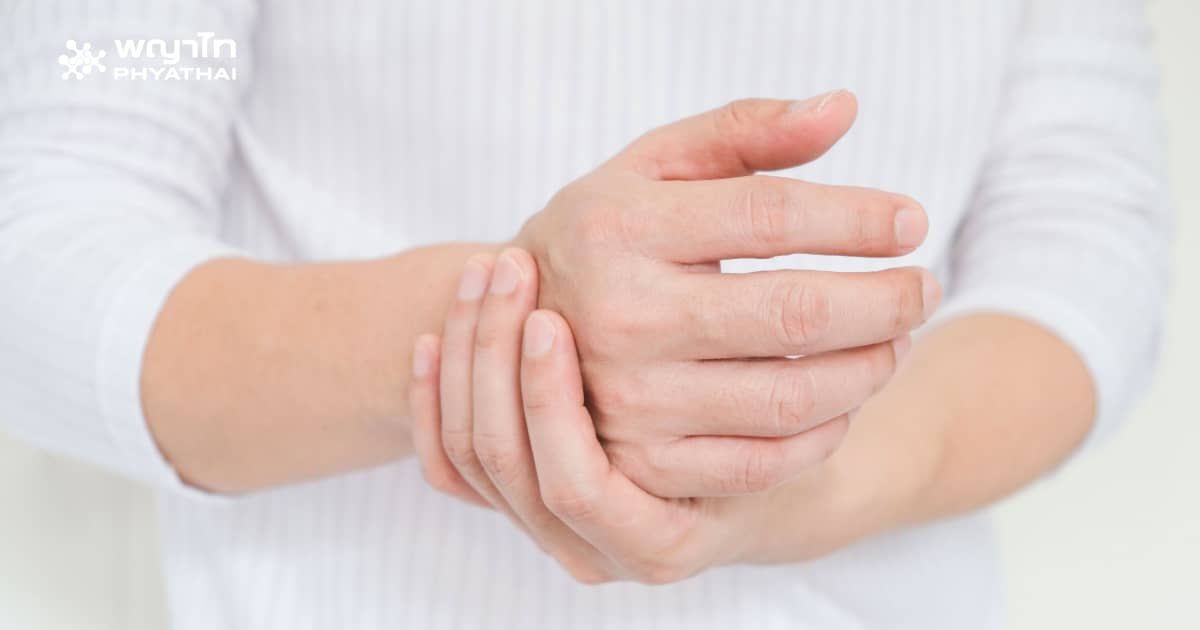
In an era where people work in front of computer screens and use smartphones for long periods with repetitive postures, it causes muscle, tendon, and joint pain in the fingers, leading to the development of “Trigger Finger” disease.
What is Trigger Finger?
Trigger Finger or Trigger Finger is a condition where the finger locks when bent and cannot easily straighten back. It is caused by inflammation and thickening of the tendon sheath in the finger, preventing the tendon and muscle inside from moving normally. The finger locks and cannot straighten as usual. Generally, trigger finger often occurs in the thumb, middle finger, or ring finger, but it can also affect multiple fingers and both hands simultaneously.
What are the symptoms of Trigger Finger?
- A clicking sound when bending or straightening the finger
- Finger stiffness, usually occurring in the morning
- A feeling of tightness and a bump at the base of the locked finger
- Finger locks when bent, which happens immediately when suddenly straightening the finger
- Finger locks when bent and cannot be straightened back
Causes of “Trigger Finger”
It is caused by continuous use of the fingers for a long time, such as gripping while working or using a smartphone for extended periods, leading to inflammation or swelling of the tendon sheath, causing loss of flexibility and inability to bend or straighten the finger normally.
How to treat “Trigger Finger”?
There are several treatment methods depending on the severity of the symptoms, as follows:
- Rest Rest the hand from activities that require repetitive force or carrying weight for a long time by avoiding such activities for at least 3-4 weeks.
- Apply hot or cold compresses Some people with trigger finger may use cold compresses on the palm, which can help improve symptoms. Additionally, soaking in warm water can relieve symptoms, especially if done in the morning.
- Use finger splints Wearing a finger splint helps keep the finger straight, preventing it from bending or overextending, and allows the finger to rest. If trigger finger occurs regularly in the morning, doctors may recommend wearing the splint overnight to prevent the finger from tightening or bending during sleep.
- Stretching exercises Doctors may recommend light exercises to help the finger move normally.
- Medication Use non-steroidal anti-inflammatory drugs (NSAIDs) to relieve pain, but these medications cannot reduce swelling in the tendon sheath.
- If severe trigger finger occurs If treatment with medication and physical therapy does not improve symptoms, surgery or other medical procedures may be necessary, such as corticosteroid injections, which reduce tendon inflammation and help restore normal finger movement.
- Surgery If other treatments fail, doctors may recommend minor surgery to treat trigger finger. Generally, patients do not need to stay overnight in the hospital.
