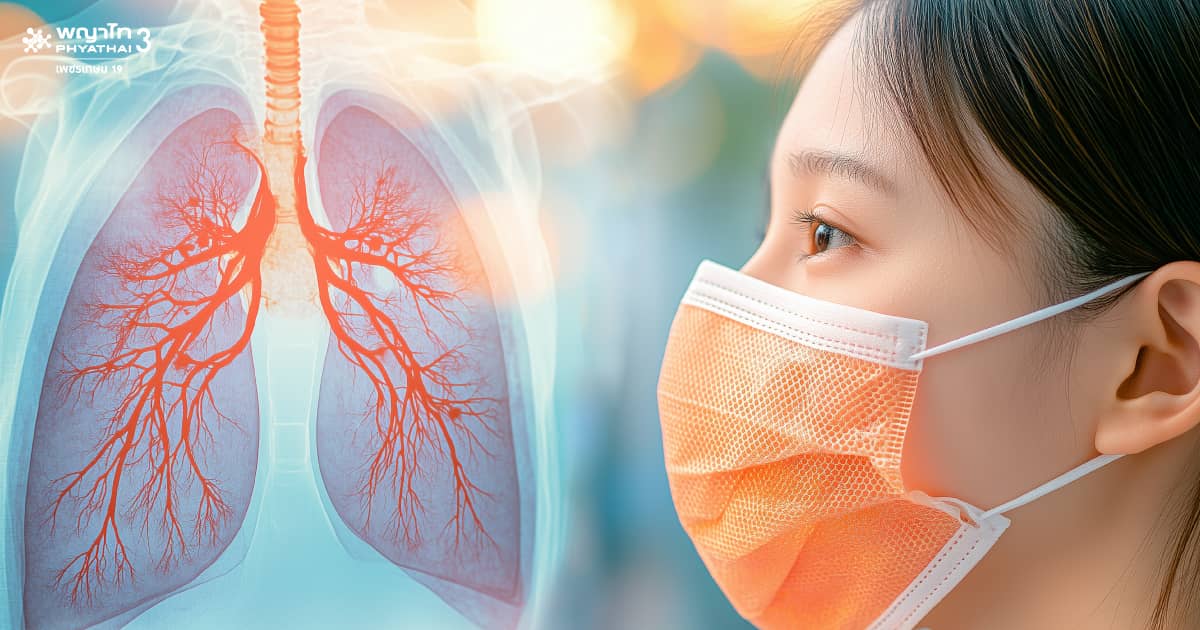
After the situation of fine particulate matter PM 2.5 eased, the sight of people wearing dust masks almost immediately decreased, especially among public transport passengers, motorcycle riders, and those near busy roads with constant traffic throughout the day. In reality, it is not only PM 2.5 that is harmful to the body, but there are also many other invisible air pollutants that are equally dangerous.
How Dangerous Is Air Pollution?
Air pollutants that are harmful to health, according to the Air Quality Index (AQI) report, are divided into 6 types:
- Particulate matter not exceeding 2.5 microns (PM2.5) is produced from combustion, including vehicles, agricultural burning, forest fires, and industrial processes. These particles are very small and can reach the alveoli in the lungs, causing lung deterioration, bronchitis, and asthma symptoms.
- Particulate matter not exceeding 10 microns (PM10) comes from fuel combustion, industrial processes, grinding, milling, or dust from construction. When inhaled, it can accumulate in the respiratory system and is harmful to health.
- Ozone gas (O3) causes eye irritation and respiratory tract irritation, reducing lung function and causing fatigue, especially in children, the elderly, and those with chronic lung diseases.
- Carbon monoxide gas (CO) results from incomplete fuel combustion. This gas binds to red blood cells, reducing oxygen transport to body cells, causing fatigue and increased heart workload.
- Nitrogen dioxide gas (NO2) affects vision and triggers asthma or respiratory diseases.
- Sulfur dioxide gas (SO2) causes irritation to the conjunctiva, skin, and respiratory system. Long-term exposure can lead to chronic bronchitis.
Not Smoking? Just Inhaling Smoke Puts You at Risk!
Over 90% of lung disease patients, especially lung cancer, currently have smoking as the main cause. What is more frightening is that many people who think they are safe because they do not smoke are mistaken. About 30% of lung cancer patients are non-smokers but have been exposed to secondhand smoke from close contacts and smokers in public places.
Dr. Winai Boveja, Head of the Lung Health Center and Pulmonologist specializing in respiratory and critical respiratory care at Phyathai 3 Hospital recommends that everyone regularly observe themselves for lung symptoms that may signal abnormalities, such as:
- Chronic cough, coughing up blood, cough that does not heal
- Shortness of breath, difficulty breathing, breathlessness
- Chest tightness or pain, unexplained chest pain when breathing
- Fatigue, weight loss, fever
- Wheezing sounds when breathing
If you experience any of these unusual symptoms, you should see a doctor immediately to check which part of your body is signaling an abnormality. When a pulmonologist examines a patient, they can determine the cause of the symptoms and diagnose the illness.
In reality, a pulmonologist is like a mechanic for a car. When a car breaks down, we take it to a garage. The doctor, like a mechanic, will ask questions to find out the possible cause, then examine which part is malfunctioning, diagnose, and confirm the cause. Once the cause is identified, treatment follows accordingly.
In fact, drivers know how often they need to have their cars inspected annually or after a certain number of kilometers, even before the car breaks down or shows symptoms. What about lung health? Have you ever had your lungs checked by a doctor?
Don’t Let It Break Down, Get Your Lungs Checked
Normally, everyone should have their lung health checked regularly at least once a year to detect any abnormalities early for timely treatment. Every minute we breathe, there is a chance of inhaling foreign substances and harmful pollutants into the body. The Healthy Lung Center at Phyathai 3 Hospital offers comprehensive examinations, including lung function tests, lung volume tests, airway hyperresponsiveness tests, respiratory muscle strength measurement, cardiopulmonary exercise testing, and bronchoscopy by expert physicians. They also provide knowledge, advice, and consultation on respiratory diseases to help everyone take care of themselves and stay safe from respiratory diseases, maintaining strong internal health.
Protect Your Lungs, Stay Away from Pollution
- Wear a mask every time you travel by public transport, ride a motorcycle, or work in dusty environments to protect against dust and pollution.
- Avoid exposure to smoke, including staying away from cigarette smoke and smokers.
- Clean your body immediately after exposure to pollution. If not possible, at least wash your hands thoroughly before doing other activities.
- Exercise regularly in well-ventilated areas.
- If you have symptoms like a cold, chronic cough, excessive phlegm, shortness of breath, or allergies, seek medical treatment or consult a doctor early to control symptoms and prevent progression to other respiratory diseases.
Dr. Winai Boveja
Head of the Lung Health Center
Pulmonologist specializing in respiratory and critical respiratory care
Phyathai 3 Hospital
